
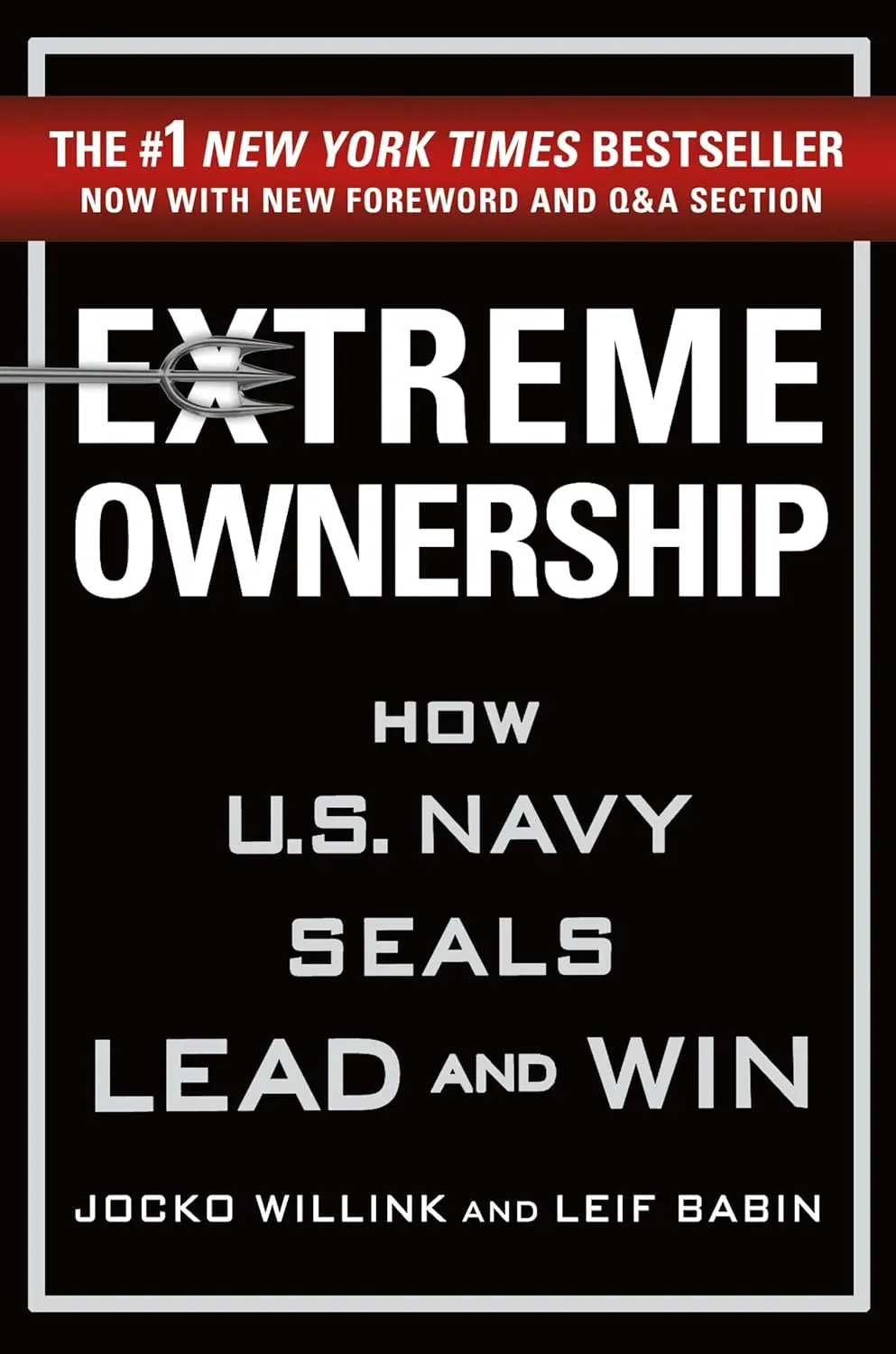
Willink and Babin led SEAL Task Unit Bruiser during the Battle of Ramadi in 2006, one of the most violent combat deployments in the Iraq War. After leaving the military, they founded a leadership consulting firm and adapted their battlefield principles for corporate clients. This book is the result.
The title principle, extreme ownership, means that a leader takes full responsibility for every failure in their organization. If a team member underperforms, the leader failed to train them properly or set clear expectations. If a mission goes wrong, the leader failed to plan or communicate effectively. Willink illustrates this with a story from Ramadi where a friendly-fire incident nearly killed Iraqi soldiers. Rather than blame the fog of war or individual mistakes, Willink took responsibility in front of his commanding officers. The result was that everyone on the team learned from the error instead of spending energy on blame.
The book covers twelve principles, each presented first through a combat scenario and then through a business case study. Principles include: there are no bad teams, only bad leaders. Believe in the mission or you cannot lead others through it. Prioritize and execute when overwhelmed by multiple problems. Keep plans simple. Decentralize command so that subordinates can act without waiting for orders.
For founders, the most transferable ideas are about accountability and communication. When things go wrong at a startup, it is tempting to blame the market, the team, or bad luck. Extreme ownership says: start with yourself. What could you have done differently? This is not about guilt. It is about maintaining agency in situations where most people feel helpless.
The writing style is direct and unadorned. Willink and Babin are not literary writers. They communicate the way military officers communicate: clearly, briefly, and without ambiguity. Tim Ferriss, Alex Hormozi, and Joe Rogan have all recommended it. At around 300 pages, the book is straightforward and each chapter stands alone. Some readers find the combat stories repetitive, but the principles are sound and immediately applicable to any leadership context.
