
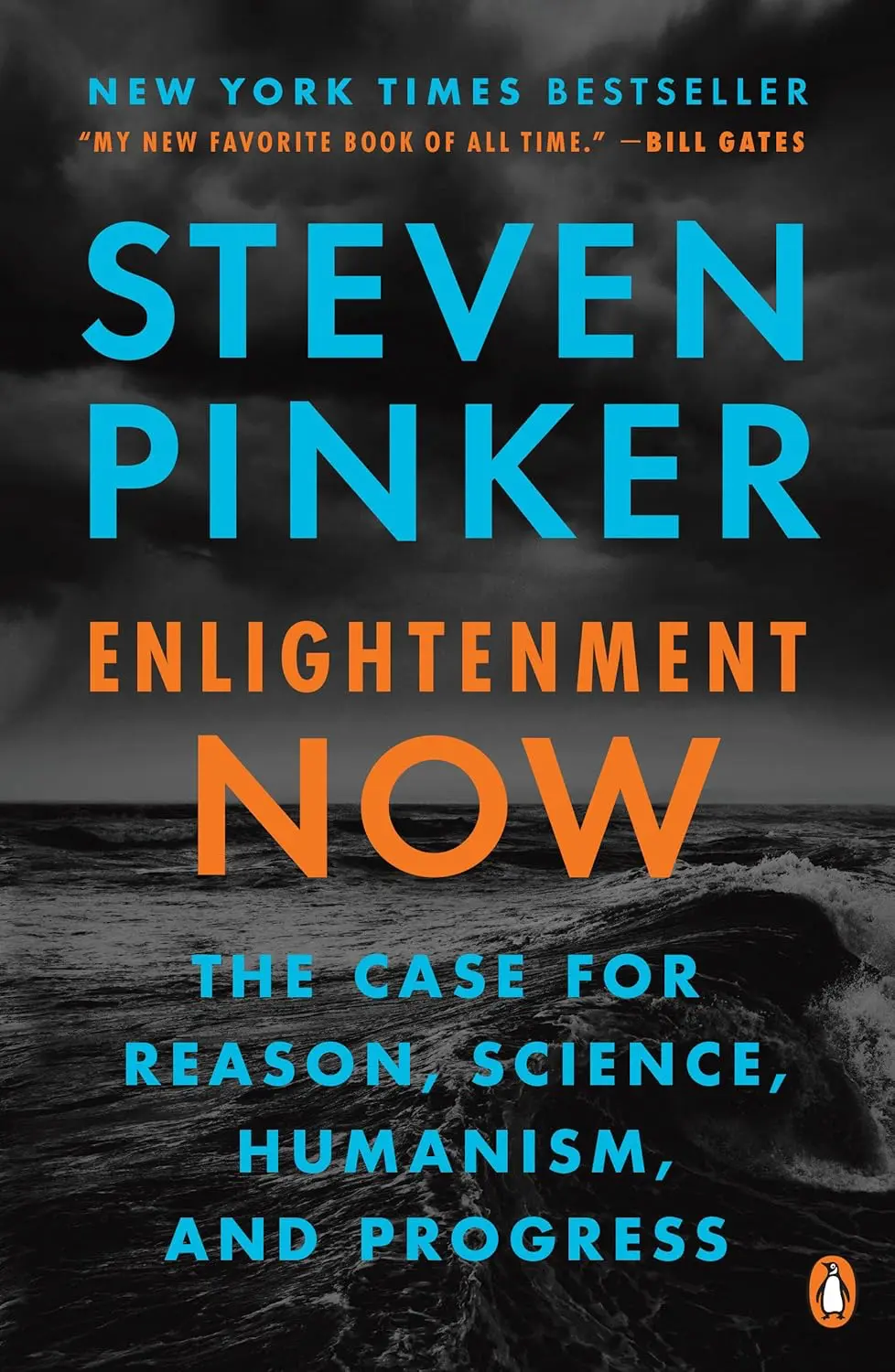
Enlightenment Now is essentially a 500-page argument backed by data. Pinker walks through dozens of metrics, from life expectancy and literacy to poverty rates, war deaths, and environmental indicators, and shows that by nearly every measure, the world has improved dramatically over the past few centuries, with the pace accelerating in recent decades.
The data is the book’s strongest feature. Pinker does not rely on anecdotes or feelings. He presents chart after chart showing declines in violence, disease, extreme poverty, and illiteracy, alongside increases in lifespan, education, democracy, and quality of life. Many of these trends are so consistent that arguing against them requires ignoring the numbers.
Pinker attributes this progress to the ideals of the Enlightenment: the belief that reason, evidence, and human well-being should guide policy rather than tradition, authority, or religion. He argues that these ideals are under threat from both the political left (which emphasizes identity over universalism) and the political right (which appeals to nationalism and nostalgia), and that defending them requires understanding what they have actually accomplished.
The book has been criticized from several angles. Some argue that Pinker cherry-picks metrics while ignoring others (like wealth inequality or ecological damage). Others find his optimism dismissive of real suffering. And some academics have challenged specific data points or interpretations. These criticisms are worth engaging with, but they do not erase the overall pattern the data reveals.
For founders, the book offers a corrective to the doom-and-gloom narrative that dominates news and social media. If you are building something with the intention of making the world better in some specific way, it helps to know that this kind of improvement has actually happened before, repeatedly, and that the mechanisms behind it are understandable.
Bill Gates called it his new favorite book of all time. Sergey Brin and Sam Harris have also recommended it. At about 450 pages, the book is long, and the middle chapters covering specific metrics can feel repetitive. But the cumulative effect of the data is persuasive.
