
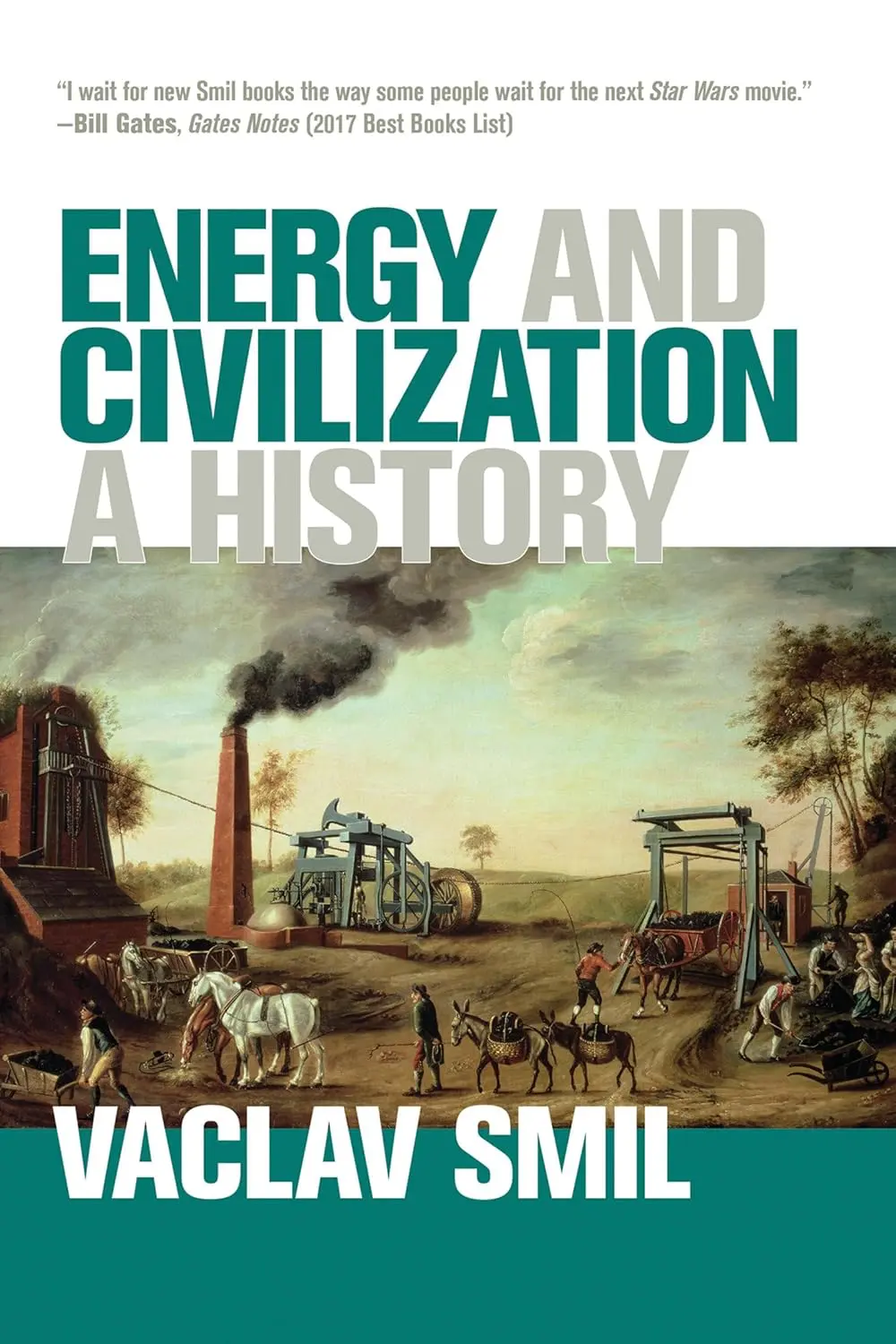
Vaclav Smil is Bill Gates’s favorite author. Gates has said he waits for new Smil books the way other people wait for the next Star Wars movie. Energy and Civilization is Smil’s most comprehensive work, covering the entire history of human energy use from fire to nuclear power.
Smil’s central claim is that energy is the master resource. Every civilization is defined by how it captures and uses energy. Hunter-gatherers used human muscle power. Agricultural societies added animal power and biomass (wood, crop residues). Industrialization added coal. The 20th century added oil, natural gas, and nuclear. Each transition multiplied the energy available per person and enabled new levels of economic complexity.
But transitions take much longer than most people realize. Coal did not replace biomass in a decade. It took over a century. Oil did not replace coal quickly either. Smil uses historical data to show that energy transitions are generational processes, not events. This has implications for the current transition to renewable energy: even with strong political will and massive investment, replacing the fossil fuel infrastructure that powers the global economy will take decades, not years.
Smil writes with the precision of a scientist and the perspective of a historian. He uses numbers constantly: how many calories a Roman soldier consumed, how much horsepower a medieval watermill produced, how many kilojoules are in a barrel of oil. This can make the book dense, but the numbers are what give the arguments weight.
For founders, especially those in energy, climate, or infrastructure businesses, Smil provides the baseline for realistic planning. If you are building a company that depends on an energy transition, understanding the pace at which transitions have actually occurred helps you set expectations and build business models that can survive the timeline.
Bill Gates, Mark Zuckerberg, and Elon Musk have all recommended Smil’s work. At about 550 pages, Energy and Civilization is long and data-heavy. It is not a casual read. But for founders who want to understand the physical substrate of the economy, it is hard to find a more thorough treatment.
