
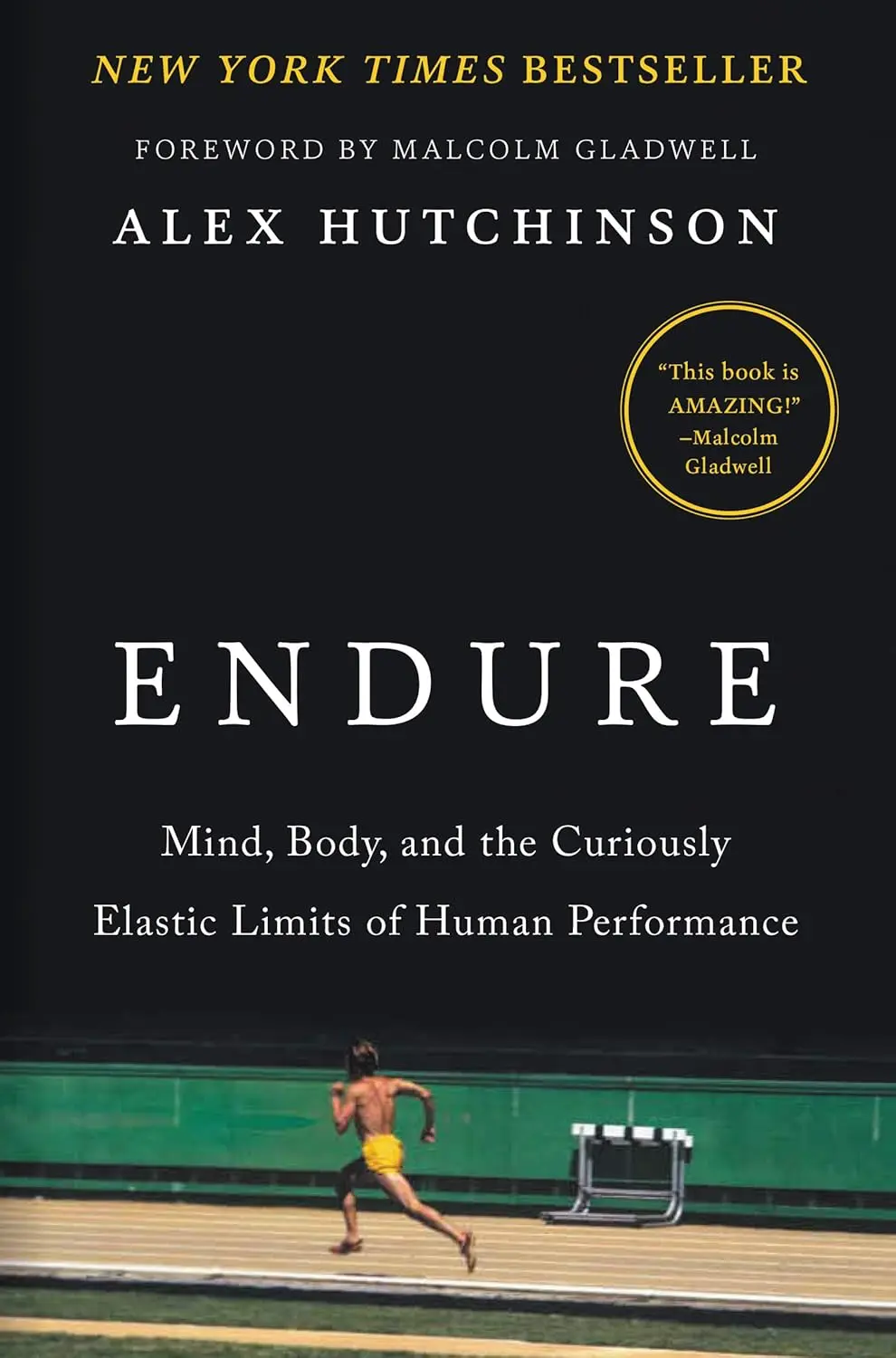
Endure asks a question that matters to athletes and non-athletes alike: what determines how far you can push yourself? Alex Hutchinson, a physicist turned journalist turned competitive runner, surveys decades of research on endurance to argue that physical limits are more flexible than most people assume, and that the brain plays a bigger role than the body in determining when we stop.
The book covers the history of endurance science, from early laboratory studies of fatigue to modern brain-imaging research. Hutchinson profiles the central debate between two camps: the “classical” model, which says you stop when your muscles physically can’t continue, and the “psychobiological” model championed by researcher Samuele Marcora, which argues that you stop when your brain decides the effort is no longer worth it. The truth, Hutchinson suggests, sits somewhere between the two.
Along the way, he covers heat, cold, thirst, fuel, oxygen, pain, and mental fatigue, devoting chapters to each factor and showing how researchers have tested the limits of each. The stories are good: runners in the Sahara, swimmers crossing the English Channel, cyclists in laboratories rigged with deception experiments designed to trick the brain into pushing harder.
For founders and people in demanding careers, the book’s lessons extend well beyond sports. The idea that your perceived limits are often set by your brain rather than your actual capacity has obvious parallels to any kind of sustained difficult work. Hutchinson doesn’t make those parallels explicit, which is to his credit. The book trusts you to draw your own connections.
The writing is careful and well-sourced. Hutchinson avoids the trap of oversimplifying the science or making grand claims about willpower. He acknowledges where the research is uncertain and presents competing viewpoints fairly. It is a smart book about human limits that will make you reconsider your own.
