
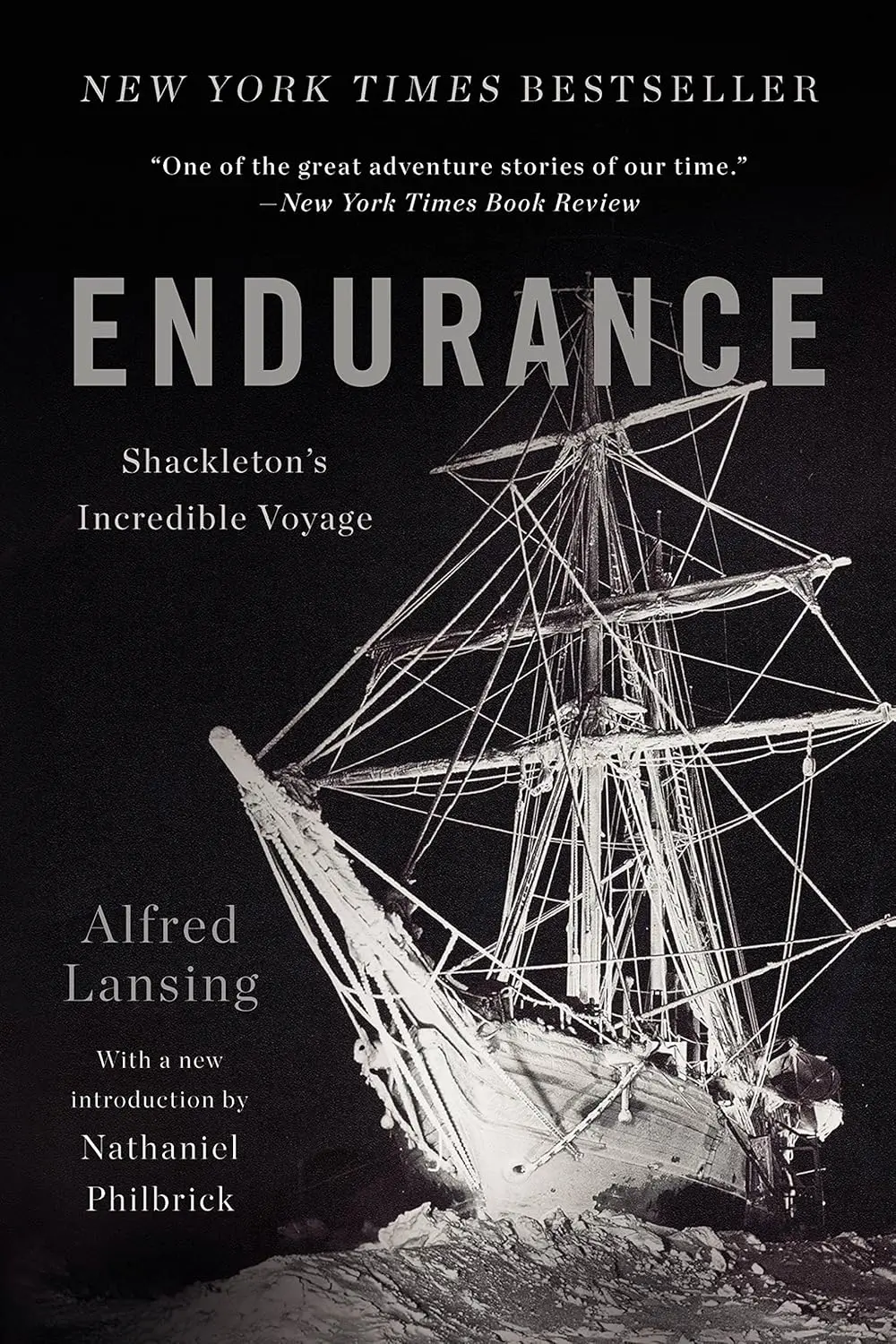
In 1914, Ernest Shackleton set out to cross Antarctica on foot. Before the expedition reached the continent, their ship, the Endurance, became trapped in pack ice. For ten months, the crew lived on the ship as the ice slowly crushed it. When the ship sank, they camped on the ice floes. When the ice broke up, they took to lifeboats and reached the uninhabited Elephant Island. Shackleton then sailed 800 miles across the open Southern Ocean in a 22-foot boat to reach a whaling station on South Georgia Island. He then crossed the island’s mountain range on foot to get help. He returned to rescue every single crew member. Nobody died.
Lansing wrote the book in 1959 using the diaries and journals of the crew, and his reconstruction reads with the pace of a novel. The conditions are almost incomprehensible: temperatures far below zero, constant darkness during the Antarctic winter, food supplies running low, and no way to communicate with the outside world.
Shackleton’s leadership is the through line. He managed morale by keeping routines, distributing food equally (giving up his own rations when supplies were short), making decisions quickly, and projecting confidence even when the situation was desperate. He also made hard calls about who to take on the lifeboat journey and who to leave behind, always choosing based on capability rather than favoritism.
For founders, the book resonates because it is about leading a team through a crisis that has no obvious solution. Shackleton could not control the ice, the weather, or the ocean. He could only control how his team responded. The ability to keep people functioning, keep them trusting each other, and keep making decisions when the situation keeps getting worse is the same ability founders need during company crises.
At about 280 pages, the book reads fast. Lansing’s writing is clear and unpretentious. The story is so extreme that it does not need literary embellishment. It is widely considered one of the best survival narratives ever written and one of the best books on leadership in impossible conditions.
