
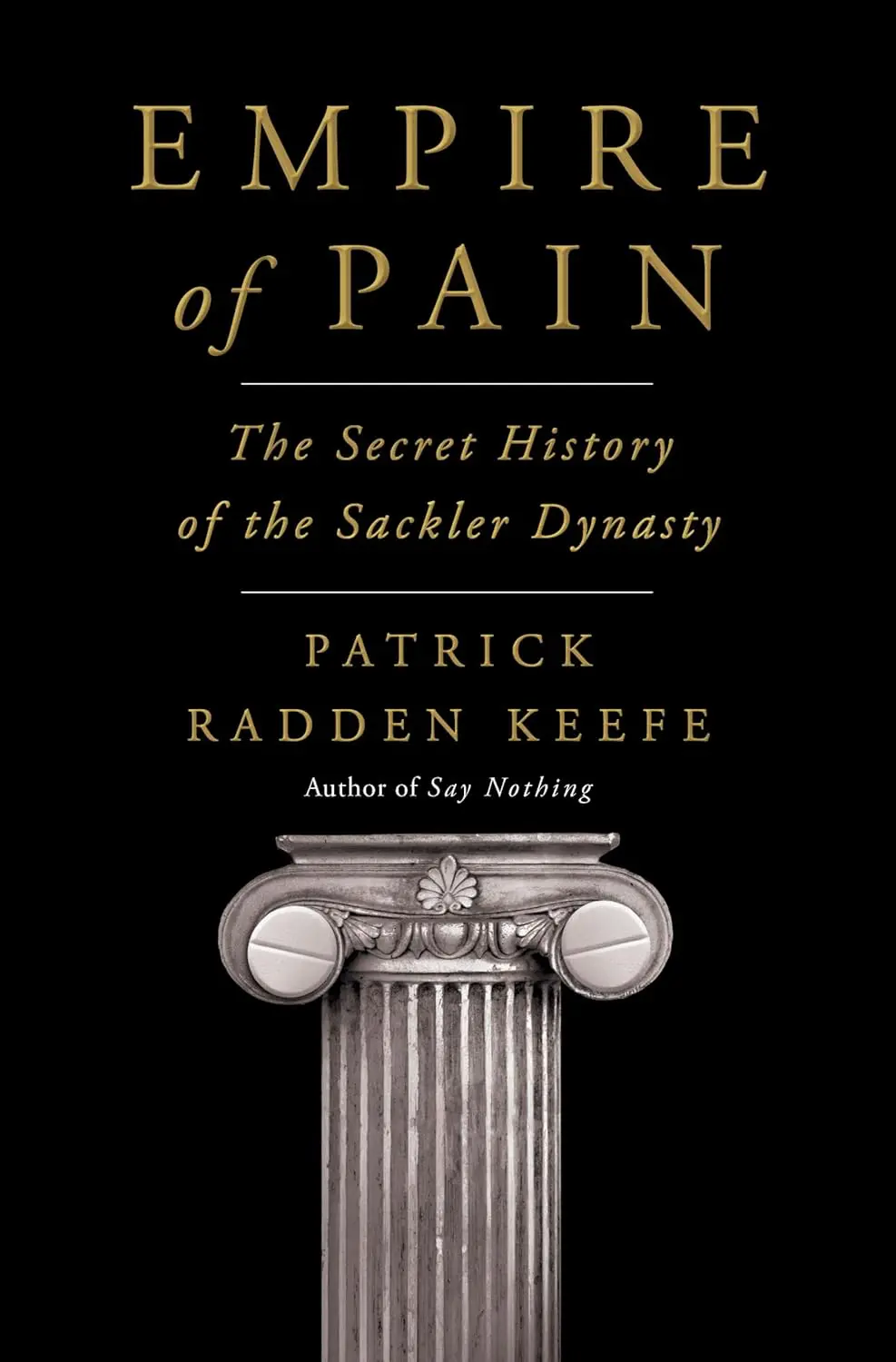
Empire of Pain traces the Sackler dynasty across three generations, beginning with Arthur Sackler, a psychiatrist and advertising pioneer who in the 1950s and 1960s revolutionized pharmaceutical marketing. Arthur figured out that you could sell drugs directly to doctors through aggressive advertising, paid speaking engagements, and lavish gifts, a playbook that the pharmaceutical industry still uses. He died in 1987, before OxyContin existed, but Keefe argues that the marketing machine Arthur built was the foundation for everything that followed.
The second and third generations of Sacklers took that machine and applied it to OxyContin, a time-release oxycodone pill produced by Purdue Pharma. Keefe documents how Purdue marketed OxyContin as less addictive than competing painkillers, despite internal evidence suggesting otherwise. He covers the sales tactics: the bonuses for reps who pushed higher doses, the targeting of doctors with high prescribing rates, and the company’s response to mounting evidence of addiction and death, which for years was to blame the patients rather than the product.
The reporting is meticulous. Keefe draws from internal company documents, court filings, and interviews with former employees, family members, and victims. He traces the money from OxyContin sales to the Sackler family’s philanthropic donations, which funded wings at the Met, the Louvre, and dozens of universities, and asks what it means when cultural institutions accept money from a family that profited from a crisis that has killed over 500,000 Americans.
For founders and business readers, the book is relevant as a case study in the long-term consequences of aggressive growth tactics when the product itself causes harm. The Sacklers built a company that was extraordinarily effective at marketing and distribution. The problem was not competence but ethics, and Keefe’s account shows how the absence of ethical constraints, combined with the insulation that wealth provides, can allow damage to compound for decades before anyone is held accountable.
The writing is restrained and precise, which makes the material hit harder. Keefe lets the facts do the work rather than editorializing. The book won the Baillie Gifford Prize and was a finalist for the Pulitzer. It reads like a thriller despite being nonfiction.
