
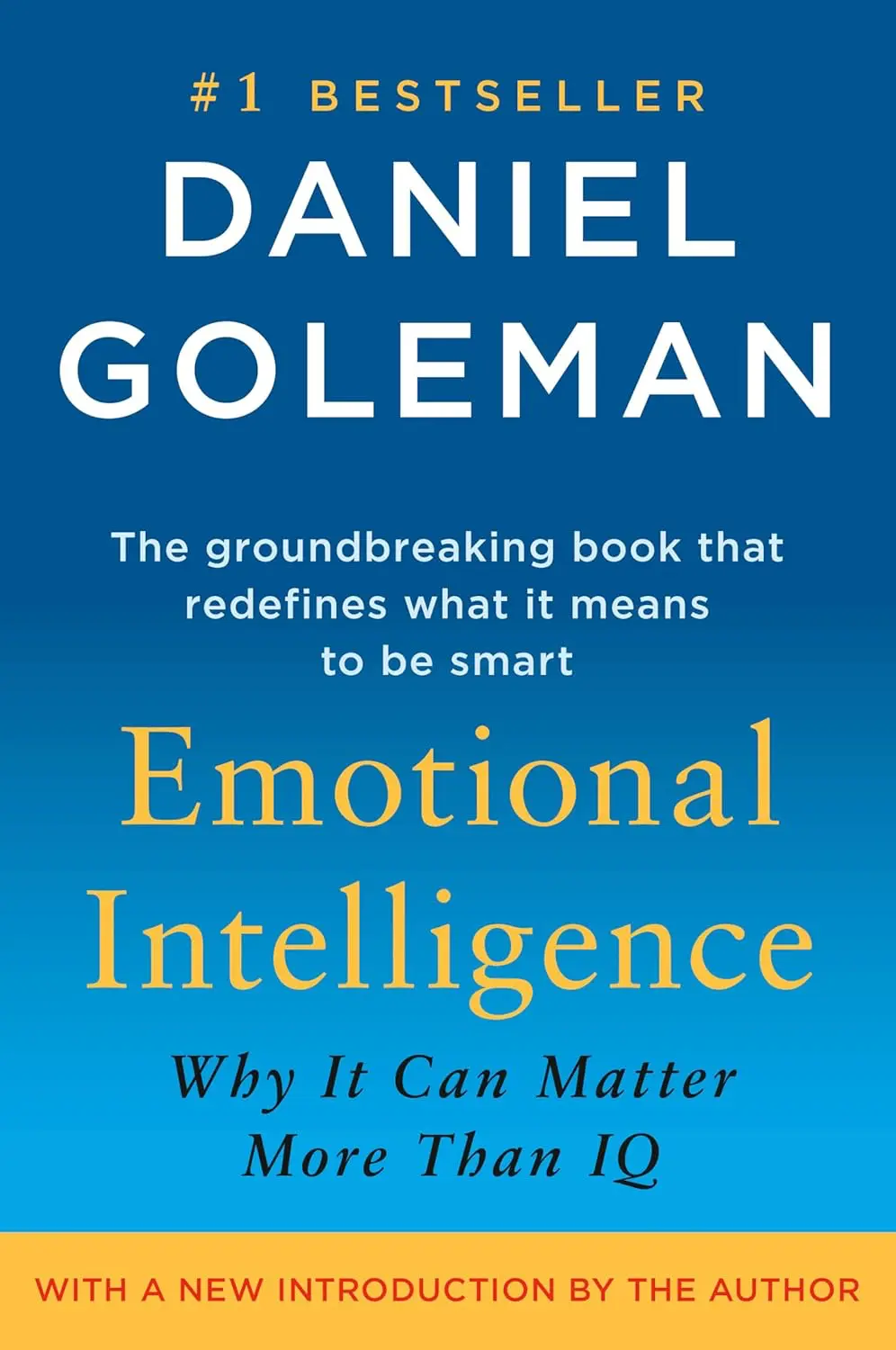
Goleman’s 1995 book introduced the term “emotional intelligence” to a mass audience and argued that EQ (emotional quotient) matters as much as IQ in determining life outcomes. The argument drew on neuroscience showing that the emotional brain processes information before the rational brain does, and that people who cannot manage their emotional responses make poor decisions regardless of how smart they are.
The book covers five components of emotional intelligence. Self-awareness means recognizing your own emotions as they happen. Self-regulation means managing those emotions rather than being controlled by them. Motivation means sustaining effort toward goals despite setbacks. Empathy means reading other people’s emotions accurately. Social skill means managing relationships effectively.
Goleman supports each component with research and real-world examples: students whose ability to delay gratification predicted SAT scores and career outcomes decades later, managers whose empathy predicted team performance, and leaders whose self-awareness allowed them to navigate crises that reactive leaders could not.
The book was written for a general audience and reads more like a magazine feature than an academic text. Goleman is a former New York Times science writer, and his skill at making research accessible shows. Some academics have criticized the book for oversimplifying the underlying research and for broadening the definition of intelligence beyond what the evidence supports. These criticisms have merit, but the practical core, that emotional skills are trainable and that they matter for professional success, has held up.
For founders, emotional intelligence affects every relationship in the business: managing cofounders, hiring, giving feedback, negotiating, and handling the stress that comes with the job. Founders with high cognitive ability but low emotional regulation make impulsive decisions, alienate team members, and burn out. The book provides a framework for understanding why these patterns occur and how to address them.
Jeff Bezos has cited emotional intelligence as a factor in Amazon’s hiring process. At about 350 pages, the book is thorough. The early chapters on brain science are the most interesting. The later chapters on education and social policy are less directly relevant to business readers.
