
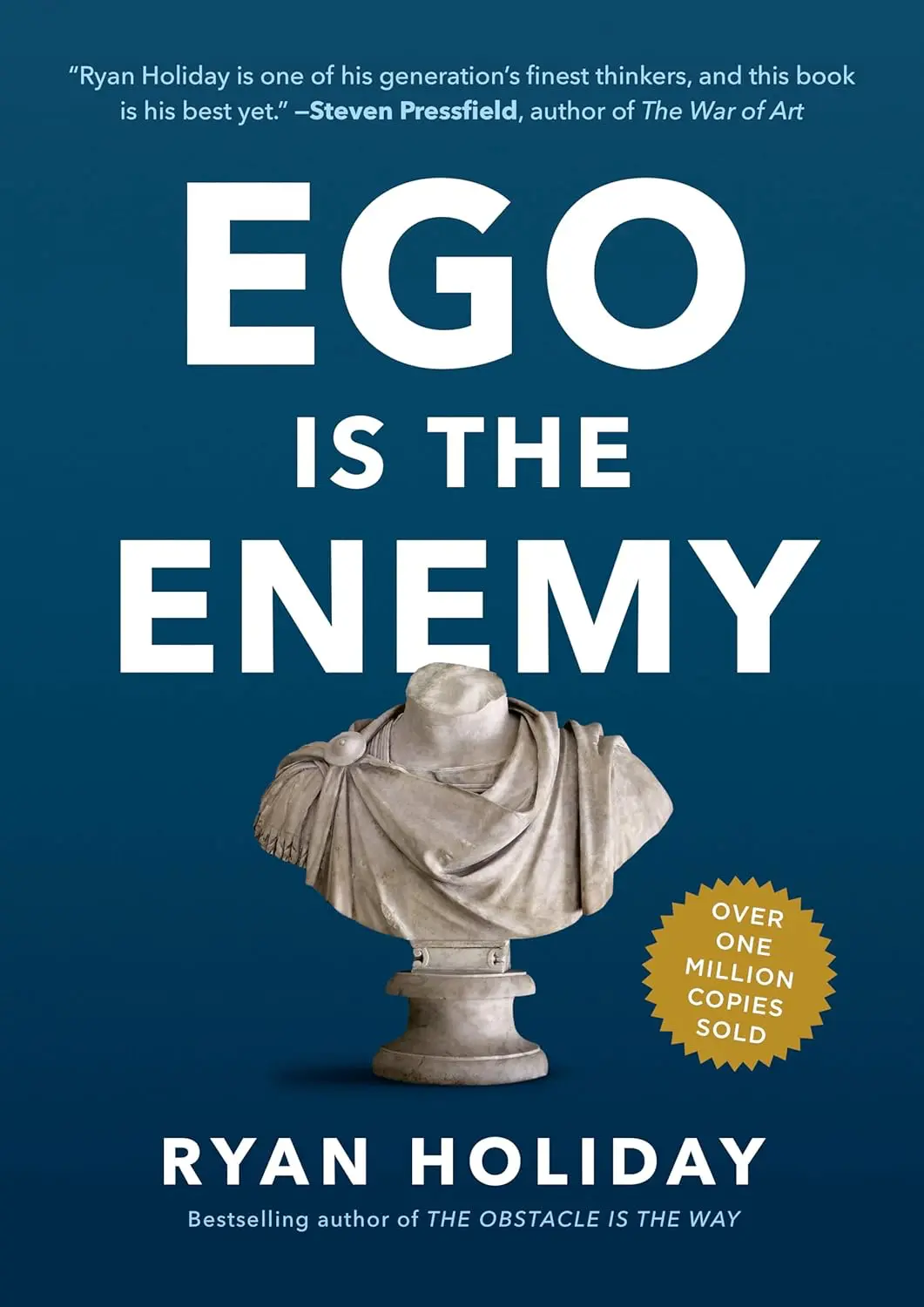
Ego Is the Enemy is organized around three phases: Aspire (when you are building toward something), Success (when you have achieved it), and Failure (when you have lost it). Holiday argues that ego, defined as an unhealthy belief in your own importance, is dangerous at every stage.
During the aspiration phase, ego makes people talk about their plans instead of executing them, seek recognition before earning it, and overestimate their readiness. During success, ego makes people stop learning, alienate the team that helped them win, and confuse luck with skill. During failure, ego prevents honest self-assessment, makes people blame others, and blocks the learning that failure is supposed to produce.
Holiday draws on figures like Genghis Khan’s adviser (who stayed effective by keeping his ego in check), the early career of George Marshall (who spent decades in obscurity doing excellent work before being recognized), and the collapse of various business leaders who let success go to their heads.
The tone is more somber than The Obstacle Is the Way. This is not a motivational book. It is a warning. Holiday is direct about the fact that ego is not something you conquer once. It is a recurring temptation that returns with every new success, every positive article written about you, every person who tells you how brilliant you are.
For founders, the applications track closely to the startup lifecycle. In the early days, ego makes you overspend on offices and branding before you have revenue. After a funding round, it makes you believe the press coverage. After a failure, it makes you blame the market instead of your execution.
Tim Ferriss, Robert Greene, and James Clear have recommended the book. At about 230 pages, it is concise. Holiday writes in short chapters with clear takeaways. The historical examples keep the book from feeling preachy, which is a risk with any book about humility. It pairs well with The Obstacle Is the Way as a one-two combination of Stoic thinking for people building things.
