
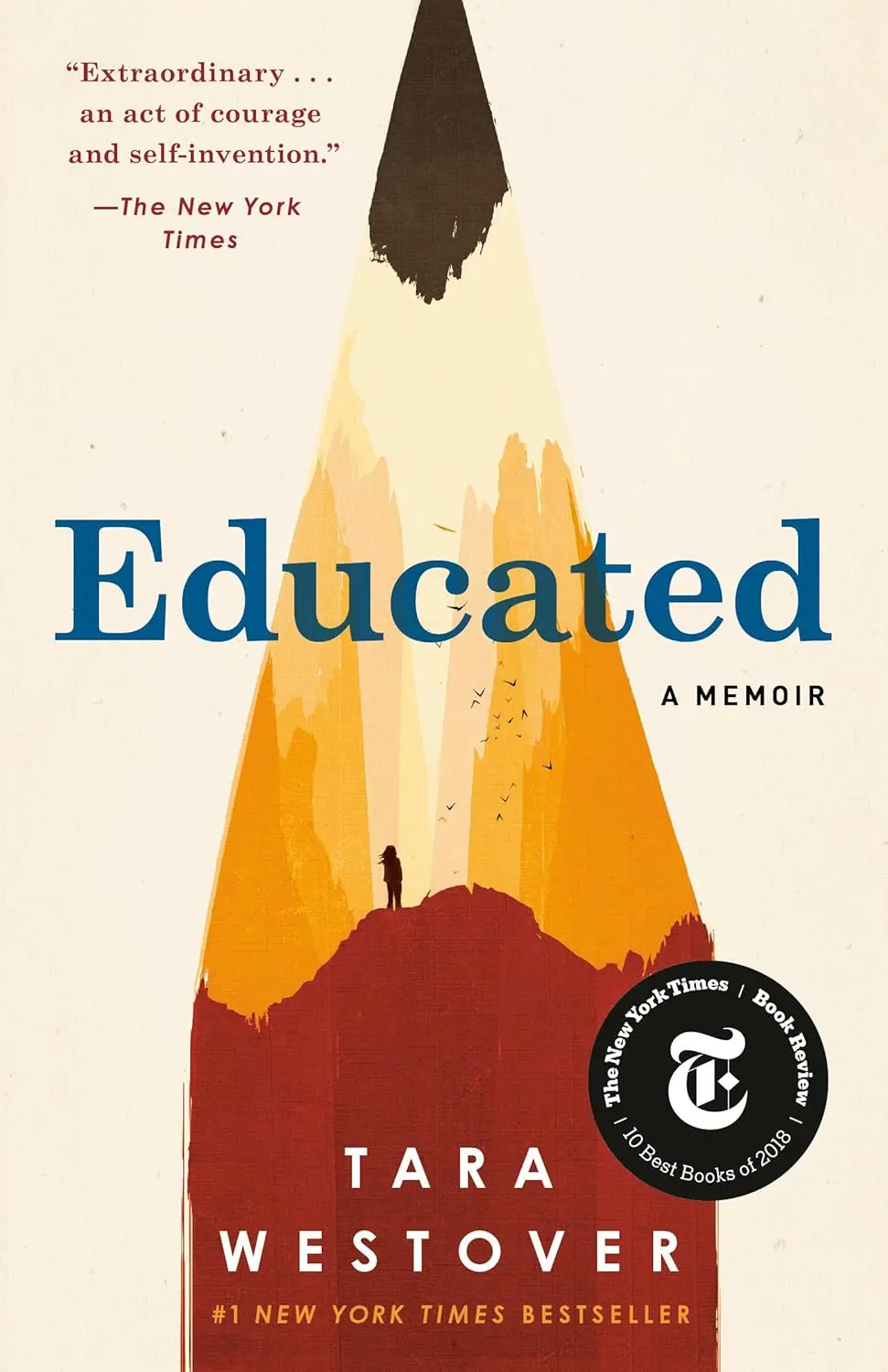
Tara Westover’s childhood was defined by isolation and danger. Her father, who she believes had untreated bipolar disorder, ran a junkyard and hoarded supplies for the end of the world. Her mother was an unlicensed midwife and herbalist. The family did not use hospitals, did not attend school, and did not have birth certificates. Westover and her siblings worked in the junkyard and suffered serious injuries, including a brother who was badly burned and another who was physically abusive.
Westover did not set foot in a classroom until she was 17, when she taught herself enough math and grammar to pass the ACT and enroll at Brigham Young University. The culture shock was extreme. She had never heard of the Holocaust. She did not know what Europe was. She describes the experience of entering a world where everything she had been taught was either wrong or incomplete.
From BYU, she went to Cambridge on a Gates scholarship, and then earned her PhD in history. But the memoir is not a straightforward triumph narrative. Each step forward created distance from her family, who viewed her education as a betrayal. Her father pressured her to come home. Her abusive brother escalated. Her parents ultimately cut contact with her, and several siblings chose the family’s version of events over hers.
What makes the book relevant beyond its specific circumstances is its treatment of identity. Westover’s question is not just “can I escape my background?” but “what happens to who I am when I do?” Building a new life required dismantling the one she grew up in, and that process was painful even when the old life was harmful.
For founders and ambitious people, the book resonates because it describes the cost of change that nobody talks about. Leaving behind a job, a city, an industry, or a worldview to pursue something new often means losing relationships, community, and the comfort of a familiar identity. Westover’s story is an extreme version of that trade-off, but the underlying dynamic is recognizable.
Bill Gates, Michelle Obama, and Barack Obama have all recommended it. The book won numerous awards and was a New York Times bestseller for years. It is well-written, propulsive, and honest. Westover does not sentimentalize her family or her own decisions. She presents the complexity of loving people who harm you, and of choosing growth when growth means loss.
