
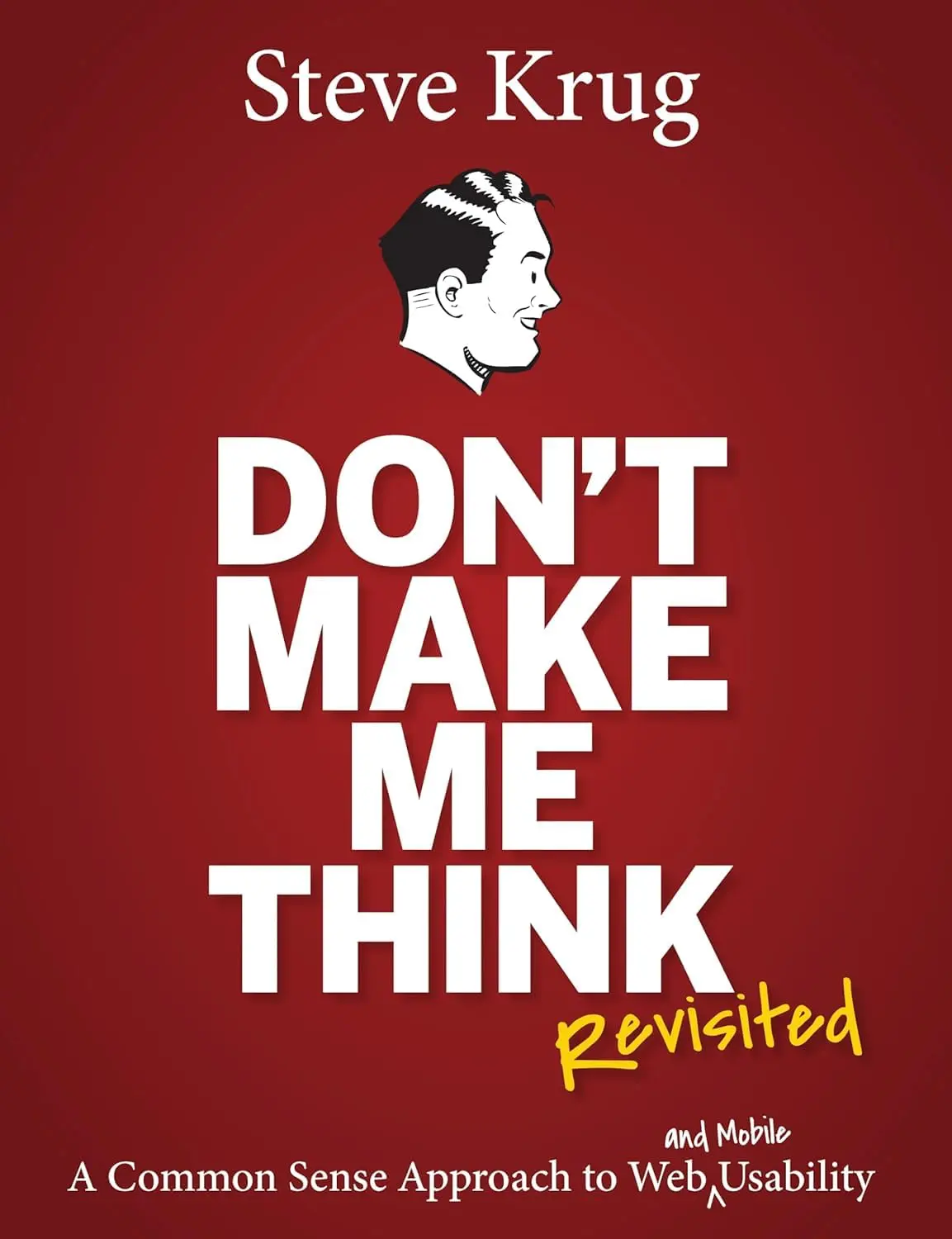
The title is the first law of usability, and the rest of the book elaborates on it. When users land on a web page, they should not have to think about where to click, what a label means, or how to accomplish their goal. Every moment of confusion is a moment where someone might leave.
Krug covers usability with a light touch and plenty of humor. He uses annotated screenshots showing good and bad design choices. He explains how users actually behave on the web (they scan, they do not read; they satisfice, they do not optimize; they muddle through, they do not figure things out). He covers navigation (make it obvious where users are and how to get where they want to go), page design (make the most important elements visually prominent), and content (shorter is almost always better).
The chapter on usability testing is the most practically useful. Krug argues that you do not need expensive labs or large sample sizes. Testing with three to five people, watching them try to accomplish specific tasks on your site, will reveal most of the major problems. He describes a testing process that takes half a day and costs almost nothing.
Krug writes the way he thinks designers should design: simply, clearly, and without unnecessary complexity. The book is about 200 pages, heavily illustrated, and can be read in an afternoon. The third edition (2014) updates examples for mobile design and responsive layouts.
For founders, especially those building web products without a dedicated designer, this book provides the minimum viable knowledge of usability. You will not become a UX expert by reading it, but you will stop making the most common mistakes, which is more than most early-stage products achieve.
The book has sold over 600,000 copies and remains the most recommended introduction to web usability. Its brevity and clarity are its greatest assets.
