
Michael Dell was twelve years old when he figured out the middleman was the problem. He got neighbors to consign their stamp collections, typed a twelve-page catalog with one finger, advertised in Linn’s Stamp Journal, and made $2,000. The lesson stuck. A few years later, he was selling newspaper subscriptions by targeting newlyweds and new homeowners instead of cold-calling random numbers. By sixteen, he was earning more than his teacher.
At nineteen, Dell started assembling and selling upgraded PCs from his dorm room at the University of Texas at Austin. The insight was straightforward: computer dealers were charging huge markups on machines configured for average buyers. If you sold directly to the customer, you could find out exactly what they needed, build it to order, and charge less. Dell dropped out of college, incorporated, and within a few years was competing head-to-head with IBM and Compaq.
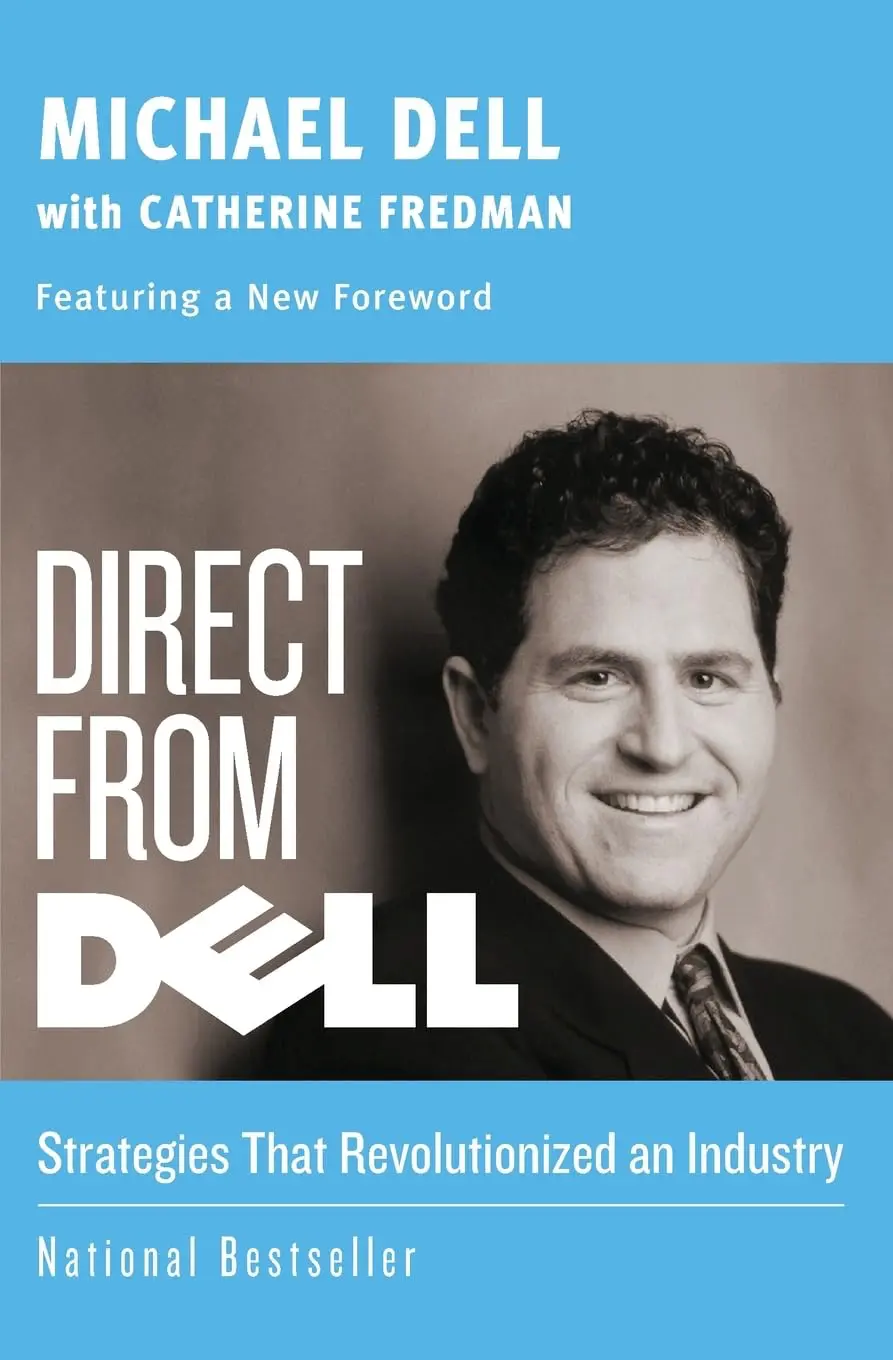
Direct from Dell covers both the founding story and the management principles that enabled the company’s growth. The direct model, which eliminated resellers and distributors, was not just a sales strategy. It was an operating system. Because Dell only built machines after receiving orders, its inventory was measured in days rather than weeks. When component prices dropped (which they did constantly in the PC business), Dell captured the savings immediately while competitors sat on warehouses full of parts purchased at yesterday’s prices. At one point Dell’s inventory was down to about eight days of supply while competitors were carrying forty or more.
The book describes how Dell structured its supplier relationships, how it segmented customers, and how it handled the transition to selling online in the late 1990s. Dell was one of the first major companies to use the internet as a primary sales channel, reaching $1 million per day in online revenue early in the Web’s commercial life.
Dell is candid about mistakes too. He describes periods of growing too fast, hiring the wrong people, and chasing product lines that did not fit the direct model. The chapter on Dell’s brief and unsuccessful attempt to sell through retail stores provides a useful counterexample: it violated the core of what made the company work, and they pulled back quickly.
Andrew Grove, Intel’s chairman, endorsed the book. The writing is plain and operational, heavy on specifics and light on philosophy. Published in 1999, the book captures Dell Computer at its peak growth phase. Some of the technology details are dated now, but the underlying logic of the direct model, build to order, minimize inventory, and own the customer relationship, remains a powerful framework for anyone building a business where eliminating friction between producer and buyer creates a structural advantage.
