
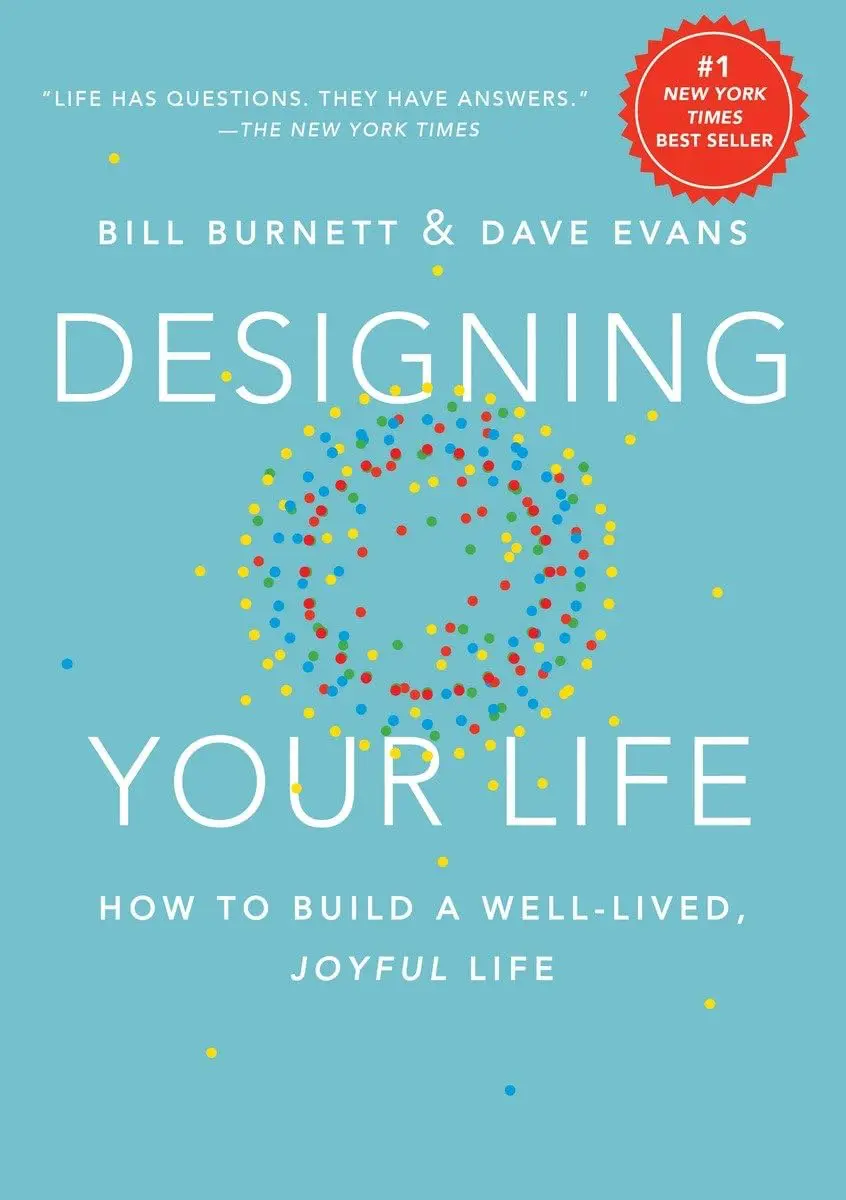
Burnett and Evans teach a course at Stanford called “Designing Your Life” that has become one of the most popular classes on campus. The book adapts that course for a general audience. The premise is that the same design thinking principles used to create products (empathy, ideation, prototyping, testing) can be applied to designing a life.
The book starts by attacking “dysfunctional beliefs” about career planning. The idea that you should find your one true passion. The idea that you should have a five-year plan. The idea that if you just think hard enough, the answer will appear. Burnett and Evans argue that these beliefs cause more paralysis than progress.
Instead, they propose a process. Start with a “workview” (what you believe about work) and a “lifeview” (what you believe about life) and look for alignment or tension between them. Use “energy engagement” logging to track which activities actually give you energy versus which drain it. Generate multiple “Odyssey Plans,” which are three different possible life paths for the next five years, rather than fixating on finding the one right answer.
The prototyping chapter is the most distinctive. Rather than making a big bet on a career change, the book recommends small experiments: conversations with people doing the work you are considering, short volunteer stints, side projects, or even just spending a day shadowing someone in a different field. These prototypes give you real data about whether a path suits you before you commit to it.
For founders, the book is most useful during transition periods: before starting a company, during a pivot, or when considering what comes after a exit or a failure. The design thinking approach reduces the pressure of making the “right” decision by reframing it as an experiment.
At about 250 pages, the book includes exercises at the end of each chapter. The tone is encouraging without being saccharine. Burnett and Evans write like professors who have watched thousands of students go through this process and know where people get stuck.
