
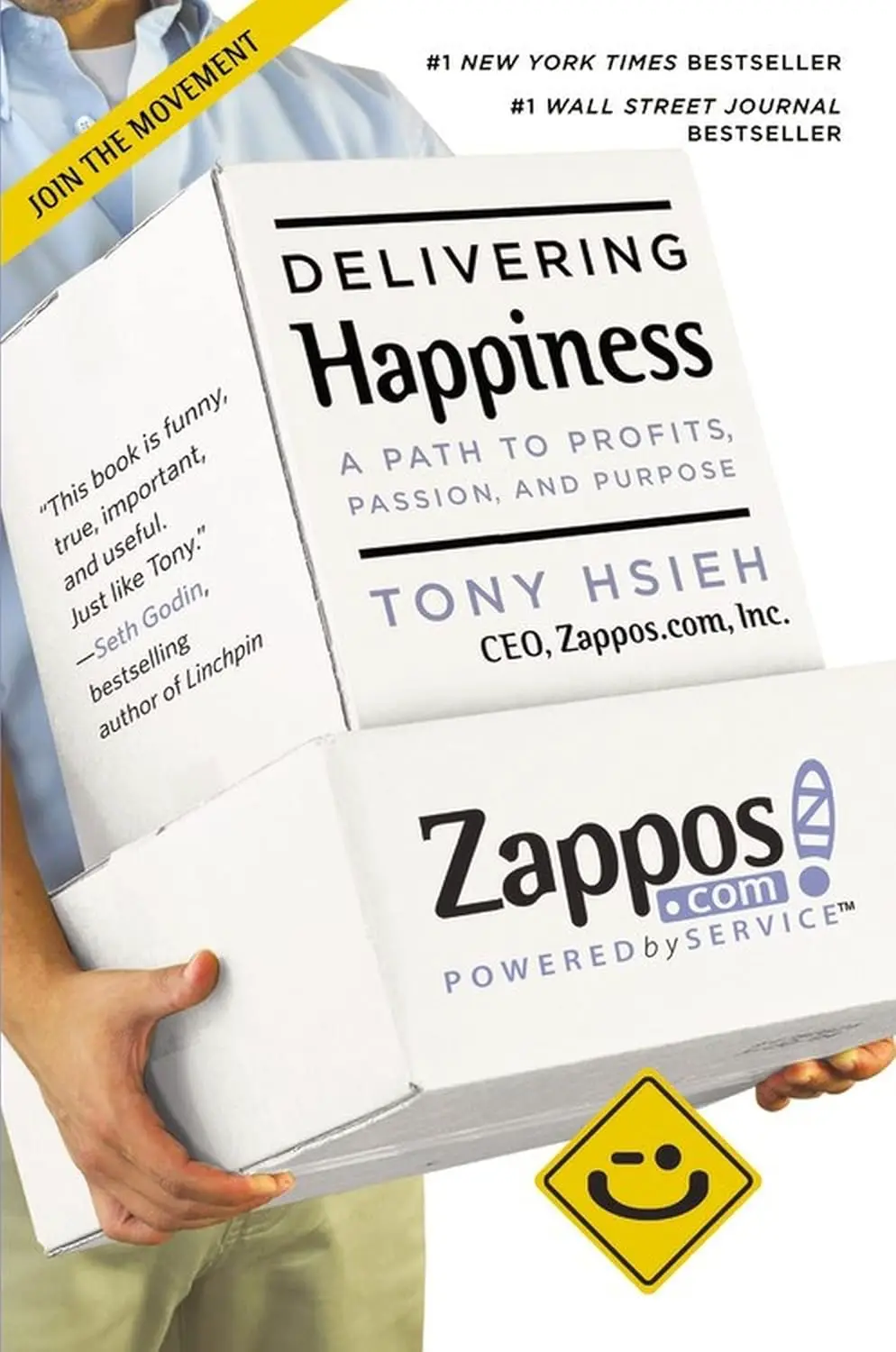
Delivering Happiness is partly autobiography, partly business book, and partly a manifesto for building companies around happiness rather than just profit. Hsieh starts with his childhood entrepreneurial experiments (a worm farm, a button-making business, a pizza operation in his college dorm) and traces his path through LinkExchange (which he sold to Microsoft for $265 million), a period as a venture investor, and eventually Zappos.
The Zappos section is the heart of the book. Hsieh took over as CEO when the company was close to running out of cash. He moved the entire company from San Francisco to Las Vegas, partly to reduce costs and partly because he believed the move would strengthen the culture. He bet the company on customer service, offering free shipping, free returns, and a 365-day return policy when competitors offered none of these.
The most famous Zappos practice is the offer new hires receive after their first week of training: $2,000 to quit. The reasoning is that anyone who takes the money was not committed enough to stay, and it is better to find out now than six months later. In practice, very few people take the offer, but the fact that it exists sends a signal about the kind of company Zappos is.
Hsieh also covers the science of happiness, drawing on positive psychology research to argue that companies that optimize for employee and customer happiness outperform those that optimize only for financial metrics. The link is direct: happy employees deliver better service, which creates happy customers, which creates more revenue, which creates more resources to invest in employees and customers.
Hsieh died in 2020 at age 46, which gives the book’s emphasis on meaning and purpose a weight it did not have when it was first published.
For founders, the most useful sections are about building culture deliberately rather than letting it happen by accident, and about using customer service as a competitive weapon rather than a cost center.
At about 250 pages, the book is breezy and personal. Hsieh’s writing style is conversational and self-deprecating. Brian Chesky and Howard Schultz have both cited Zappos as a cultural influence on their own companies.
