
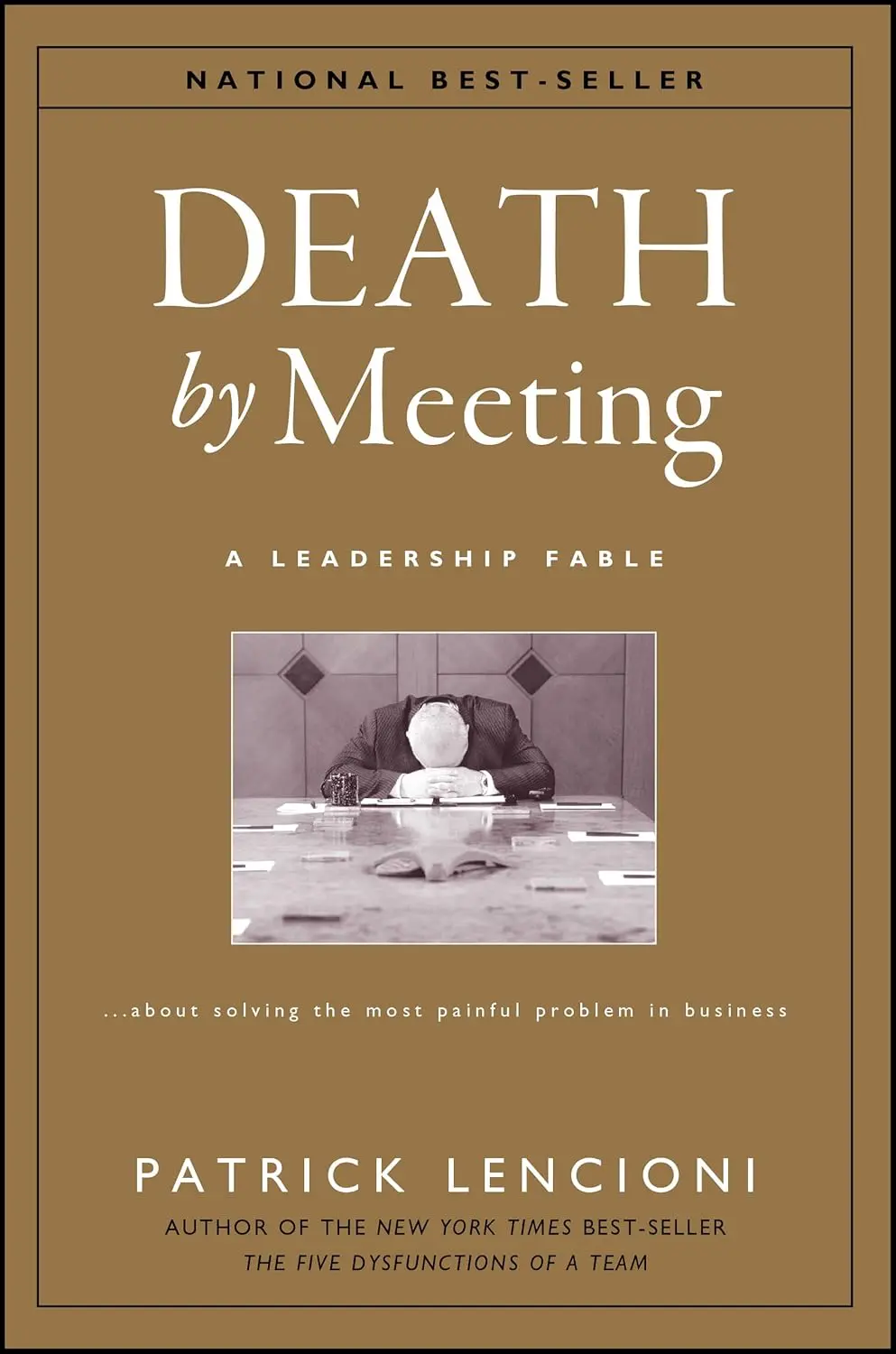
Death by Meeting is Patrick Lencioni’s attempt to fix what he considers the most underestimated problem in business: bad meetings. The book is structured as a fable, following a CEO whose company is struggling partly because his team dreads every meeting they attend. An unlikely advisor shows up and suggests an approach that feels counterintuitive: the solution to bad meetings is not fewer meetings but better-designed ones.
Lencioni’s framework breaks meetings into four types. The daily check-in is five minutes, standing up, no sitting down, just a quick sync on the day’s priorities. The weekly tactical is 45 to 90 minutes, focused on current activities and short-term issues, with a real-time agenda built at the start. The monthly strategic is two to four hours, dedicated to one or two big topics that need real debate. And the quarterly off-site is one to two days, covering the bigger picture stuff like competitive threats, team health, and strategy.
The reasoning behind the framework is simple. Most meeting frustration comes from mixing different types of conversation into one session. When you try to handle daily logistics, weekly tactics, and long-term strategy in the same hour-long meeting, nothing gets the attention it deserves. Separating them by type gives each conversation the right amount of time and the right kind of energy.
For founders, the practical value is immediate. Most startups run terrible meetings by default because nobody takes the time to think about meeting structure. Lencioni’s point that meetings lack drama, meaning there’s no real conflict or tension allowed into the room, is especially relevant for founders who avoid difficult conversations with their teams.
The fable format won’t appeal to everyone. Some readers find the fictional storyline slow or contrived. But the model section at the end is concise and directly actionable. If you’re running more than a few meetings a week and most of them feel like a waste of time, this book offers a fix that takes about an afternoon to implement.
