
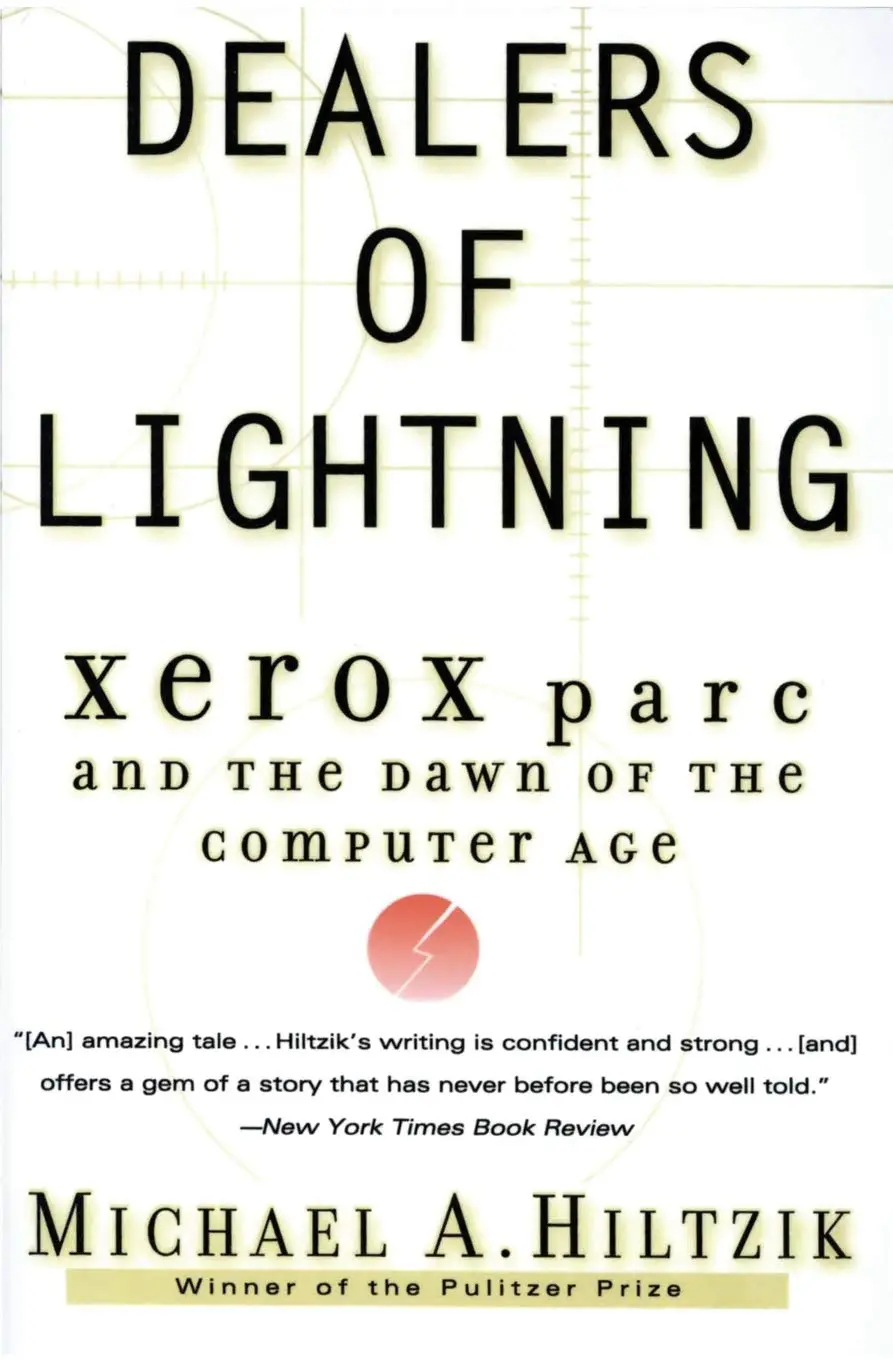
Xerox PARC (Palo Alto Research Center) is one of the most productive and most frustrating stories in technology history. In the 1970s, a small group of researchers at PARC built prototypes of nearly every technology that would define the personal computer revolution: the Alto (a desktop computer with a graphical interface), Ethernet (local area networking), the laser printer, WYSIWYG text editing, and Smalltalk (the first object-oriented programming language).
Steve Jobs visited PARC in 1979 and saw the Alto’s graphical interface. He immediately recognized what Xerox had and built the Macintosh around similar concepts. Microsoft followed with Windows. Ethernet became the standard for local networks. Laser printers became a billion-dollar market. Xerox commercialized the laser printer but missed nearly everything else.
Hiltzik traces why this happened. Xerox’s corporate headquarters was in Connecticut, 3,000 miles from PARC in California. The executives who controlled budgets were copier salesmen who did not understand what the researchers were building. Internal politics pitted PARC against the company’s existing business units. The researchers were brilliant but sometimes arrogant, and they did not always make the case for their work in terms that executives could act on.
The book profiles the key researchers: Bob Taylor (who managed the lab with an unusual collaborative style), Alan Kay (who envisioned personal computing as a medium rather than a tool), Chuck Thacker (who designed the Alto), and Butler Lampson (who contributed to nearly every major project). Their stories are interesting individually and collectively.
For founders, the lesson is about the gap between invention and commercialization. Having the best technology is not enough. You also need organizational alignment, commercial judgment, and the ability to bring a product to market before someone else does. Every startup that has been outexecuted by a faster competitor despite having better technology is living a version of the Xerox PARC story.
At about 450 pages, the book is detailed. Hiltzik is a Los Angeles Times journalist, and his reporting is thorough. The writing is engaging, though some readers may find the internal politics sections slower than the technology sections.
