
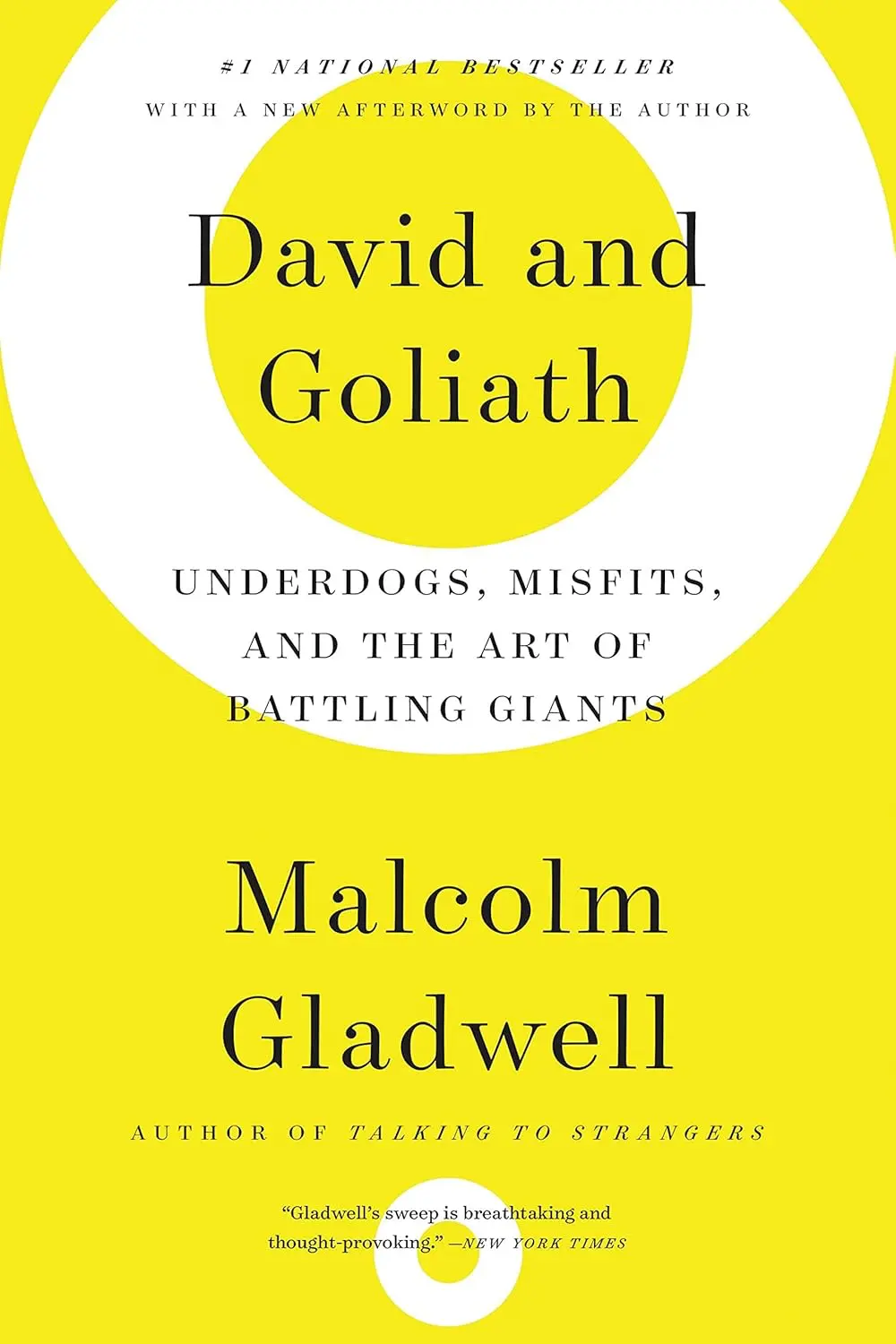
David and Goliath starts with the story you think you know and turns it on its head. Gladwell argues that David was never really the underdog. As an expert slinger going up against a slow, possibly vision-impaired giant, David had real tactical advantages that only look like disadvantages if you accept the conventional framing of the fight.
That inversion is the premise for the rest of the book. Gladwell examines situations across history, education, business, and civil rights where the supposed disadvantage turned out to be the source of strength. He profiles dyslexic entrepreneurs who succeeded because, not despite, their disability, arguing that struggling to read forced them to develop skills in delegation, memorization, and persuasion that served them well later. He looks at students who chose less prestigious universities and ended up more confident and successful than peers who went to elite schools, because they were big fish in small ponds rather than the reverse.
The book also covers darker territory. Gladwell examines how the civil rights movement in Birmingham used Bull Connor’s overreaction to generate sympathy and support, and how the experience of losing a parent in childhood, while traumatic, sometimes produces an unusual resilience in survivors.
For founders and entrepreneurs, the book’s core message is directly relevant. Most startups are underdogs by definition, competing against companies with more money, more people, and more brand recognition. Gladwell’s argument is that this position, if approached correctly, is not the disadvantage it appears to be. Constraints force creativity. Limited resources force focus. Being underestimated gives you room to maneuver.
The book has been criticized for cherry-picking examples and oversimplifying complex situations, and some of those criticisms are fair. But as a framework for rethinking what counts as an advantage, especially when you are the smaller player in any competitive situation, it offers a genuinely useful shift in perspective.
