
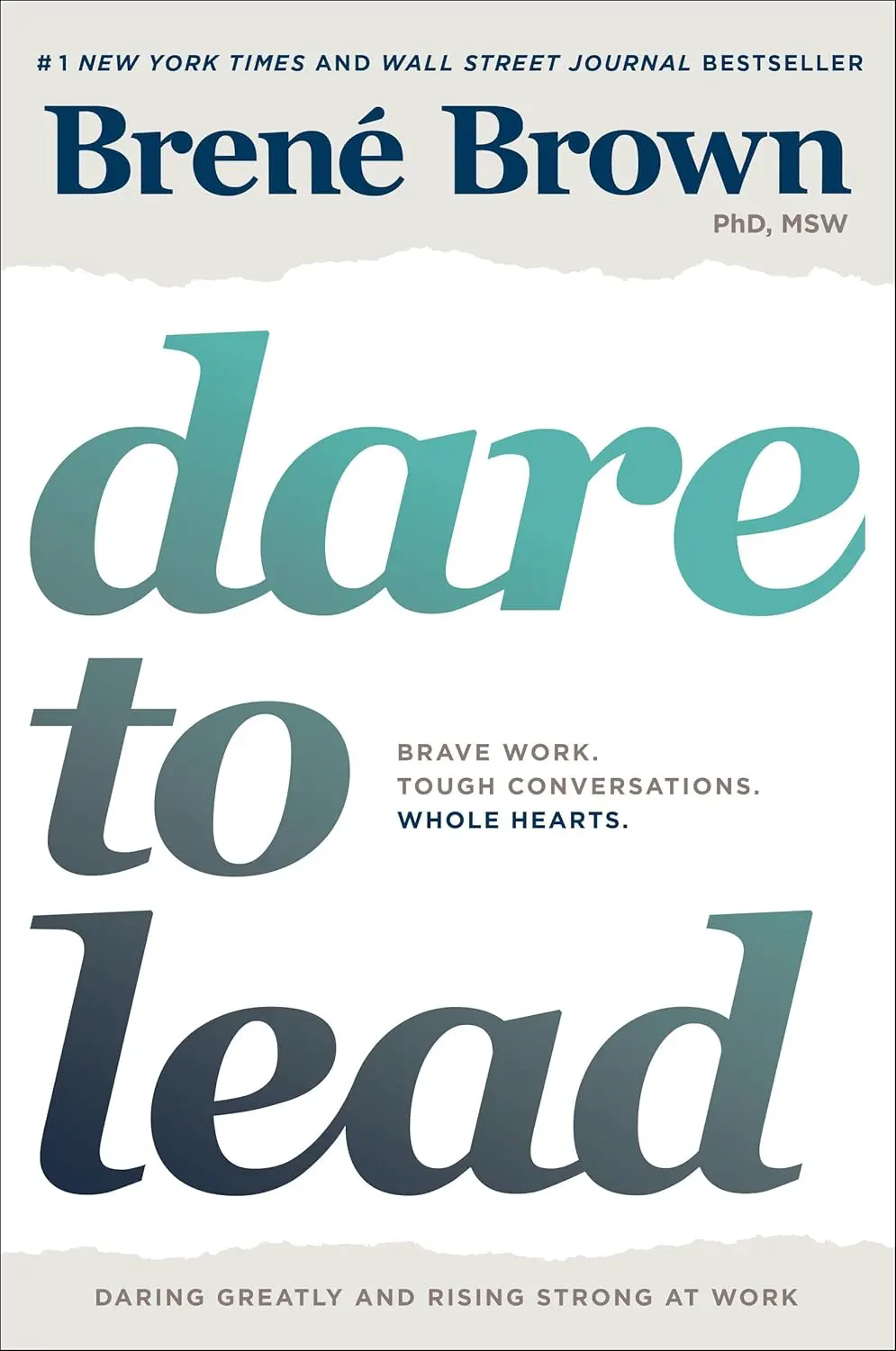
Dare to Lead is Brown’s most directly applicable book for business readers. Where Daring Greatly introduced the research and Rising Strong covered the recovery process, this book translates the entire framework into specific leadership behaviors.
Brown organizes the book around four skill sets. Rumbling with vulnerability: having difficult conversations, giving and receiving feedback, and making decisions without certainty. Living into values: identifying your two core values and using them as decision-making anchors rather than treating values as wall decorations. Braving trust: building trust through the BRAVING inventory (Boundaries, Reliability, Accountability, Vault, Integrity, Nonjudgment, Generosity). Learning to rise: processing failure and disappointment using the Rising Strong framework.
The BRAVING trust inventory is the most immediately useful tool. Brown breaks trust into seven specific, measurable components. You can assess whether someone is trustworthy by checking each component: do they respect boundaries? Do they do what they say they will do? Do they own their mistakes? Do they keep confidences? This specificity turns an abstract concept (“I don’t trust this person”) into a diagnostic (“specifically, they don’t keep confidences”).
Brown also covers the relationship between armor (the defenses people use to avoid vulnerability) and leadership effectiveness. Leaders who wear armor (cynicism, perfectionism, being the knower rather than the learner) create cultures where people also wear armor. Leaders who model vulnerability (admitting uncertainty, asking for help, acknowledging mistakes) create cultures where honest work is possible.
For founders, every chapter addresses a real problem. How do you give feedback to a cofounder without damaging the relationship? How do you build a culture where people flag problems early? How do you make decisions when the data is incomplete? Brown provides frameworks, not formulas, which is the right level of guidance for situations that vary by context.
At about 320 pages, the book is well-organized. The writing is clear, direct, and avoids both academic jargon and motivational platitudes. It pairs well with Radical Candor for a complete picture of how to lead honestly.
