
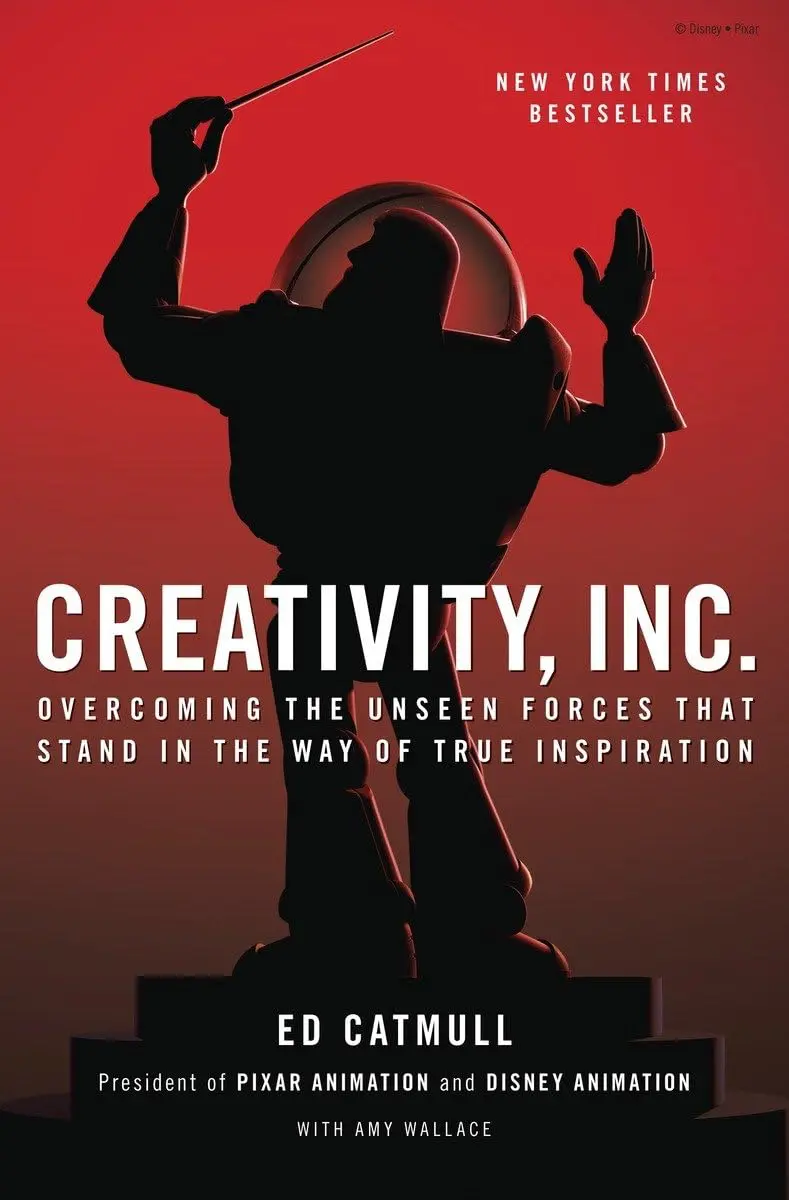
Ed Catmull cofounded Pixar in 1986 and spent decades trying to solve a problem: how do you build an organization that produces creative work consistently, not just once? Creativity, Inc. is his attempt to write down what he learned.
The book opens with Catmull’s own story, from his childhood ambition to make the first computer-animated film to the founding of Pixar and its early years (when the company nearly went under multiple times before Toy Story was released in 1995). The historical sections are interesting on their own, covering Catmull’s relationships with George Lucas, Steve Jobs, and John Lasseter.
But the core of the book is about organizational culture. Catmull identifies what he calls “the unseen forces” that prevent organizations from producing their best work: fear of failure, hierarchies that suppress honest feedback, short-term thinking that kills long-term creativity, and the natural tendency of processes to calcify into bureaucracy.
His solution at Pixar was the Braintrust, a group of experienced directors and storytellers who review every film during production and give candid feedback. The critical rule: the Braintrust has no authority. The director is free to ignore everything. This separation of feedback from decision-making authority is what allows the feedback to be honest. Nobody is protecting their ego, because nobody is losing power by speaking up.
Catmull also writes about Pixar’s relationship with failure. Every Pixar film starts bad. The early versions of Toy Story, Finding Nemo, and Up were all, by his account, terrible. The job of the creative process is to go from terrible to good, and that requires a culture where people are comfortable showing work that is not finished and accepting criticism without defensiveness.
For founders, the lessons apply beyond creative industries. Any company that depends on people thinking clearly and sharing honest feedback faces the same challenges Catmull describes. The section on how success breeds complacency, and how organizations must actively fight their own tendency toward self-satisfaction, is relevant to any growing company.
The book is well-written, avoids management cliches, and includes enough specific stories to keep abstract ideas grounded. The 2014 edition was updated in 2023 with additional reflections after the Disney acquisition of Pixar.
