
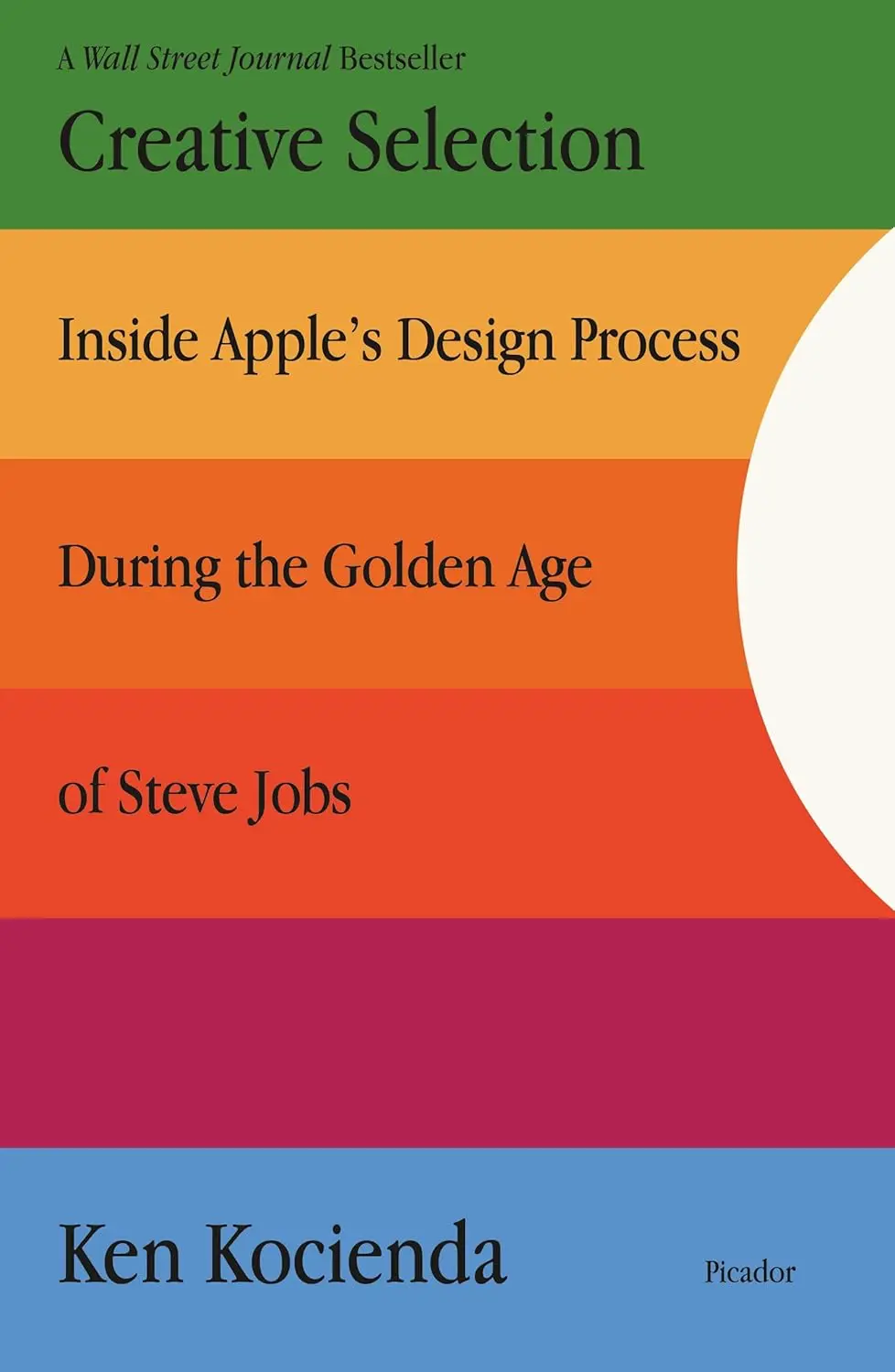
Creative Selection is an insider account of how software was built at Apple during the Steve Jobs era, written by Ken Kocienda, who spent 15 years as a principal engineer working on Safari, the iPhone, iPad, and Apple Watch.
The book’s central idea is the process Kocienda calls “creative selection,” which is essentially a demo-driven approach to product development. Instead of writing long specification documents or running focus groups, Apple engineers built working prototypes and showed them to progressively senior people. Feedback was immediate. If something worked, you kept going. If it didn’t, you changed direction fast. The highest-stakes version of this was the demo for Steve Jobs, and Kocienda describes several of these in detail.
The most gripping section covers the development of the iPhone keyboard. Typing on a glass screen with no physical keys was one of the biggest technical risks of the original iPhone, and Kocienda was the engineer responsible for making it work. He walks through the process of trying dozens of different approaches, from a miniaturized QWERTY layout to entirely new input methods, and explains how he landed on the autocorrection system that made touch-screen typing viable.
What makes the book useful for founders is how concrete it is about the relationship between process and quality. There is no talk of innovation frameworks or design thinking methodologies. The lesson is simpler: build something, show it to someone whose taste you trust, listen to the feedback, and improve it. Repeat that loop hundreds of times. The work is unglamorous and detail-obsessed, and that is exactly what produces good products.
The book also gives a rare look at how Apple managed secrecy and small-team dynamics. Kocienda describes working in locked rooms, being unable to tell colleagues what he was building, and the intensity of operating inside a company where the stakes for every product decision were enormous. It is a readable, first-person account that avoids both the mythologizing and the cynicism that tend to surround writing about Apple.
