
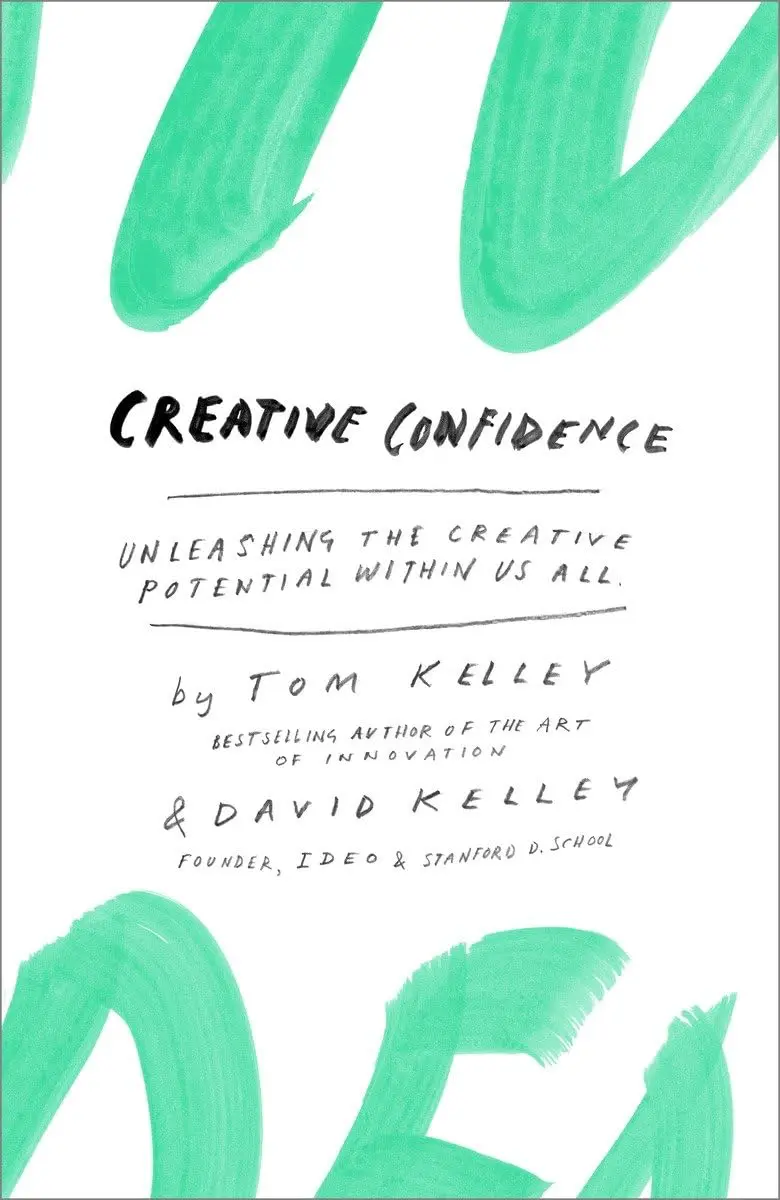
David Kelley founded IDEO, one of the most influential design firms in the world (they designed Apple’s first mouse, among thousands of other products). Tom Kelley has written about IDEO’s methods for years. Together, they wrote this book to address a specific problem: most adults believe they are not creative, and this belief becomes self-fulfilling.
The Kelleys trace the loss of creative confidence to childhood. Kids naturally create, experiment, and make things without worrying about quality. At some point, usually around third or fourth grade, they start comparing their work to others and conclude they are “not creative.” This belief calcifies into adulthood, where people in business roles routinely say “I’m not the creative type” and defer all creative work to specialists.
The book presents a process for recovering creative confidence. Start with small challenges that produce quick visible results (rearranging a workspace, making a simple prototype). Build tolerance for ambiguity by working on problems without clear solutions. Practice “guided mastery,” which means taking progressively larger creative risks with support.
The IDEO design process is woven throughout: empathize with the user, define the problem, ideate broadly, prototype quickly, and test with real people. The Kelleys argue this process works for any problem, not just product design. It works for business strategy, organizational change, and personal challenges.
For founders, the book is useful in two ways. First, it helps founders who do not consider themselves creative to start thinking differently about their own capacity for original ideas. Second, it provides a framework for building creative confidence in teams, which matters when you need people to take risks, propose unconventional solutions, and challenge existing approaches.
At about 290 pages, the book is accessible and encouraging. The Kelleys write in a warm, supportive tone that matches their message. The examples from IDEO projects are specific and interesting. The book works best for readers who have internalized the belief that they are “not creative” and want to challenge it.
