
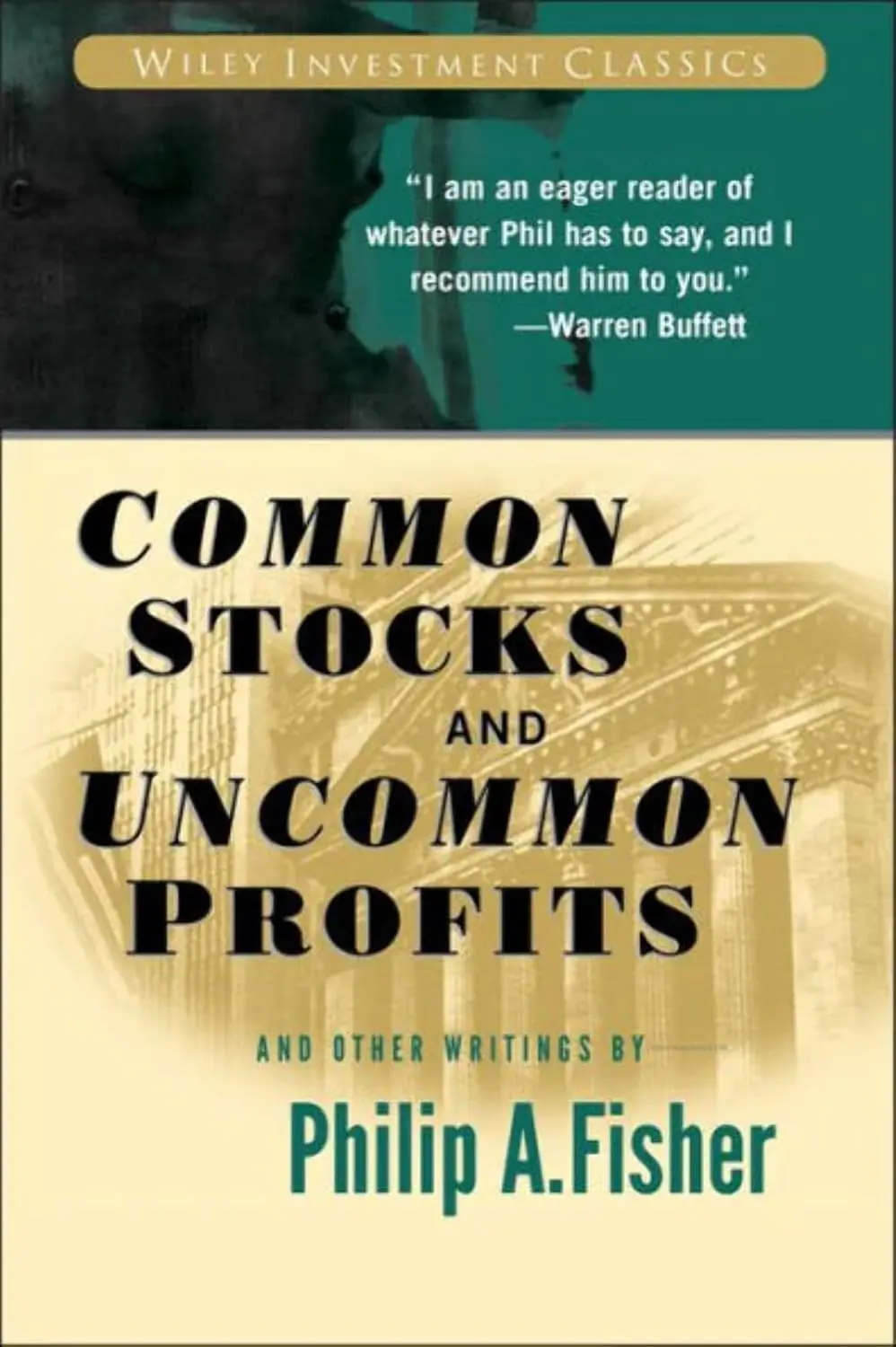
Fisher published Common Stocks and Uncommon Profits in 1958, and it is one of the few investment books that Warren Buffett credits alongside Benjamin Graham’s work. Where Graham focused on quantitative analysis (buying statistically cheap stocks), Fisher focused on qualitative analysis (buying excellent companies at reasonable prices and holding them for a long time).
Fisher’s method centers on 15 points to look for in a stock. Does the company have products with enough market potential to allow significant sales growth for several years? Does management have a determination to develop new products or processes? How effective is the company’s research and development relative to its size? Does the company have an above-average sales organization? Does the company have a worthwhile profit margin? What is management doing to maintain or improve profit margins?
The “scuttlebutt” method is Fisher’s most distinctive contribution. Before investing, he talked to customers (are they satisfied? would they switch to a competitor?), competitors (which companies do they fear?), suppliers (does the company pay its bills?), former employees (what was the culture like?), and industry experts. This qualitative research, which Fisher considered more valuable than financial statements alone, gave him a picture of the company that numbers could not capture.
Fisher also argued for concentrated portfolios. Rather than diversifying across dozens of stocks, he preferred owning a few companies that he understood deeply and holding them through market fluctuations. His holding period was measured in decades, not quarters. He bought Motorola in 1955 and held it until his death in 2004.
For founders, Fisher’s scuttlebutt method maps directly onto customer discovery, competitive analysis, and due diligence. The habit of triangulating information from multiple sources rather than relying on a single data point is useful whether you are investing in stocks or evaluating a market opportunity.
Warren Buffett has said his investment approach is 85% Graham and 15% Fisher. Charlie Munger credits Fisher with pushing Buffett toward buying great companies rather than just cheap ones. At about 290 pages, the book is accessible. Fisher writes clearly, and the 15 points provide a structured checklist for evaluating any business.
