
Business Model Generation is built around a single tool: the Business Model Canvas. The canvas is a one-page template divided into nine building blocks that describe how a company creates, delivers, and captures value. The blocks are: Customer Segments, Value Propositions, Channels, Customer Relationships, Revenue Streams, Key Resources, Key Activities, Key Partnerships, and Cost Structure.
The power of the canvas is that it forces you to see the entire business model at once, rather than hiding assumptions in a 30-page business plan that nobody reads after it is written. Each block connects to the others: your value proposition must match your customer segments, your channels must reach those segments affordably, and your revenue streams must cover your cost structure. When you lay this out visually, gaps and contradictions become obvious.
The book walks through each block in detail, with examples from companies like Apple, Skype, Nespresso, and Lego. It also covers business model patterns (freemium, long tail, multi-sided platforms, unbundling), techniques for designing and testing new models, and methods for evaluating existing ones.
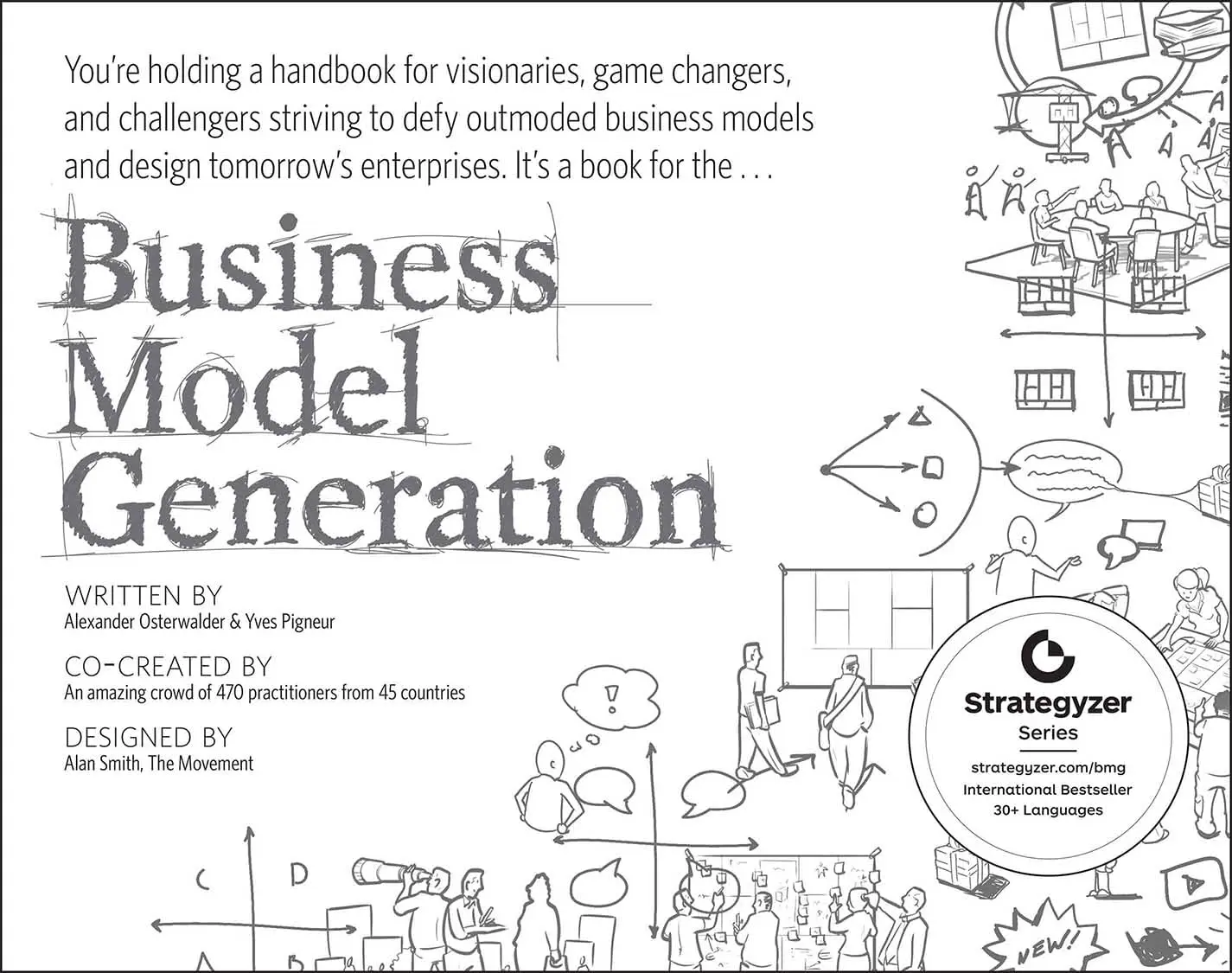
The format of the book is unusual. It is a large-format, heavily illustrated, visually designed volume that looks more like a design manual than a traditional business book. This was intentional. Osterwalder and Pigneur wanted the book itself to model the kind of visual, collaborative thinking they advocate.
For founders, the Business Model Canvas is useful at every stage. In the early days, it helps you articulate assumptions quickly so you can test them. As the company grows, it helps you see how changes to one part of the business affect the rest. It is also a communication tool: you can explain your entire business model to an investor or partner in minutes using the canvas.
The book was co-created with contributions from 470 practitioners in 45 countries. Steve Blank and Eric Ries have both recommended it as a companion to lean startup methodology. At about 280 pages, most of the content is visual and can be absorbed quickly. The Business Model Canvas has since become one of the most widely used strategic tools in entrepreneurship education.
