
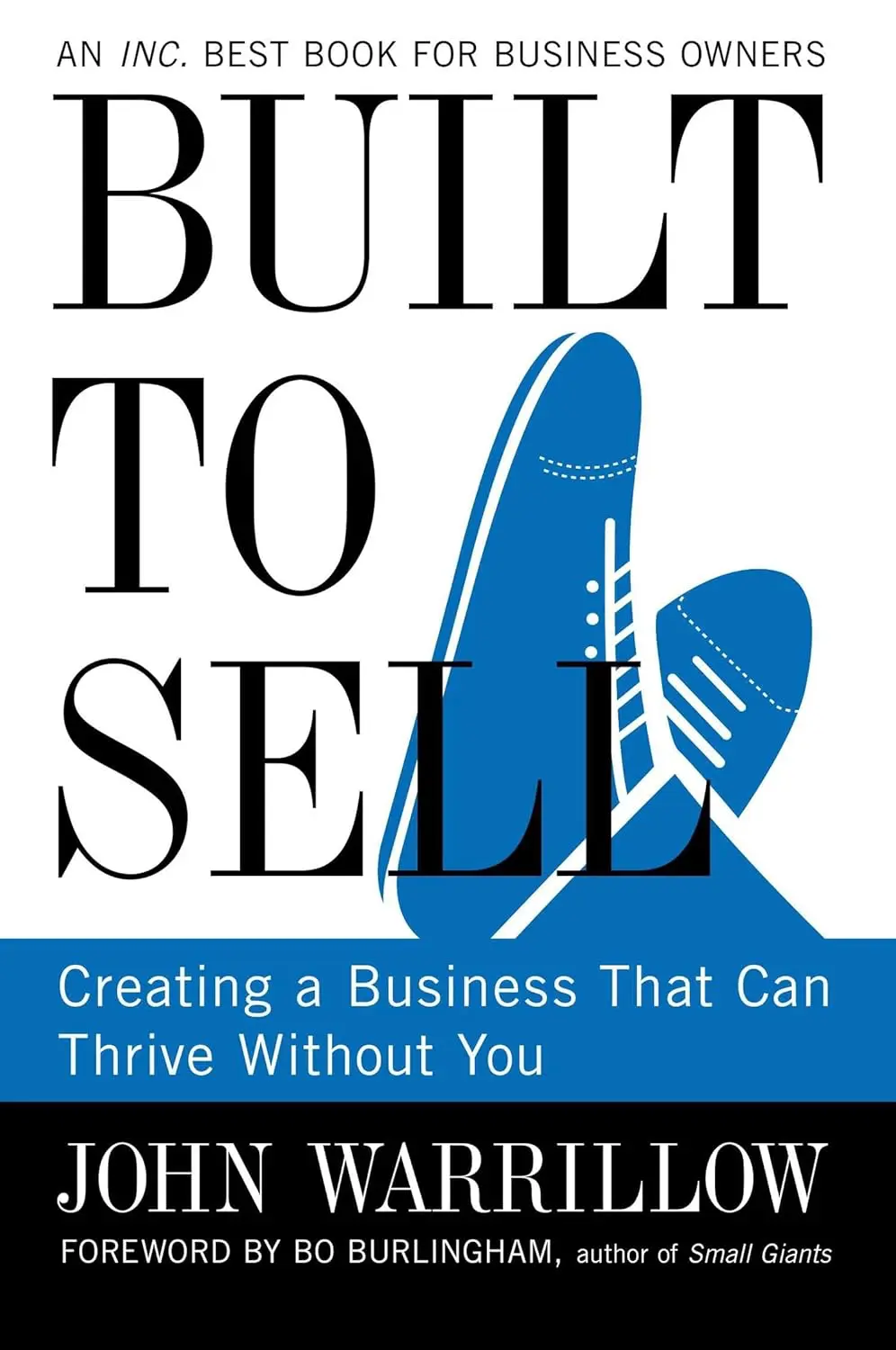
Built to Sell follows Alex Stapleton, a fictional advertising agency owner who realizes his company is worthless without him. Every client relationship runs through Alex. Every proposal requires his input. If he stops working, revenue stops flowing. He has built a job, not a business.
Alex’s mentor, Ted, walks him through a transformation. The steps include: specializing in one service instead of offering everything, creating a repeatable process with a brand name, hiring salespeople to sell the process so it is not dependent on Alex’s personal relationships, and building a management team that can operate without the founder.
The fictional format keeps the book engaging, but the business principles are specific and actionable. Warrillow identifies the features that make a business attractive to acquirers: recurring revenue, a diversified customer base (no single client representing more than 15% of revenue), a standardized process, and a management team that does not need the founder.
The book also covers what to avoid during a sale process: taking on too much debt, giving away equity to early employees without vesting schedules, and negotiating earnout structures that trap you in the business for years after the sale.
For founders, Built to Sell is relevant even if you never plan to sell. Building a company that can run without you is the same as building a company that scales. The disciplines Warrillow describes, standardizing processes, reducing owner dependence, building a management layer, are the same ones that separate a one-person hustle from a real business.
Alex Hormozi and Rob Walling have recommended it. At about 180 pages, the book is short and reads quickly because of the story format. The principles apply most directly to service businesses, agencies, and consulting firms, but the underlying ideas about owner dependence and business value apply broadly.
