
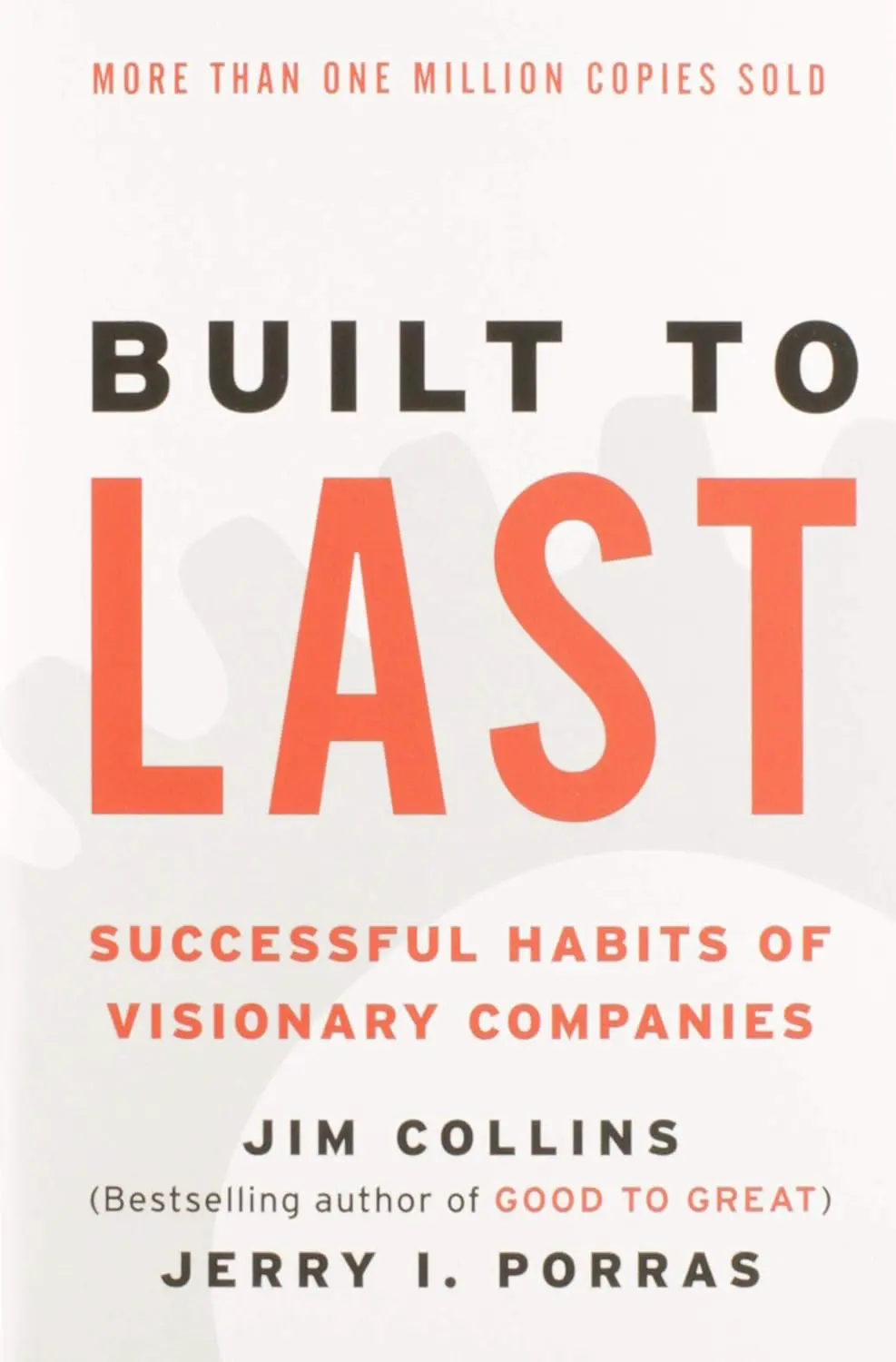
Built to Last was the predecessor to Good to Great, and it asks a different question: what makes a company not just successful but consistently successful over 50+ years? Collins and Porras selected 18 “visionary companies” (including 3M, Disney, Sony, Walmart, and Hewlett-Packard) and compared each to a close competitor that did not achieve the same long-term performance.
Several findings challenged conventional wisdom. Visionary companies did not necessarily start with a great idea. Many began with false starts, failed products, or no clear direction at all. What they had was a strong sense of core ideology, a set of values and a purpose beyond profit that guided decisions over decades. HP’s “HP Way,” Disney’s commitment to imagination, and 3M’s culture of innovation all predate the specific products that made these companies famous.
The book introduces the concept of BHAGs (Big Hairy Audacious Goals), which are long-term objectives so ambitious that they energize the entire organization. Boeing’s goal to become a major player in commercial aviation (when they were primarily a military contractor) and Sony’s goal to change the worldwide image of Japanese products are examples.
Another finding: visionary companies do not rely on a single charismatic leader. They build systems, cultures, and processes that develop leaders internally and survive leadership transitions. This “clock building vs. time telling” distinction means building an organization that can keep producing results rather than relying on one person’s vision.
For founders, the most applicable ideas are about the relationship between core values and long-term performance. Companies that stick to their core ideology while being willing to change everything else (products, strategies, markets) tend to outlast those that either abandon their values or refuse to adapt their methods.
The book is well-researched and clearly written. Jeff Bezos, Howard Schultz, and Bob Iger have recommended it. At about 340 pages, it is a manageable read. Some of the specific companies studied have since stumbled (like Motorola), but the patterns Collins and Porras identified remain relevant as design principles for building companies that last.
