
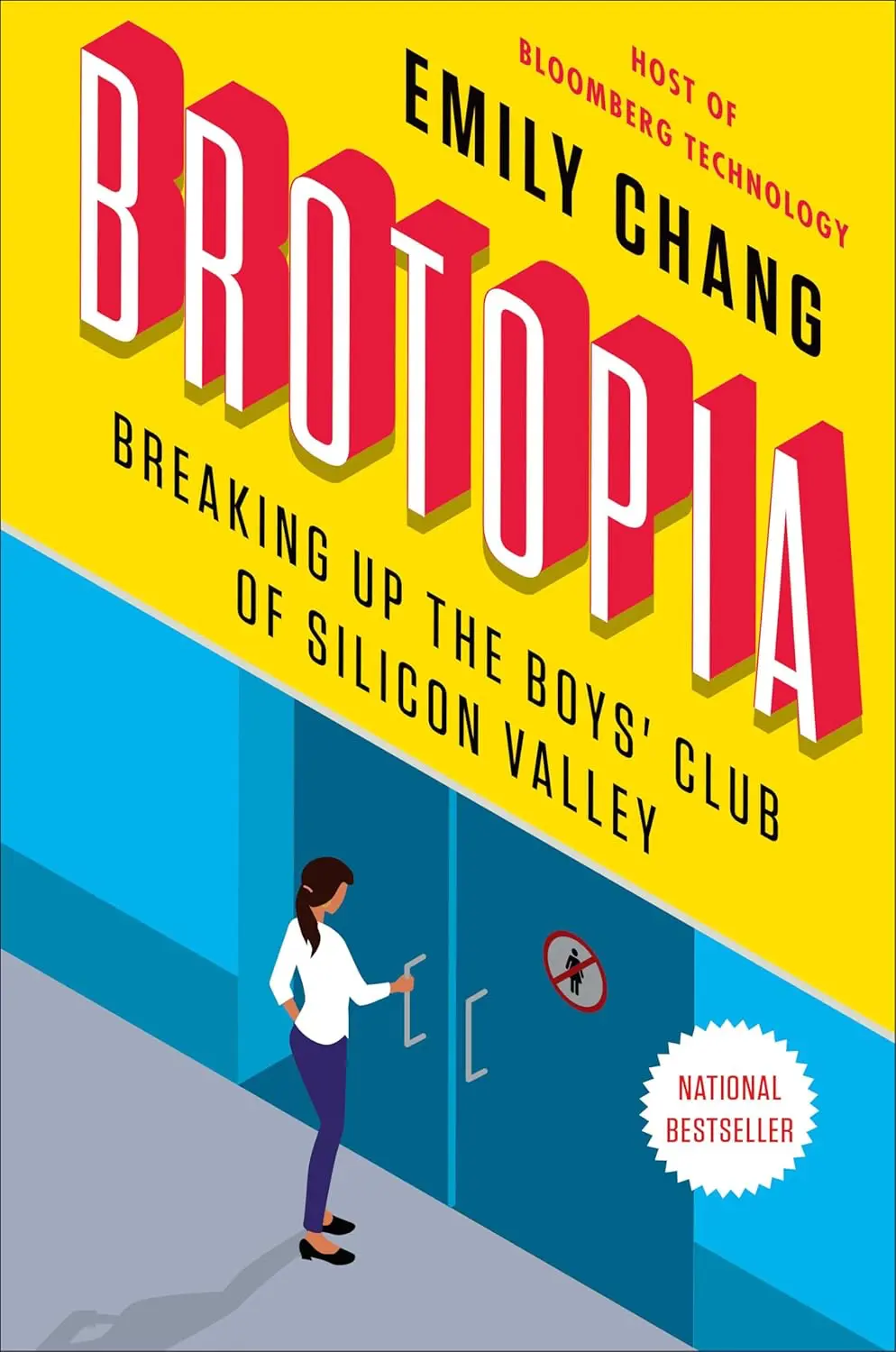
Emily Chang has covered the tech industry for Bloomberg Television for years, interviewing founders and executives across Silicon Valley. Brotopia started as a question she kept circling back to in those conversations: why is the technology industry, which likes to present itself as a meritocracy, so overwhelmingly male?
Chang traces the roots of the problem to the 1960s, when the industry was looking for ways to identify good programmers and contracted two psychologists to build a personality profile. The resulting test favored people who were antisocial and enjoyed solving puzzles in isolation. It screened out most women. That profile became the template for who got hired, and it stuck for decades, not because it predicted good engineering but because it became a self-reinforcing loop. People hired people who looked and thought like them. The culture that developed around those hires, one that prized all-night coding sessions, aggressive debate styles, and a particular brand of social awkwardness, made the industry hostile to anyone who did not fit the mold.
The book moves from that historical analysis into the present day. Chang documents the experience of women working at major tech companies and venture capital firms. She covers Ellen Pao’s gender discrimination lawsuit against Kleiner Perkins, which brought national attention to the issue but did not change much inside the firm. She interviews Susan Wojcicki, Sheryl Sandberg, and Marissa Mayer about what it took to reach the top of companies that were not designed with women in leadership positions in mind. She also reports on the sex parties and drug-fueled social gatherings in San Francisco that blurred the lines between professional networking and predatory behavior.
Chang is not writing a polemic. She includes the perspectives of men who disagree with her framing, and she acknowledges the complexity of the problem. Some of the most interesting sections deal with the tension between meritocratic ideals and exclusionary outcomes. Many people in tech believe they are hiring purely on talent and are uncomfortable with the suggestion that their judgment is shaped by bias. Chang presents evidence that it is, without dismissing the sincere belief behind the denial.
The book was longlisted for the Financial Times Business Book of the Year. For founders who are building teams and making early hiring decisions, the book raises a practical question that goes beyond fairness: if your hiring process systematically filters out half the population, you are working with a smaller talent pool than your competitors. Chang’s argument is that the homogeneity of tech is not just a moral problem but a strategic one.
