
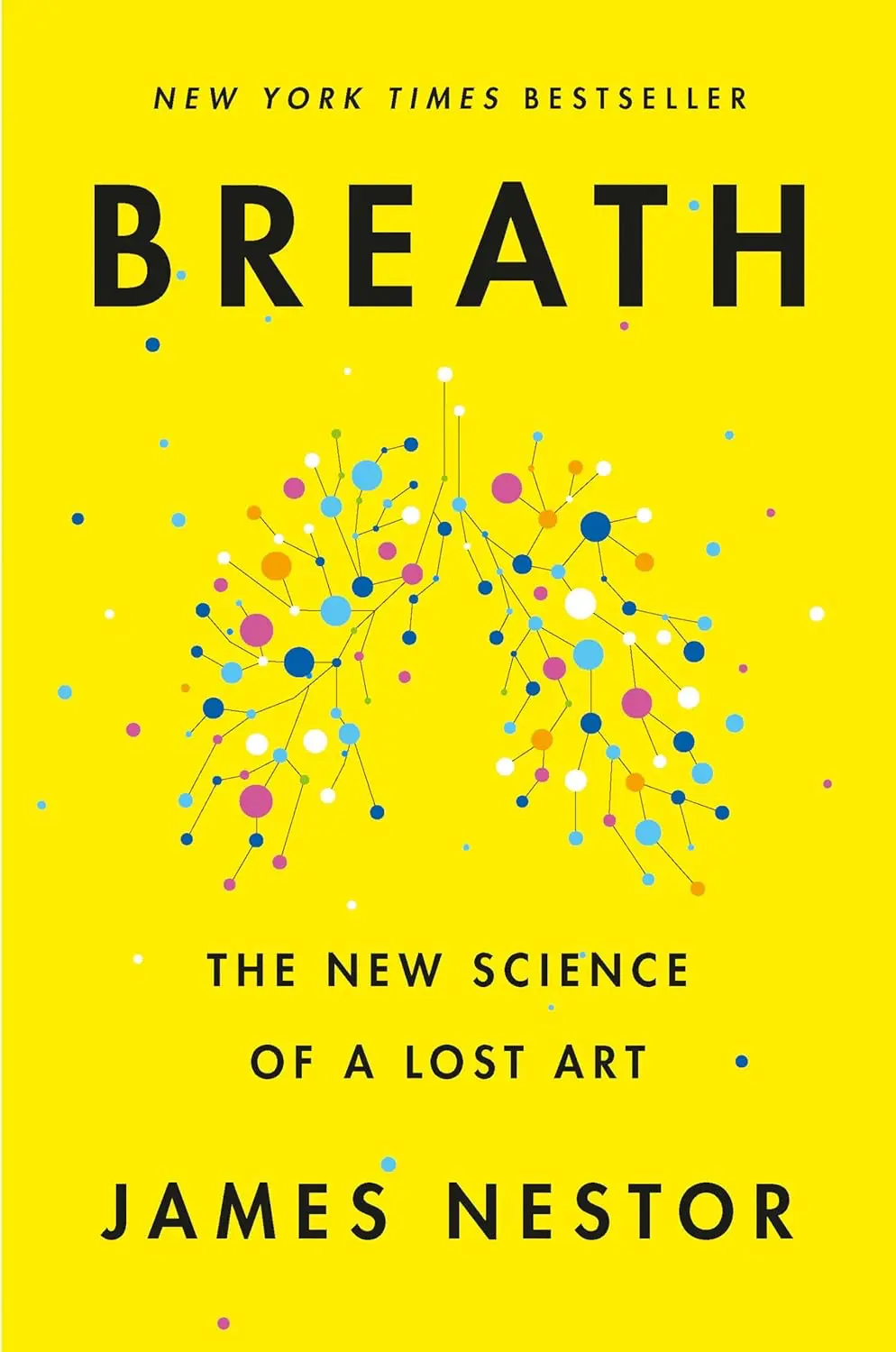
Breath is James Nestor’s investigation into something so basic it seems absurd to write a book about: how we breathe. But Nestor’s argument, supported by a mix of historical research, modern science, and his own self-experiments, is that most people breathe badly, and that this has real consequences for health, sleep, athletic performance, and even the structure of our faces.
The book grew out of a Stanford study Nestor participated in, where he spent ten days breathing exclusively through his mouth (with his nose plugged) and then ten days breathing exclusively through his nose. The results were dramatic: mouth breathing led to increased blood pressure, snoring, sleep apnea, and measurable cognitive decline, all of which reversed when he switched back to nasal breathing.
From there, Nestor traces the history of human breathing. He visits ancient burial sites that show our ancestors had wider jaws and straighter teeth, and argues that the shift to processed food changed the shape of our faces and narrowed our airways. He profiles breath researchers, freediving champions, and practitioners of ancient techniques like Tummo and pranayama, connecting their work to modern research on CO2 tolerance, vagus nerve stimulation, and autonomic nervous system regulation.
For founders and people in high-stress environments, the practical takeaways are surprisingly useful. Slow nasal breathing activates the parasympathetic nervous system and reduces anxiety. Specific breathing patterns can improve sleep quality. Even simple changes, like taping your mouth shut at night (which Nestor tries and recommends), can reduce snoring and improve rest.
The book is readable and entertaining, though it occasionally wanders into territory where the evidence is thinner than Nestor suggests. Some claims, particularly around extreme breathing practices, are based on small studies or anecdotal reports. But the core message about nasal breathing and its benefits is well supported and easy to act on immediately.
