
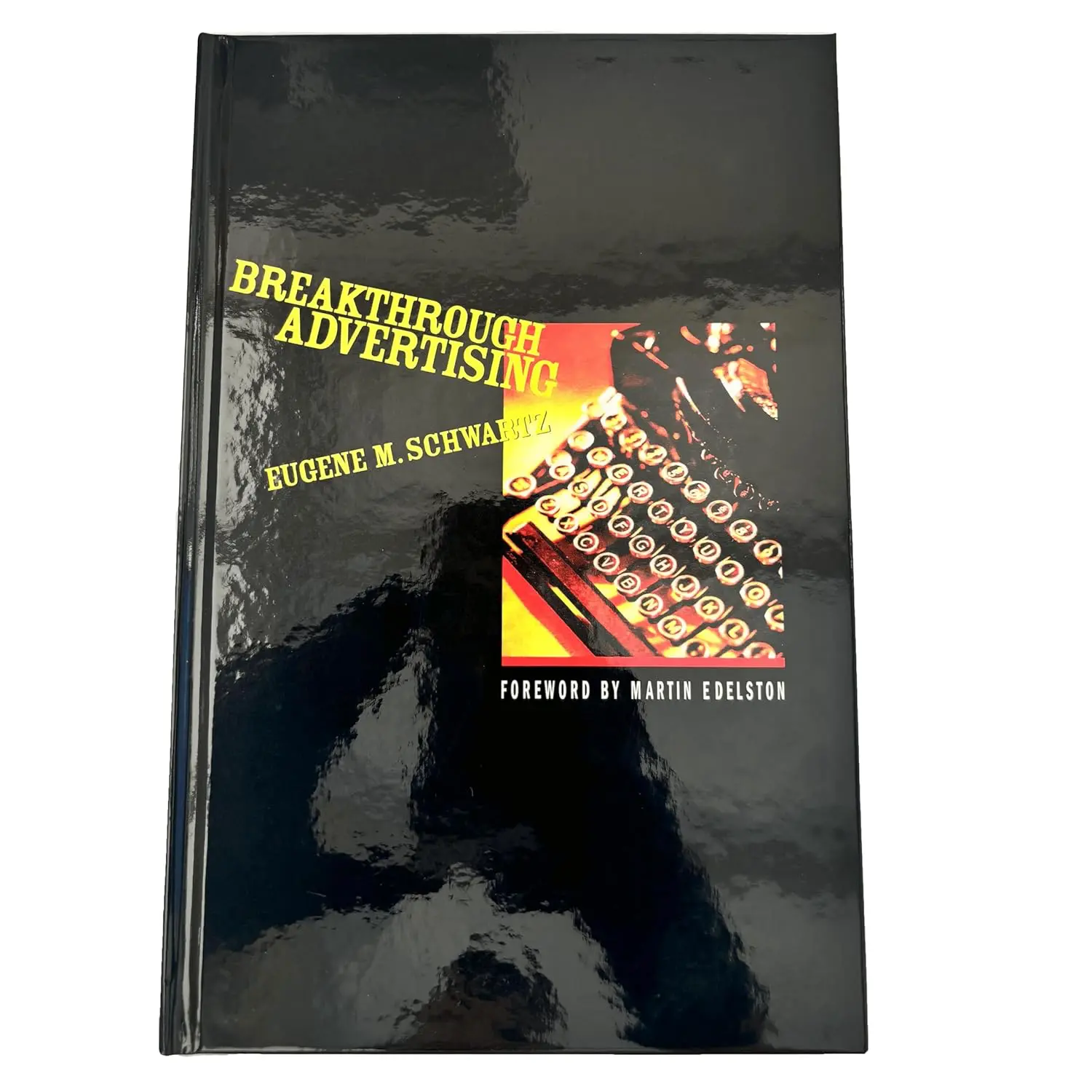
Breakthrough Advertising is not a beginner’s book. Schwartz assumes you already understand the basics of writing ads and dives into the deeper question: how do you match your message to the state of mind your prospect is already in?
The book’s most cited contribution is the concept of “market sophistication” and “stages of awareness.” Schwartz identified five levels of customer awareness: unaware (does not know they have a problem), problem-aware (knows the problem but not the solution), solution-aware (knows solutions exist but not yours), product-aware (knows your product but has not bought), and most-aware (knows your product and just needs a push). The advertising approach for each level is fundamentally different. Selling to a problem-aware prospect requires a different headline, different proof, and different call to action than selling to a most-aware prospect.
Schwartz also covers mass desire (how to identify the forces driving a market), headline strategy (the headline’s job is to connect to an existing desire, not to sell the product), and how to intensify desire through specificity, identification, and proof.
The writing is dense and sometimes abstract. Schwartz is working at a conceptual level that requires re-reading. Most copywriters who study this book report that they understand it differently each time they return to it.
The book has been out of print for years and physical copies sell for hundreds of dollars. Some marketers consider this the single most important book on advertising ever written. Others find it too theoretical to apply directly.
For founders, the stages of awareness framework alone justifies the effort. If your marketing is not working, it may not be a problem with your copy or your product. It may be a mismatch between your message and where your audience is in their awareness journey.
Alex Hormozi and Gary Halbert have both named it as the most important marketing book they have read. The book is about 240 pages. It is not a quick read, but for anyone serious about understanding how advertising actually works at a structural level, nothing else comes close.
