
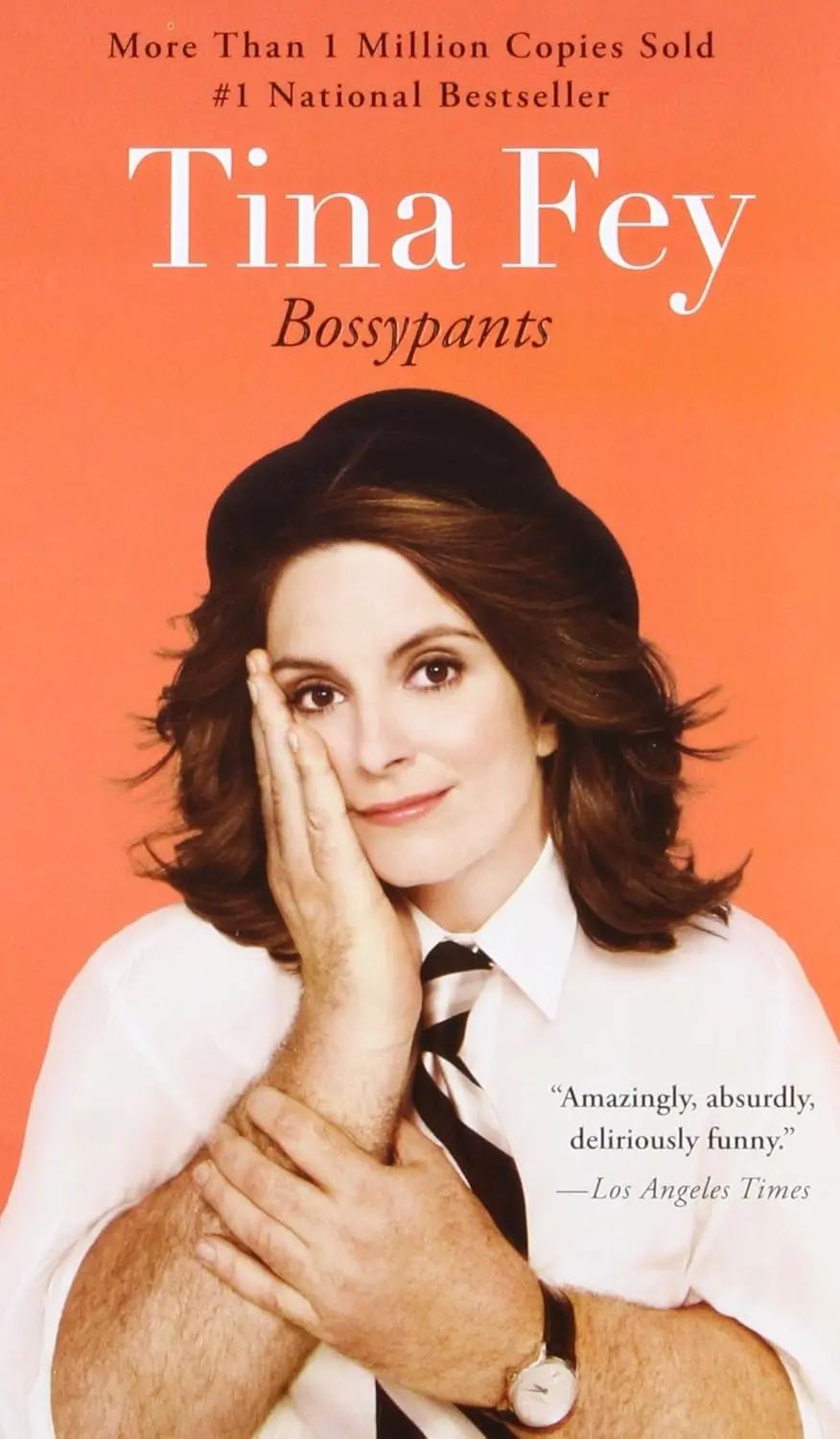
Tina Fey grew up in Upper Darby, Pennsylvania, took improv classes at Second City in Chicago, and worked her way onto the writing staff of Saturday Night Live. In 1999, at 29, she became the show’s first female head writer. She went on to create 30 Rock, which ran for seven seasons on NBC, and built a production company that has generated multiple hit shows. Bossypants is her account of how all of that happened, told in the style of someone who thinks the whole thing is slightly ridiculous and wants you to know that.
The book is organized as a loose collection of essays rather than a chronological memoir. Fey writes about her childhood, her father’s influence, her years doing improv, the SNL writers’ room, what it was like to play Sarah Palin on live television during a presidential election, and the daily absurdity of producing a network sitcom while raising a daughter. The tone is consistently funny, and Fey is a skilled enough writer that the humor does not feel forced.
But what makes the book interesting beyond the comedy is how much it reveals about managing creative people. Fey describes the SNL writers’ room as a place where ego, sleep deprivation, and deadline pressure combine to produce both brilliant work and spectacular dysfunction. She talks about the specific skills required to lead a team of people who are all convinced they are the funniest person in the room. Her approach was not to dominate or to seek consensus, but to make decisions quickly and move on. She writes about the improv principle of “yes, and” not as a vague collaboration philosophy but as a concrete tool for keeping creative momentum alive.
Fey does not present herself as a management guru. She writes about her insecurities, her mistakes, and the moments when she had no idea what she was doing. She describes the experience of being told she was too ugly for television and the experience of being told she was too pretty to be funny. She writes about the specific challenges women face in comedy workplaces, where they are simultaneously expected to prove they are talented and to prove they can take a joke about their bodies.
The book became a number one New York Times bestseller and was nominated for a Grammy for best spoken word album. Sheryl Sandberg has cited it. For anyone leading a creative team, building a product that depends on taste and originality, or trying to figure out how to be in charge without becoming insufferable, Fey’s book offers more practical wisdom than most books that actually try to be about leadership.
