
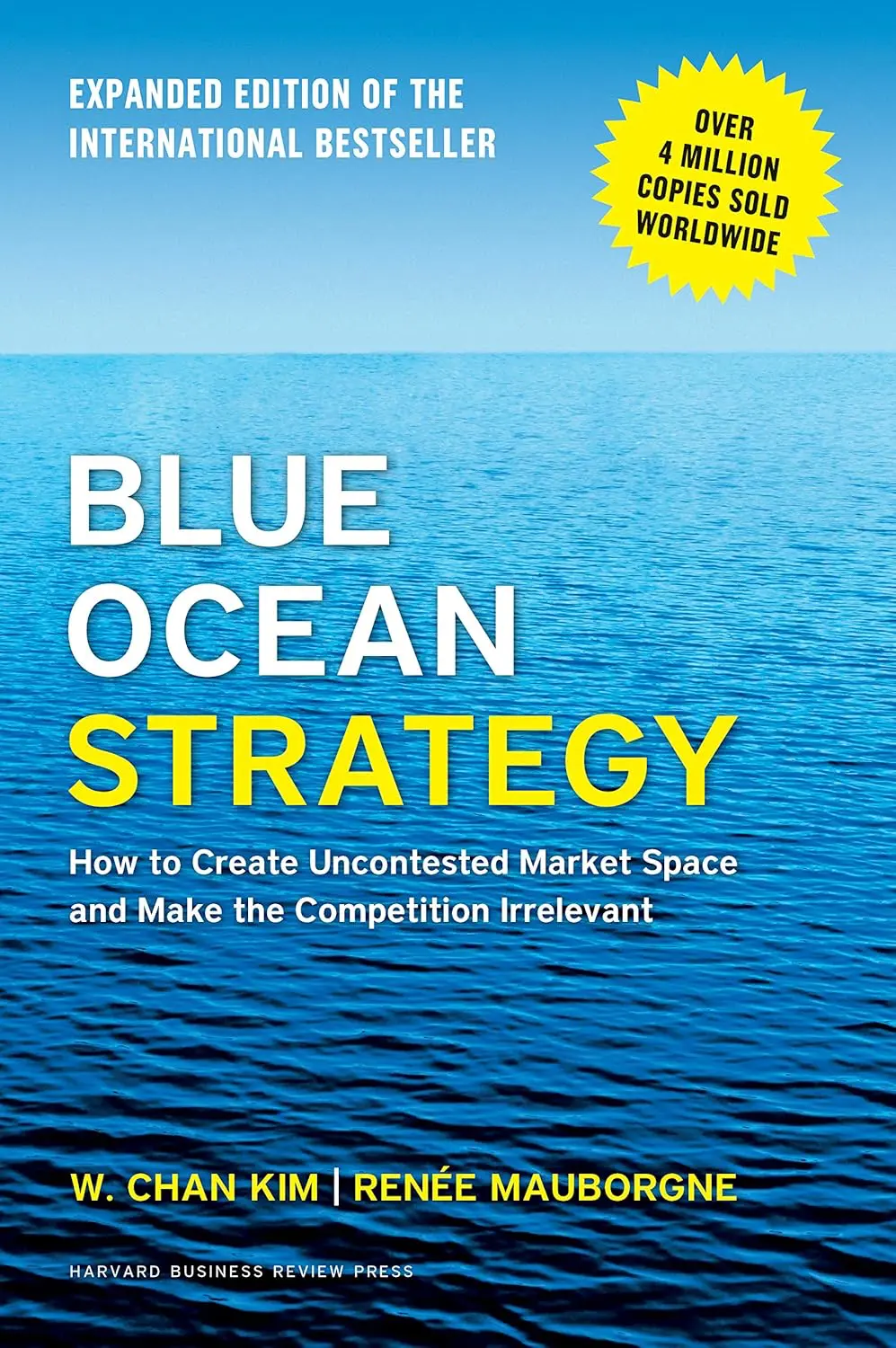
The book uses a color metaphor. Red oceans are existing markets where competitors fight over the same customers with similar products. Margins shrink, competition intensifies, and growth slows. Blue oceans are new market spaces created by offering a value proposition that did not exist before. In a blue ocean, you set the rules.
Kim and Mauborgne studied 150 strategic moves across 30 industries and more than 100 years. They found that the moves which created the most value for companies were not incremental improvements within existing markets but the creation of new ones. Cirque du Soleil did not try to be a better circus. It created a new form of entertainment that combined circus arts with theater, appealing to an audience that would never have gone to a traditional circus. Southwest Airlines did not compete with other airlines on amenities. It competed with cars by making flying cheaper and more convenient than driving.
The book provides analytical tools for identifying blue ocean opportunities. The Strategy Canvas maps your industry’s competitive factors and shows where all competitors are clustered. The Four Actions Framework asks which factors you can eliminate, reduce, raise, or create to break free from the red ocean. The Six Paths Framework identifies where to look for blue ocean ideas: across industries, across strategic groups, across buyer groups, across complementary products, across functional-emotional orientation, and across time.
For founders, the blue ocean framework challenges the default assumption that you should study your competitors and try to beat them. The alternative is to study your customers and build something that makes the competition irrelevant. This does not always work (some markets are unavoidably red), but the framework helps you identify when a blue ocean strategy is possible.
At about 240 pages, the book is concise. The analytical tools are practical and well-explained. Kim and Mauborgne write clearly, and the case studies are well-chosen. The expanded edition (2015) includes new chapters and updated examples.
