
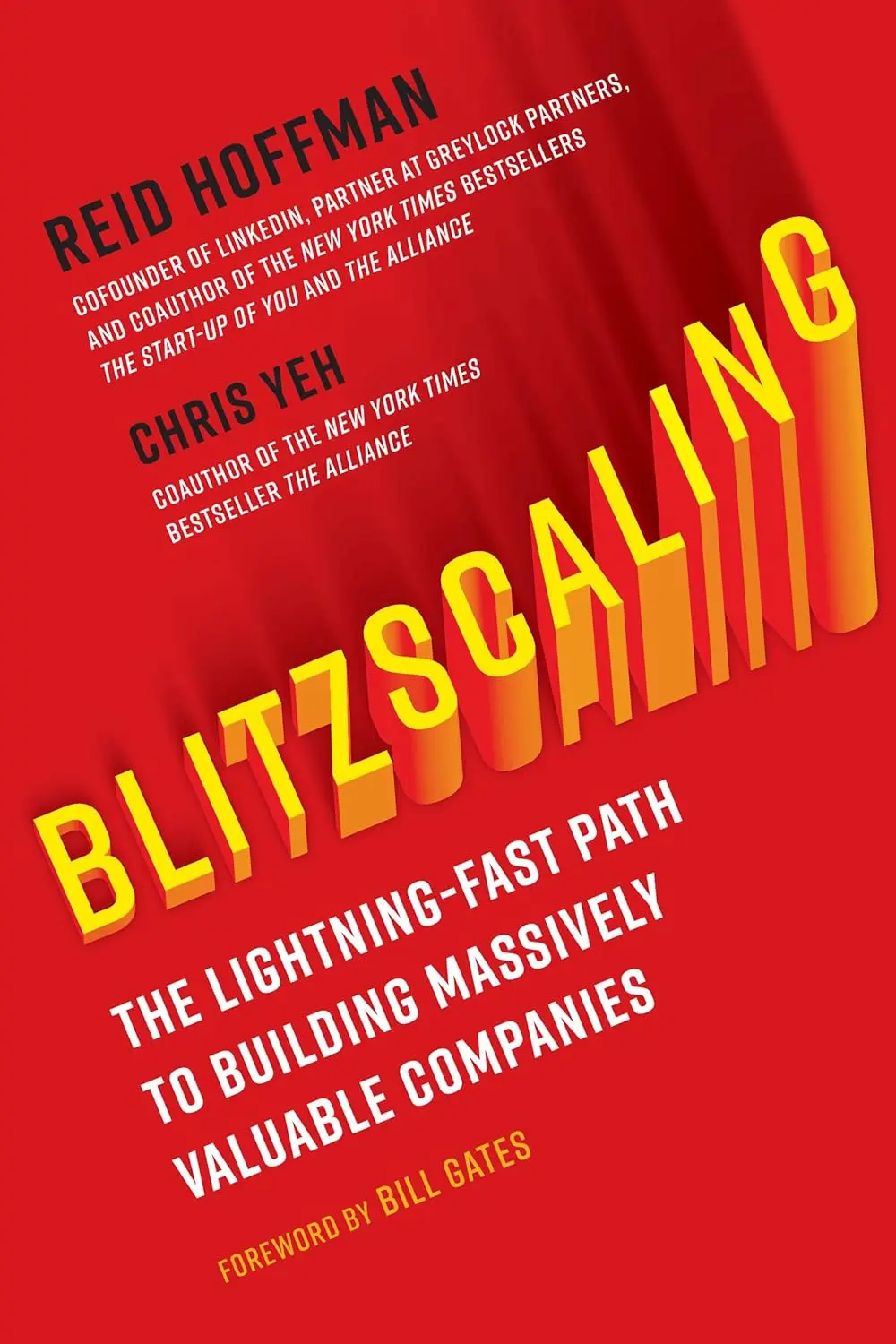
Blitzscaling is about a specific kind of growth: the kind where you are intentionally doing things that would be inefficient under normal circumstances because the market rewards the company that gets big first. Hoffman defines it as prioritizing speed over efficiency in the face of uncertainty.
The logic is that in networked, winner-take-all markets (social networks, marketplaces, communication platforms), the first company to reach critical mass captures effects that make it very hard for competitors to catch up. Network effects, data advantages, and brand recognition compound with scale. Moving slowly in these markets means losing, even if your product is better.
Hoffman describes the stages of blitzscaling from “family” (1-9 employees) through “tribe” (tens), “village” (hundreds), “city” (thousands), and “nation” (10,000+). Each stage requires different management approaches, different hiring practices, and different tolerance for chaos. What works at 10 people breaks at 100. What works at 100 breaks at 1,000.
The book covers case studies from Airbnb, LinkedIn, Dropbox, and several Chinese tech companies. Hoffman is direct about the trade-offs: blitzscaling involves hiring ahead of need, spending more than you earn, accepting that some decisions will be wrong, and tolerating organizational chaos that would be unacceptable in a stable business.
For founders, the book is most relevant if you are in (or could be in) a winner-take-all market. Not every business needs to blitzscale, and attempting it in a market that does not reward first-mover advantage is a good way to burn cash and destroy a company. The book’s value is in helping you recognize when speed matters more than efficiency and what you have to give up to move at that pace.
Sam Altman has recommended it. At about 340 pages, the book is thorough. Some of the Silicon Valley framing can feel narrow (not every company is a platform startup), but the framework for thinking about when and how to prioritize speed is useful even for founders building different kinds of businesses.
