
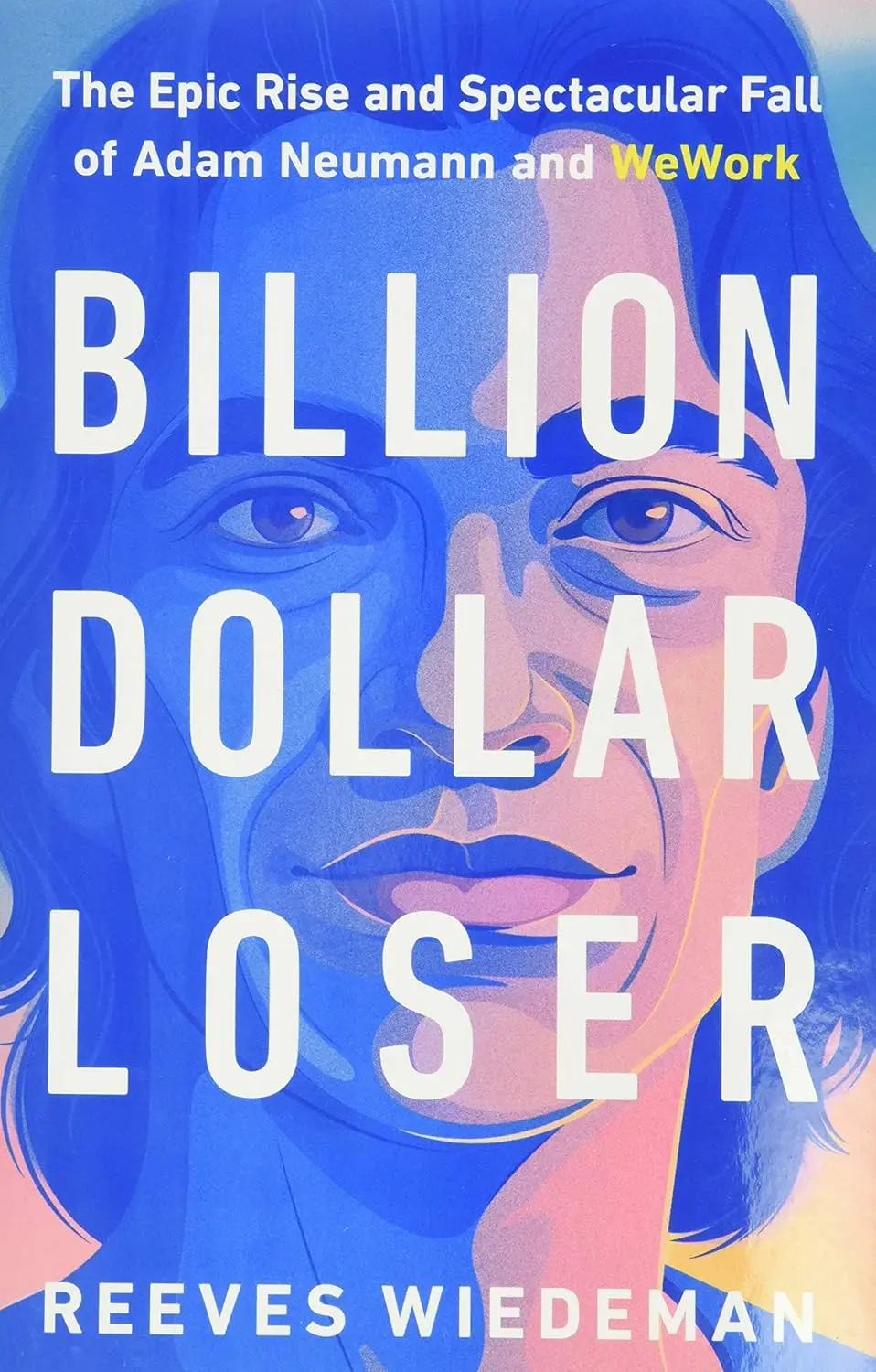
Billion Dollar Loser tells the story of WeWork from its founding through the implosion of its IPO in 2019. Reeves Wiedeman, a New York Magazine journalist, documents how Adam Neumann built a real estate company into a tech unicorn valued at $47 billion, and how the company fell apart when it tried to go public and investors finally looked closely at the numbers.
The book covers Neumann’s background and personality in detail. Born in Israel, raised partly on a kibbutz, Neumann was charismatic and relentless. He convinced SoftBank’s Masayoshi Son to invest billions at increasingly absurd valuations by framing WeWork not as a real estate company (which would be valued at modest multiples of revenue) but as a technology platform that would “change the way people work and live” (which justified Silicon Valley multiples). This narrative sleight of hand is central to the story.
The IPO filings exposed the reality. WeWork was losing billions per year. Its lease obligations far exceeded its revenue. The corporate governance structure gave Neumann extraordinary personal control, including weighted voting shares and the ability to designate his own successor. When public market investors reviewed these details, the offering collapsed. Neumann was eventually forced out, and the company’s valuation dropped from $47 billion to around $8 billion almost overnight.
Wiedeman also covers the cultural excesses: the company retreats with open bars and celebrity performers, the private jet usage, the inflated headcount, and the internal culture that treated skepticism as disloyalty. These details make the story entertaining but also illustrate a broader pattern about what happens when a company’s storytelling outpaces its fundamentals.
For founders, the book is both a cautionary tale and a study in the power of narrative. Neumann’s ability to raise capital was extraordinary, and understanding how he did it (vision, conviction, and a willingness to say things that weren’t quite true) is useful even if you’d never want to replicate it. The book also shows how investor incentives (SoftBank needed WeWork’s valuation to hold up for its own fund returns) can distort reality for years before the market corrects.
The writing is well-reported and entertaining. Wiedeman structures the book chronologically and keeps the pace quick. The tone is more amused than outraged, which suits the absurdity of the story.
