
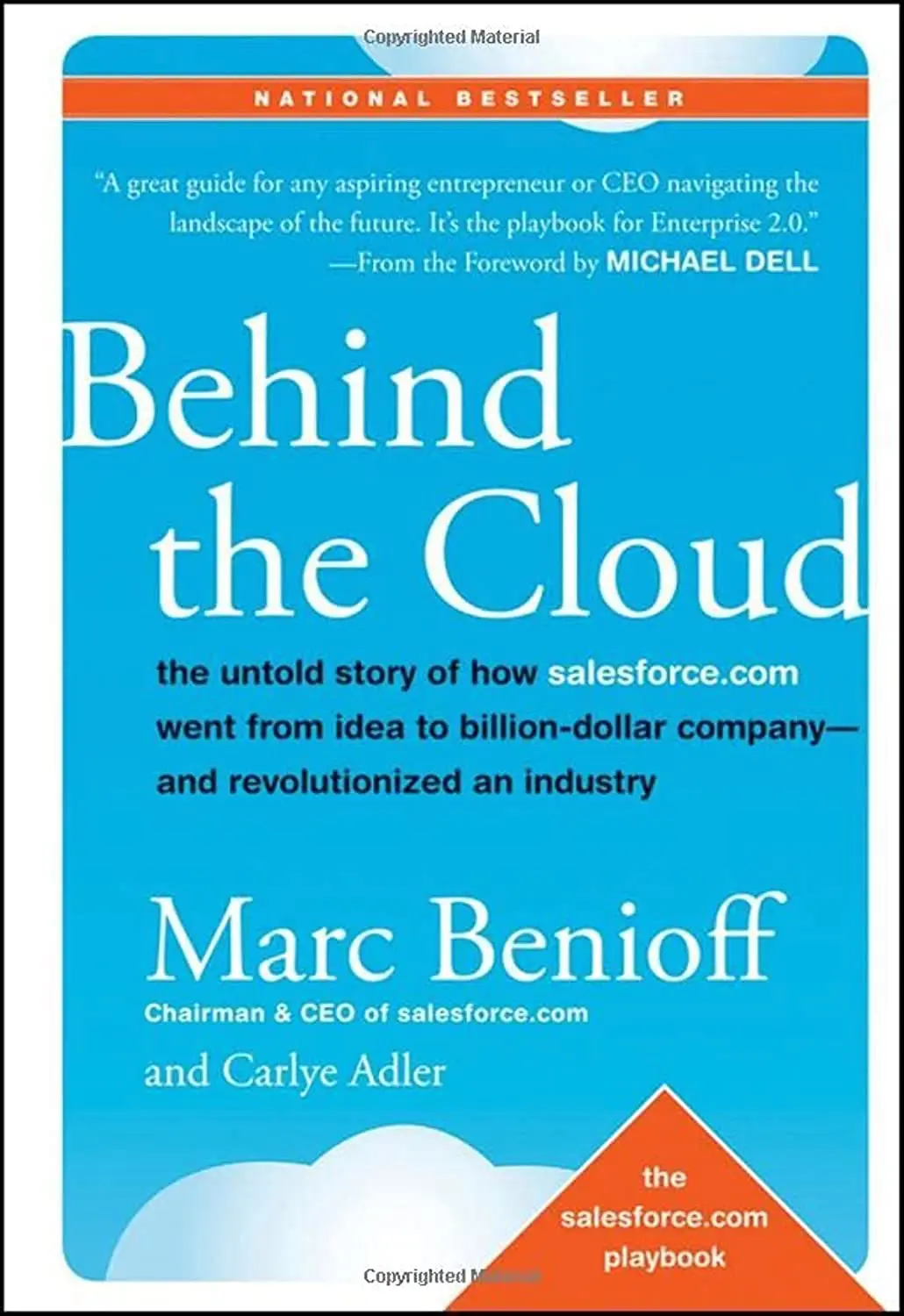
Marc Benioff left Oracle in 1999 with an idea that sounded simple: deliver business software over the internet instead of installing it on company servers. The idea was so simple that most people in enterprise software dismissed it. Traditional software companies made their money selling expensive licenses and charging for upgrades. Why would they cannibalize their own model?
Benioff bet they would not, and he was right. Salesforce started in a rented apartment in San Francisco with a guerrilla marketing approach that included staging fake protests outside competitor conferences with signs reading “No Software.” The stunts got attention. The product, a web-based customer relationship management tool, got traction. The company went public in 2004 and eventually grew into one of the most valuable enterprise software companies in the world.
The book is structured as 111 short chapters, each one a play from Benioff’s playbook. There are plays about marketing, technology, corporate culture, finance, philanthropy, and crisis management. The format makes the book easy to dip into. It also makes it feel more like a collection of case studies than a continuous story.
Some of the most interesting chapters cover Salesforce’s early marketing tactics. Benioff was shameless about generating attention: crashing competitor events, getting journalists to cover staged protests, creating an annual conference (Dreamforce) that became one of the largest tech events in the world. He also describes his V2MOM management tool, a one-page framework that stands for Vision, Values, Methods, Obstacles, and Measures. Every employee at Salesforce writes a V2MOM, and Benioff credits it with keeping the company aligned through rapid growth.
The 1-1-1 philanthropy model, where Salesforce donates one percent of equity, one percent of product, and one percent of employee time, gets substantial coverage. Benioff integrated philanthropy into the company from day one rather than bolting it on later, and this decision shaped Salesforce’s culture in ways that continued to compound.
The book reads fast and is relentlessly tactical. If you want deep personal reflection or literary prose, look elsewhere. If you want a working library of moves that a founder actually used to build a multi-billion-dollar company, this delivers.
