
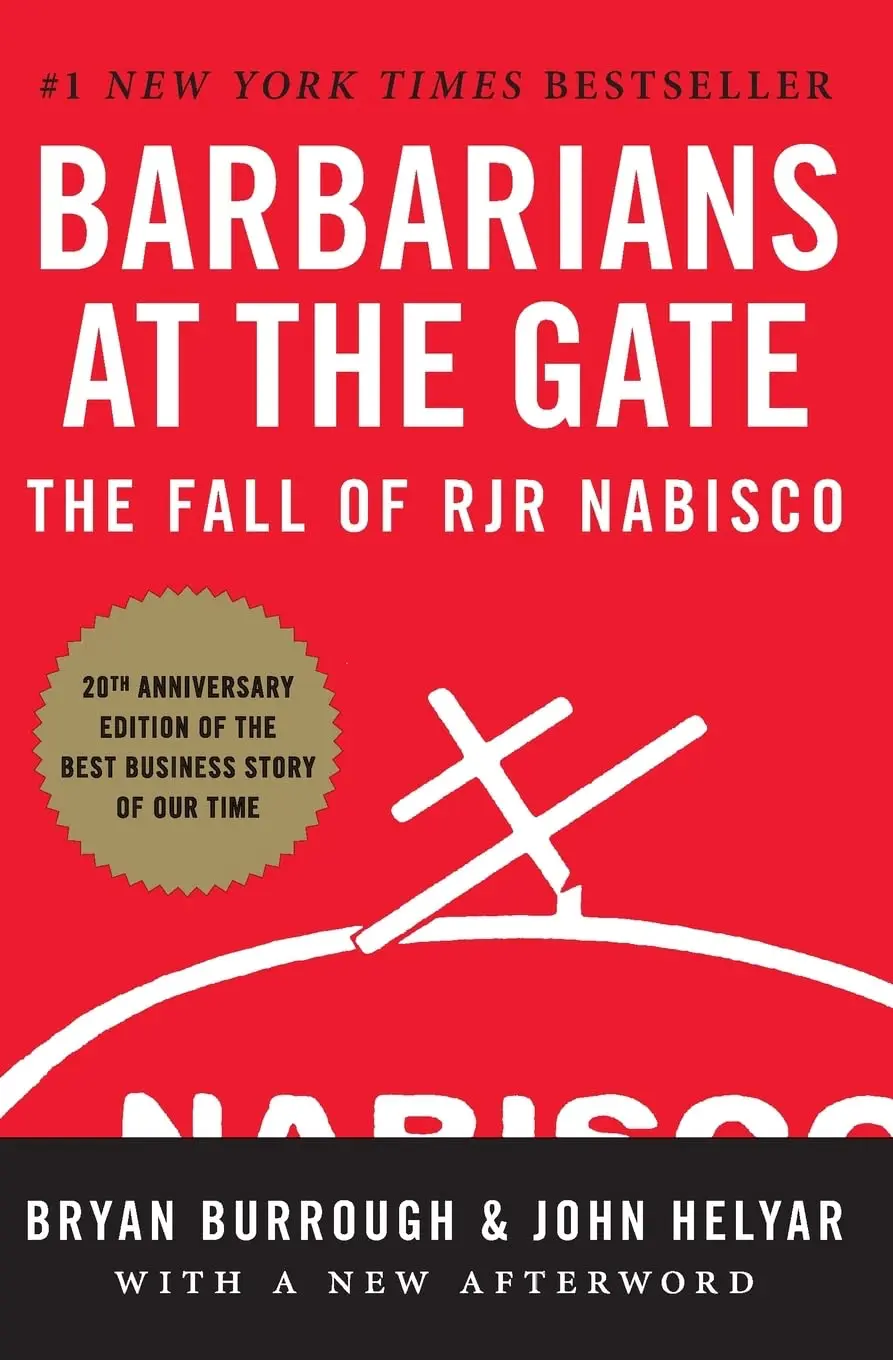
In October 1988, Ross Johnson, the CEO of RJR Nabisco, announced a management-led buyout of his own company for $17 billion. Within days, the private equity firm Kohlberg Kravis Roberts, known as KKR, entered a competing bid. What followed was a six-week bidding war that consumed Wall Street, made front-page news around the world, and ended with KKR acquiring the company for $25 billion, a record that stood for years.
Bryan Burrough and John Helyar covered the deal for the Wall Street Journal as it happened. They spent the next year conducting hundreds of interviews with the bankers, lawyers, executives, and board members involved. The result is a book that reads less like financial journalism and more like a novel about what happens when enormous sums of money collide with enormous egos.
Ross Johnson is the book’s most memorable character. He was a corporate climber who rose through the ranks at Standard Brands, merged that company with Nabisco, and then engineered Nabisco’s merger with R.J. Reynolds Tobacco. He lived lavishly on the company’s dime, maintaining a fleet of corporate jets, a celebrity-studded golf tournament, and a penthouse apartment in Manhattan, all billed to shareholders. When he decided to take the company private, he structured the deal to make himself and a small group of executives fabulously wealthy, even by Wall Street standards. The board, when they saw the terms, was not amused.
KKR’s Henry Kravis saw the management buyout as both an opportunity and an insult. Kravis had pioneered the leveraged buyout in the 1970s and 1980s, and he viewed the RJR deal as his territory. The bidding war that followed involved multiple rounds of increasingly aggressive offers, shifting alliances among investment banks, and a level of financial complexity that even experienced bankers found dizzying.
Burrough and Helyar do not editorialize much. They let the characters reveal themselves through their actions, their negotiations, and their private conversations. The effect is devastating. The executives, bankers, and lawyers come across as brilliant, driven, and almost entirely detached from any consideration beyond winning. The employees of RJR Nabisco, whose jobs and pensions hung in the balance, barely appear in the story, which is itself a kind of commentary.
The book was published in 1989 and became an immediate bestseller. It was adapted into an HBO movie in 1993. It remains the definitive account of the LBO era and one of the best pieces of business journalism ever written. Warren Buffett has recommended it. Anyone who works in finance, private equity, or corporate strategy will recognize the dynamics described here. But the book’s real audience is broader than that. The story of RJR Nabisco is a story about what happens when the people running a company stop thinking about the company and start thinking only about themselves.
