
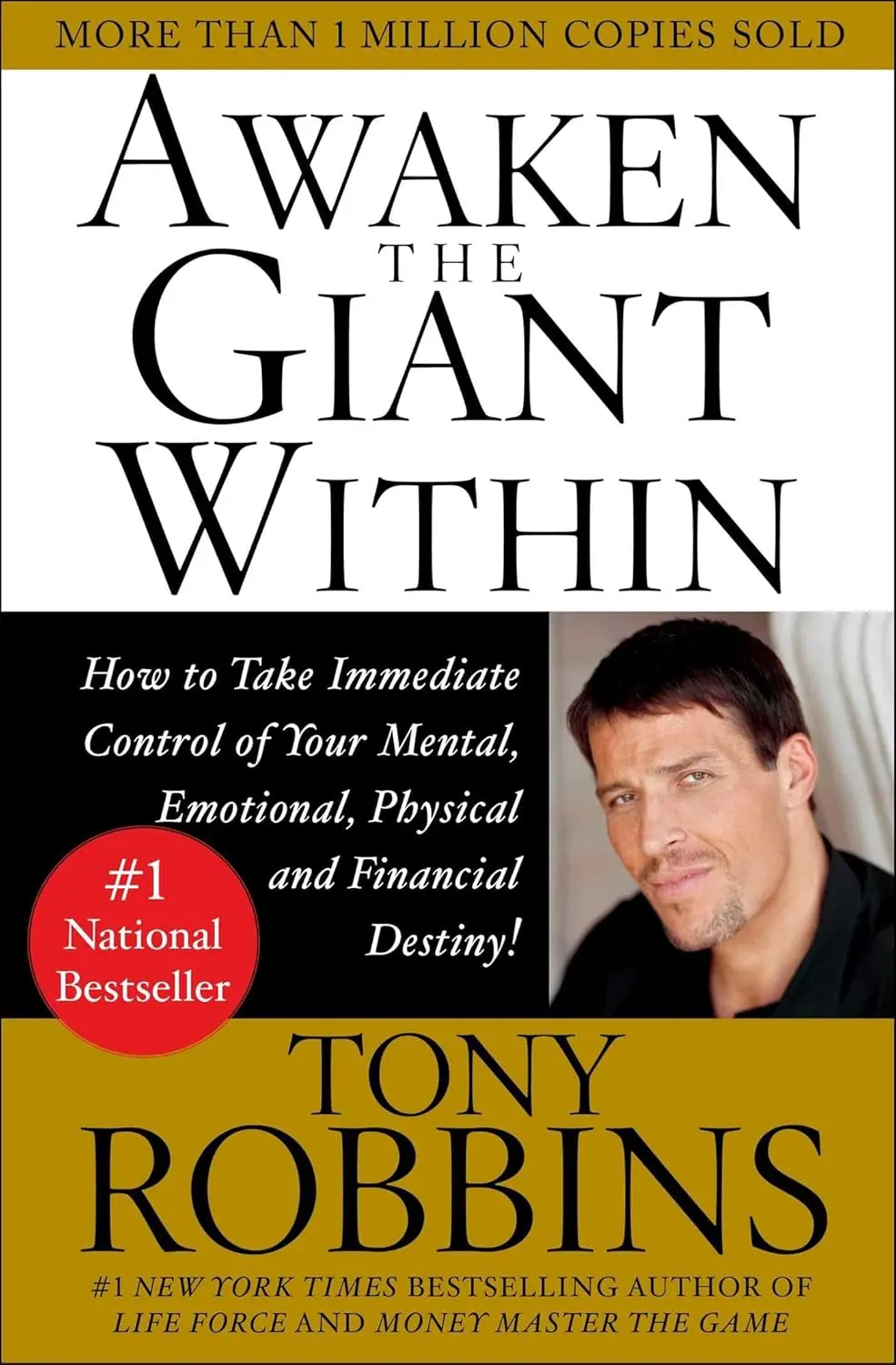
Awaken the Giant Within was published in 1991 and is Robbins’s most complete book. Where his seminars run three to five days, this book tries to fit most of that material into a single volume. The result is dense, repetitive in places, and stuffed with more frameworks than any reader will use, but also genuinely comprehensive in its coverage of personal development.
Robbins organizes the book around several core ideas. The first is the pain-pleasure principle: people make decisions based on what they associate with pain and what they associate with pleasure, and changing those associations changes behavior. The second is the power of questions: the questions you ask yourself determine what you focus on, and changing your questions changes your focus. The third is belief systems: what you believe about yourself and the world determines what you attempt, and beliefs can be changed deliberately.
The book covers specific domains. The emotional management chapters provide techniques for changing your emotional state quickly (body posture, breathing, focus). The decision-making chapters argue that your life is shaped by the decisions you make in moments of emotional intensity, and that learning to decide well under pressure is the most important skill you can develop. The financial chapters cover basic wealth-building principles (spend less than you earn, invest the difference, compound over time).
Robbins’s writing style is energetic to the point of being overwhelming. Exclamation points are everywhere. The tone is relentlessly positive. Readers who respond to motivational intensity will find it energizing. Readers who prefer understatement will find it exhausting. The content underneath the style is more substantive than the style might suggest.
For founders, the most applicable sections are on decision-making and emotional management. Running a company involves making consequential decisions under emotional pressure daily. Robbins’s frameworks for managing your state (so you decide from strength rather than panic) are practical tools.
At about 540 pages, the book is long. Most readers benefit from treating it as a reference rather than reading cover to cover. Pick the section that addresses your current challenge, work through the exercises, and return when a different challenge arises.
