
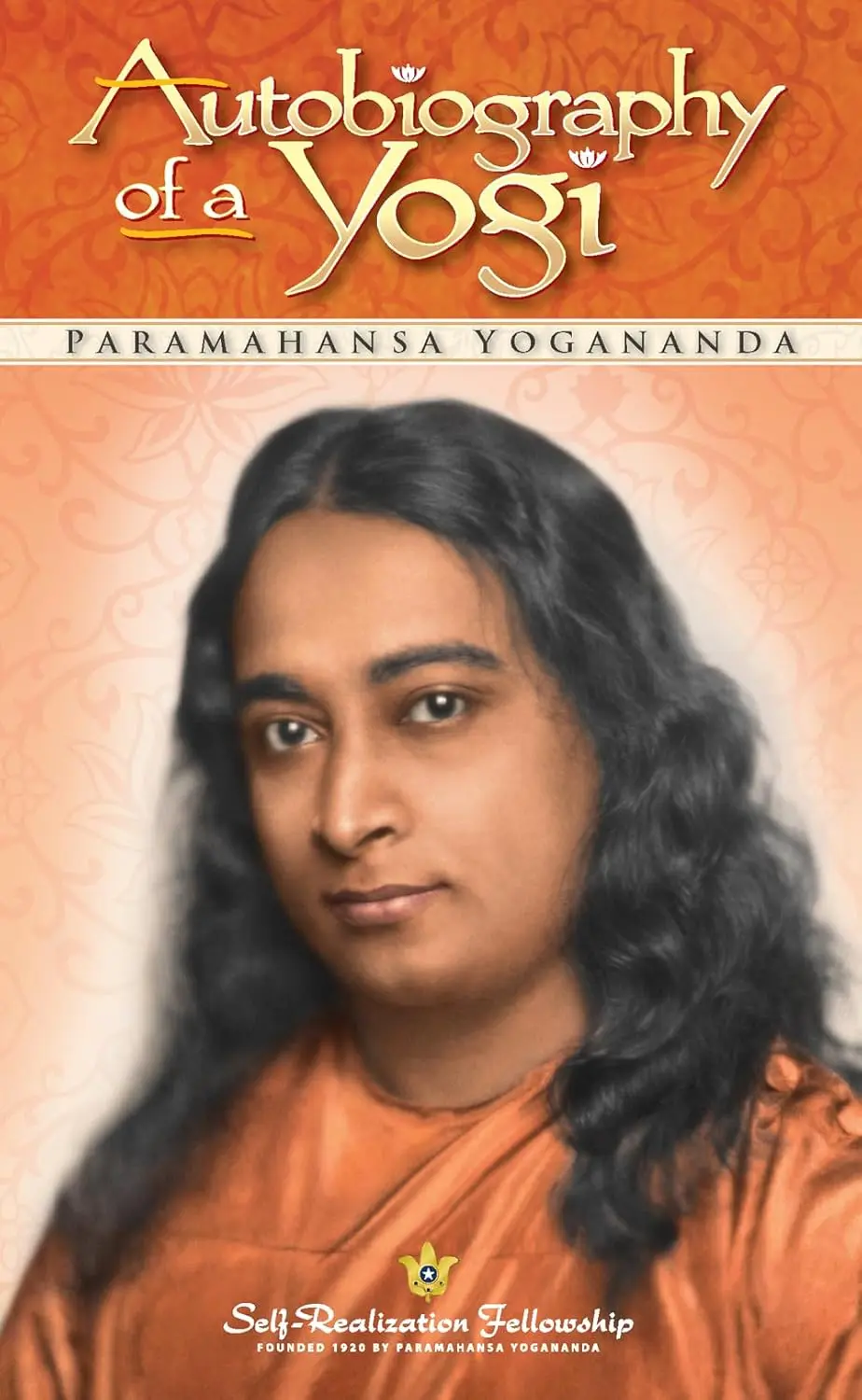
Autobiography of a Yogi is one of those books that shows up on business reading lists for reasons that are not immediately obvious. It is not about business. It is a spiritual memoir written by an Indian monk who came to America in 1920 to teach yoga and meditation. The book describes encounters with saints, miracles, and states of consciousness that are far outside ordinary experience.
What brought it into the tech world is Steve Jobs. He read the book as a teenager, re-read it every year, and arranged for copies to be distributed at his memorial service. Marc Benioff (Salesforce CEO) has also cited it as a formative influence. For Jobs, the appeal was apparently the idea that reality extends far beyond what the rational mind can process, and that training your awareness through meditation gives you access to a different kind of knowing.
Yogananda’s writing covers his childhood in Calcutta, his search for a spiritual teacher, his years studying under a guru named Sri Yukteswar, and his eventual journey to America where he lectured on yoga and meditation to audiences who had never encountered these practices. Along the way, he describes meetings with figures like Mahatma Gandhi and Rabindranath Tagore.
The book contains stories that strain rational credibility: accounts of levitation, bilocation, and physical healing through spiritual means. Whether you read these literally, metaphorically, or skeptically will depend on your disposition. Yogananda writes about them matter-of-factly, without trying to convince the reader.
For founders, the book’s relevance is not in its specific teachings but in its broader argument that the most important work you can do is on your own mind. The tech leaders who recommend it tend to have active meditation practices and credit those practices with improving their decision-making, creativity, and ability to handle stress.
At about 500 pages, the book is substantial. The early chapters about Yogananda’s childhood are accessible and engaging. The later chapters on yoga philosophy and specific spiritual practices are denser. It is a book that finds its audience rather than appealing to everyone, but for the readers it reaches, it tends to be one they return to repeatedly.
