
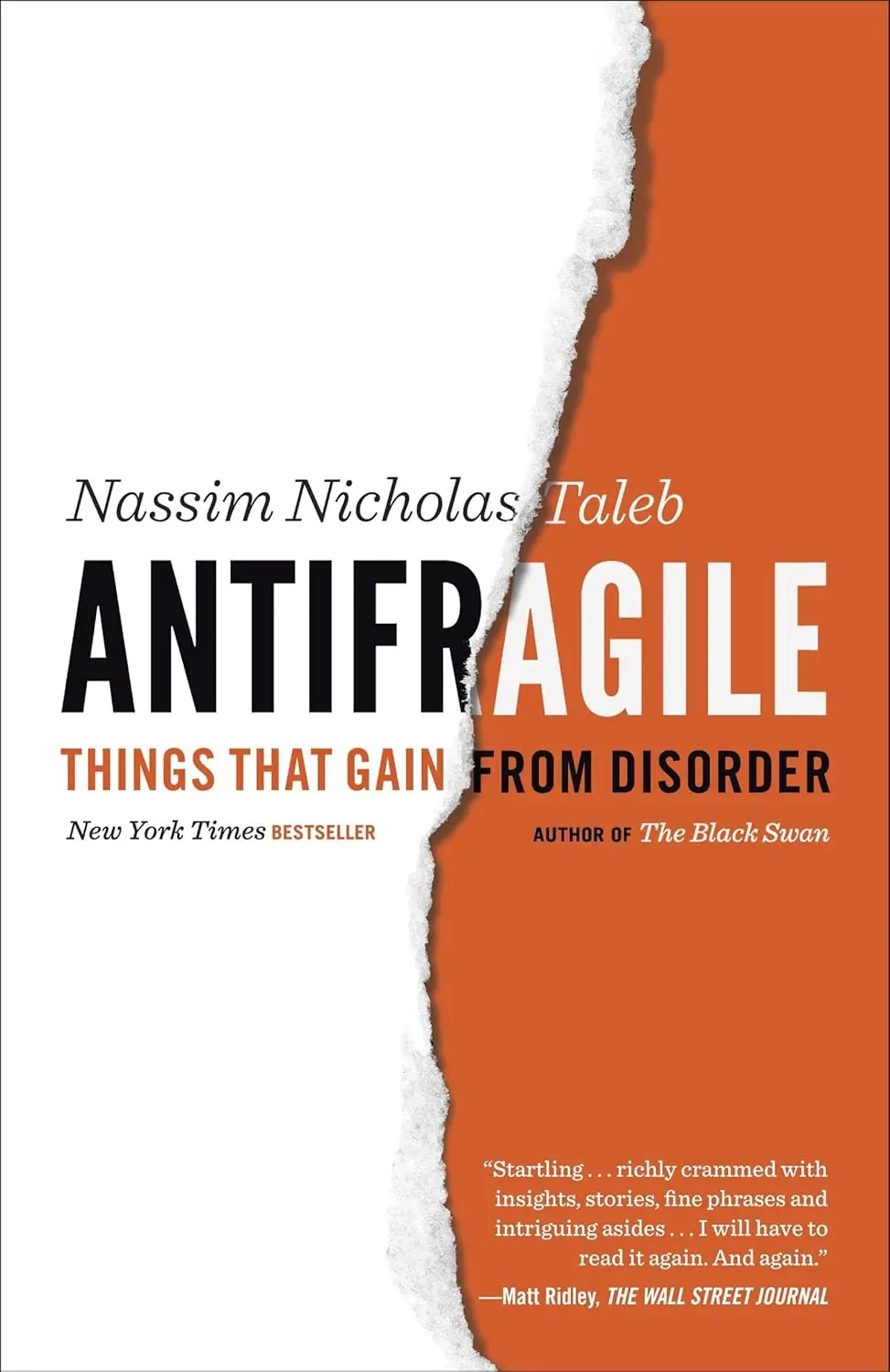
Taleb coined the word “antifragile” because English had no term for things that improve under stress. Fragile things break when shaken. Robust things resist shaking. Antifragile things get better. Your muscles after exercise, restaurants in a competitive city, and evolution itself all work this way.
The book builds on Taleb’s earlier work in The Black Swan, which argued that rare, unpredictable events shape the world more than anyone admits. Antifragile goes further by asking: given that we cannot predict these events, how should we build systems, businesses, and lives that gain from them rather than collapse?
Taleb’s answer involves several practical principles. He advocates the “barbell strategy,” which means combining extreme safety with small, high-upside bets while avoiding the middle ground. In investing, that might mean putting 90% in treasury bills and 10% in speculative options rather than putting everything in medium-risk stocks. In a career, it might mean keeping a stable job while running experiments on the side.
He is especially hostile toward what he calls “fragilistas,” people in positions of authority (bankers, policymakers, consultants) who create fragility in systems by trying to smooth out every fluctuation. Taleb argues that small stressors are healthy and necessary. Removing them causes systems to become brittle and prone to catastrophic failure when a large shock inevitably arrives.
For founders, the most transferable idea is about how to structure risk. Startups are inherently volatile. The question is not how to eliminate that volatility but how to position yourself so that the downside is limited and the upside is open-ended. Taleb calls this “optionality,” and it maps well onto how serial entrepreneurs and angel investors think about bets.
The writing style is combative, opinionated, and deliberately provocative. Taleb picks fights with economists, journalists, and academics throughout the book. Some readers find this entertaining; others find it exhausting. The book is long at around 500 pages and meanders through topics ranging from ancient Stoic philosophy to restaurant quality in New York City. But the central concept is powerful enough that it has entered the vocabulary of investors, startup founders, and policy thinkers since publication.
