
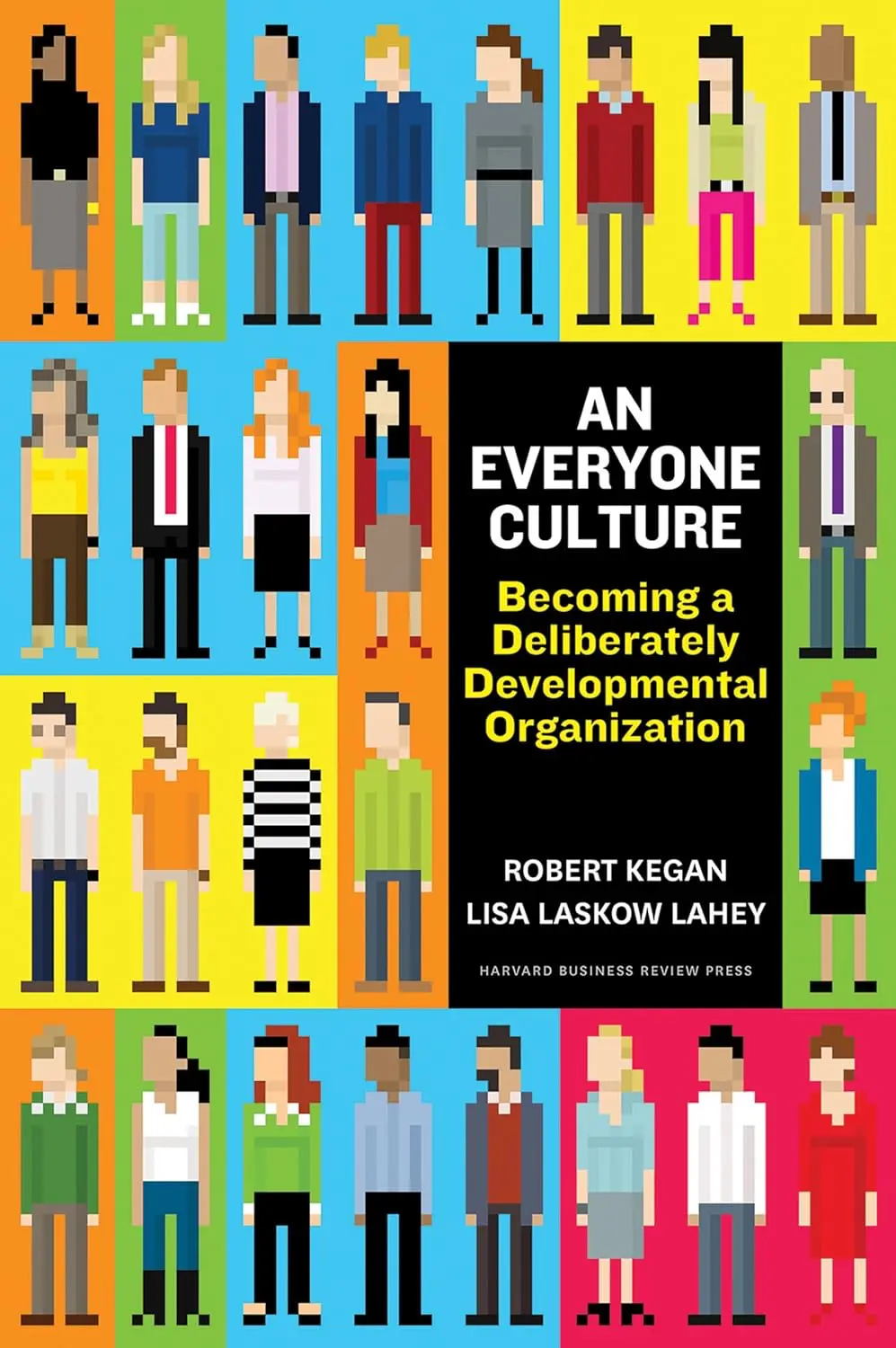
An Everyone Culture profiles three companies, Bridgewater Associates, Decurion Corporation, and Next Jump, that have organized themselves around a radical idea: the primary purpose of the organization is to help every employee grow, not just the high-potentials or the people in leadership development programs. Kegan and Lahey call these “Deliberately Developmental Organizations” (DDOs).
The book opens with an observation that in most workplaces, people spend significant energy managing how they appear to others: hiding mistakes, downplaying weaknesses, and performing competence even when they’re struggling. This “second job” is exhausting and prevents real development. In a DDO, the goal is to make it safe enough for people to be transparent about their limitations so the organization can actually help them grow.
The three case studies show different versions of this idea. Bridgewater (Ray Dalio’s hedge fund) uses radical transparency and regular feedback to force continuous self-examination. Decurion (a real estate and entertainment company) builds development into every aspect of work through ongoing dialogue and reflection. Next Jump (an e-commerce company) uses a culture of vulnerability and mutual accountability. Each organization has a different style, but they share the belief that employee growth and business performance are the same thing.
For founders building teams, the book challenges the common assumption that culture means ping-pong tables and free lunch. Kegan and Lahey argue that the most important cultural question is whether your organization helps people confront and work through their limitations or lets them hide. The DDO model is extreme and won’t suit every company, but the underlying insight, that people perform better when they can be honest about where they’re struggling, applies broadly.
The writing is more academic than most business books, reflecting Kegan’s background as a developmental psychologist at Harvard. Some sections are dense. But the case studies are specific and well-documented, and the framework for thinking about organizational development is original enough to justify the effort of reading it.
