
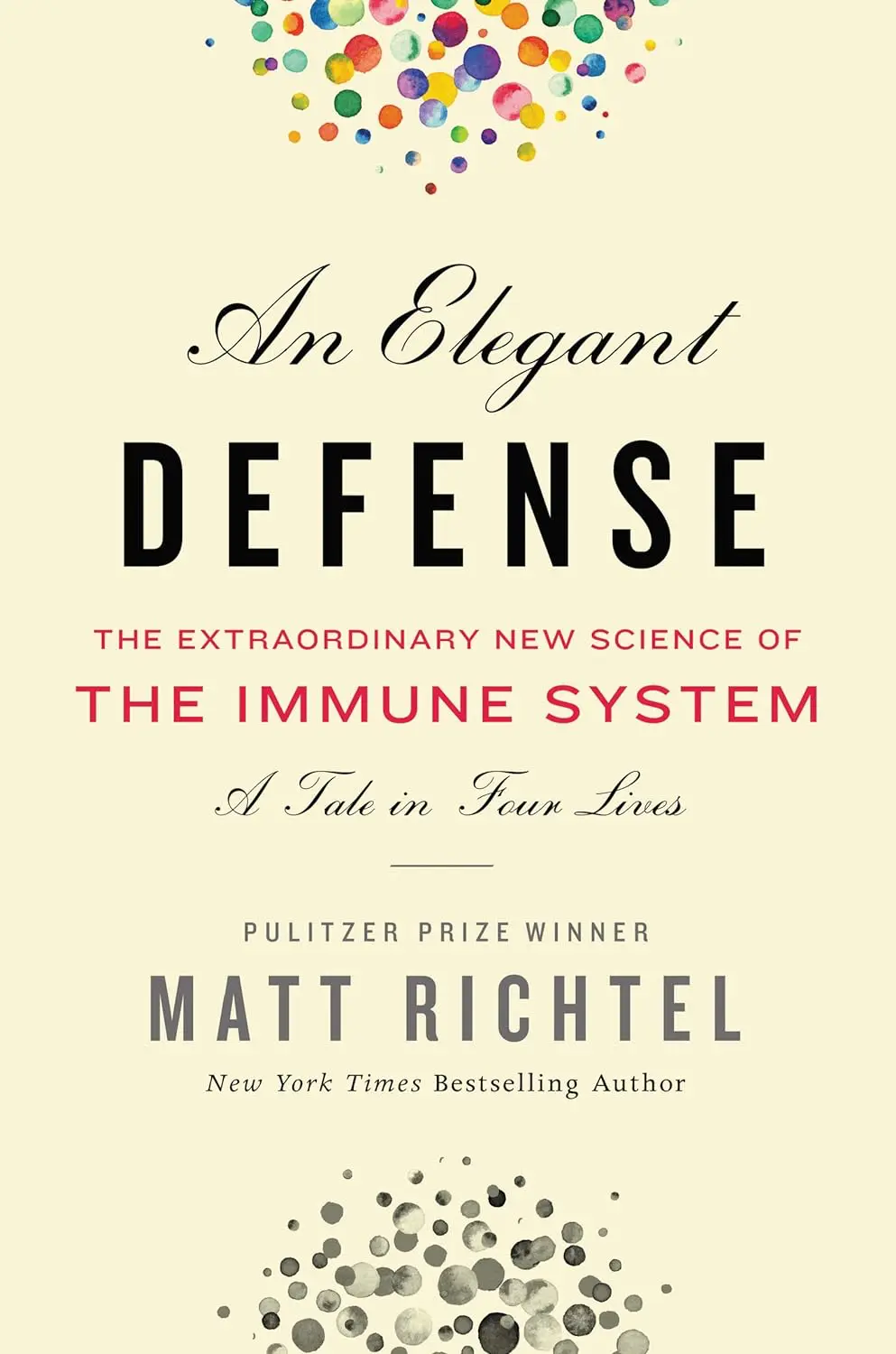
Matt Richtel spent years covering science and technology for the New York Times, winning a Pulitzer Prize for his reporting on distracted driving. When his childhood friend Jason Greenstein was diagnosed with Hodgkin’s lymphoma and given months to live, Richtel watched what happened next with a journalist’s eye and a friend’s dread. Jason’s cancer went into remission thanks to a new immunotherapy drug. That experience sent Richtel down a years-long investigation into the immune system itself.
An Elegant Defense follows four people whose lives illustrate what happens when the immune system works, fails, or turns against the body. Jason’s story anchors the cancer immunotherapy thread. Bob Hoff contracted HIV in the 1980s and, decades later, still has not developed AIDS. His immune system holds the virus in check through a genetic quirk that researchers have spent years trying to understand. Linda Segre and Merredith Branscombe live with severe autoimmune disorders, conditions where the immune system attacks healthy tissue with the same ferocity it should reserve for infections and tumors.
Richtel weaves these four stories together with the history of immunology, starting with Elie Metchnikoff’s 19th-century observations of immune cells in starfish larvae and moving through the discovery of T cells, the identification of HIV, and the Nobel Prize-winning research by James Allison that led to modern checkpoint inhibitor drugs. The science sections are detailed but accessible. Richtel writes for a general audience and avoids the textbook tone that can make immunology feel impenetrable.
The central argument of the book is that the immune system’s power comes from balance. It has to be aggressive enough to destroy pathogens and cancer cells, but restrained enough not to damage the body’s own tissues. Autoimmune diseases, allergies, and chronic inflammation all result from this balance tipping in the wrong direction. Cancer, in many cases, results from the immune system being tricked into standing down when it should be fighting.
What makes the book land harder than most popular science writing is that Richtel is not reporting from a distance. Jason was his friend from childhood. The chapters covering Jason’s decline, his miraculous recovery, and what came after carry a weight that a purely journalistic account would lack. Richtel does not sentimentalize it, but the emotional stakes are real and visible on the page.
Bill Gates has recommended the book. For anyone running a company in biotech, health, or longevity, the science here is directly relevant. But the book is worth reading even outside those fields, because it reframes how to think about the body’s relationship with disease, stress, and aging in ways that are both practical and surprising.
