
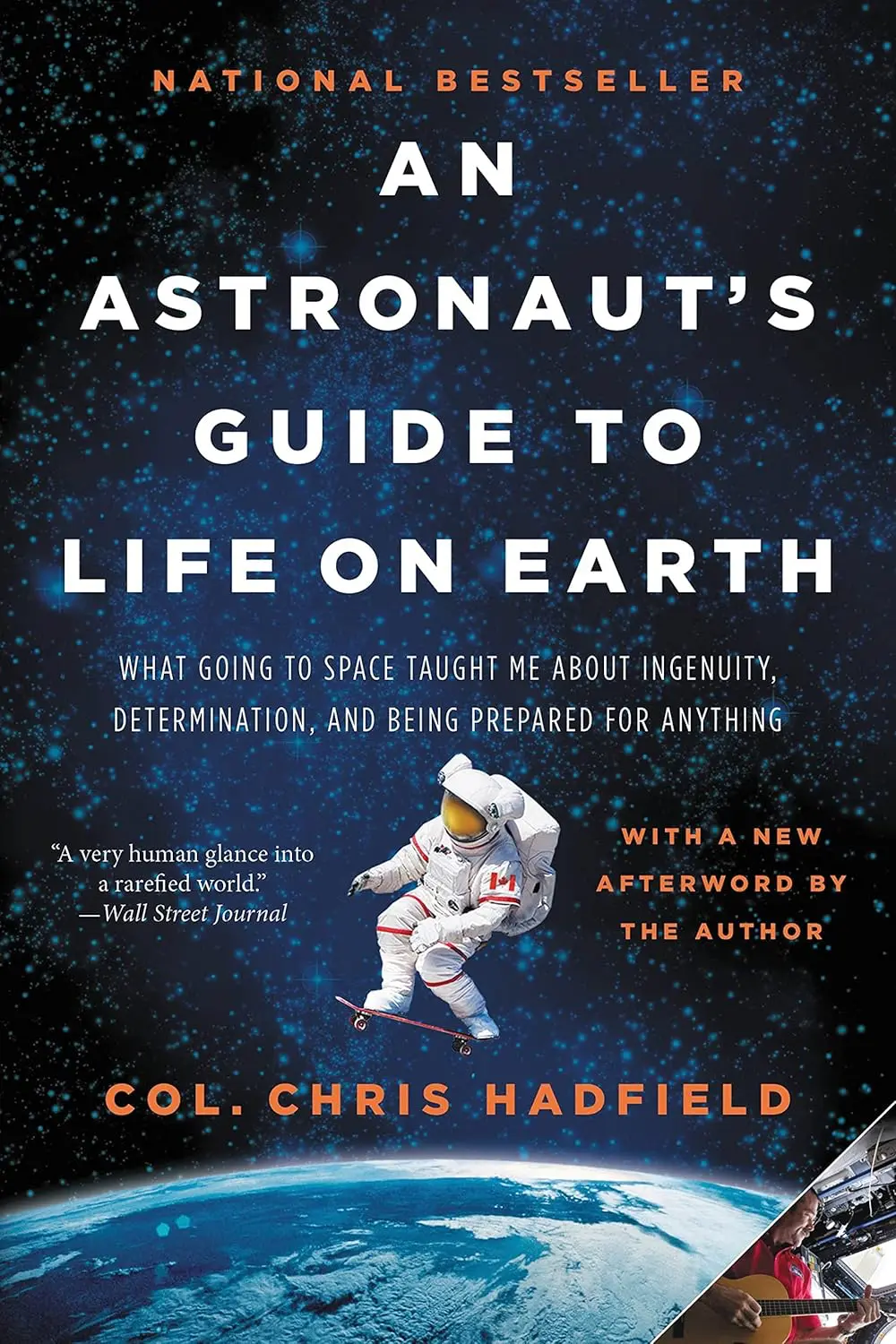
Hadfield spent 21 years as an astronaut, including three spaceflights and a stint as commander of the International Space Station (he became famous for performing David Bowie’s “Space Oddity” in zero gravity). This book is his account of what that career taught him about preparation, leadership, and managing fear.
The central philosophy is what Hadfield calls “thinking like an astronaut,” which means preparing so thoroughly for every possible failure that when something goes wrong, you already know what to do. Astronauts spend years training for missions. Most of that training involves rehearsing emergency procedures. What do you do if the oxygen system fails? What if there is a fire? What if a micrometeorite punctures the hull? You rehearse each scenario until the response is automatic.
Hadfield applies this to everyday situations. Before every meeting, conversation, or trip, he asks: “What is the next thing that could kill me?” Not literally (usually), but in the sense of identifying the worst plausible outcome and preparing for it. This reduces anxiety because fear comes from uncertainty, and preparation reduces uncertainty.
The book also covers what Hadfield calls “aiming to be a zero.” In a new team, most people try to be a plus one (the person who adds value immediately) or fear being a minus one (the person who makes things worse). Hadfield advises starting as a zero: observe, learn the culture, understand how things work, and only then start contributing. This patience prevents the common mistake of trying to prove yourself before you understand the context.
For founders, the preparation mindset is directly applicable. Most startup crises feel like emergencies because nobody planned for them. The ones who stay calm are usually the ones who already thought through what they would do if funding fell through, if a key employee left, or if the product failed at launch.
At about 300 pages, the book is engaging. Hadfield is a natural storyteller, and the space anecdotes (spacewalks, launches, equipment failures) keep the lessons grounded in memorable experiences. The tone is warm and self-deprecating rather than heroic.
