
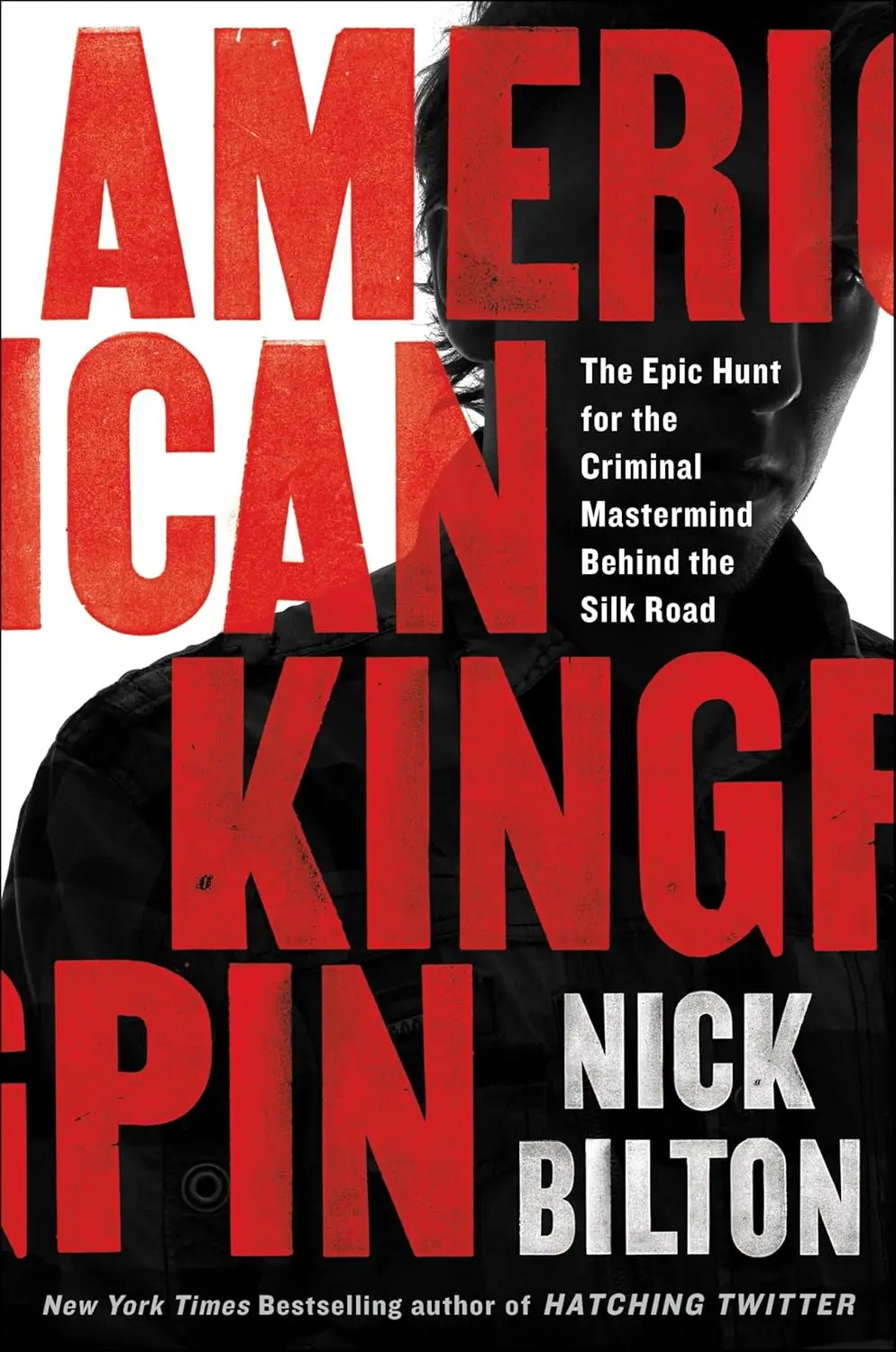
Ross Ulbricht was a physics graduate from Penn State with libertarian politics and a quiet demeanor. In 2011, he built a website called Silk Road where people could buy and sell drugs anonymously using Bitcoin and the Tor network. Within two years, the site had facilitated over a billion dollars in transactions and become the most wanted target of multiple federal agencies.
Nick Bilton, a former New York Times reporter, spent years reconstructing the story from both sides. On one side: Ulbricht, operating under the pseudonym Dread Pirate Roberts, running a global marketplace from his laptop in coffee shops and public libraries, making millions, and allegedly ordering hits on people who threatened to expose him. On the other: a scattered, often dysfunctional investigation split across the FBI, DEA, IRS, and Homeland Security, where agents competed as much with each other as with their target.
The investigation sections are where the book becomes genuinely gripping. An IRS agent named Gary Alford made the breakthrough that cracked the case, not through sophisticated hacking but through a Google search that connected Ulbricht’s real identity to an early Silk Road forum post. Meanwhile, two federal agents working the case from Baltimore, Carl Force and Shaun Bridges, were secretly stealing Bitcoin from Silk Road users and extorting Ulbricht. They were later convicted and sentenced to prison themselves.
Bilton writes with the pace of a screenplay. Chapters alternate between Ulbricht’s perspective and the investigators’. The technical details of Bitcoin, Tor, and dark-web operations are explained clearly enough for non-technical readers without dumbing them down. The book resists the temptation to make Ulbricht either a villain or a martyr. He comes across as a genuinely intelligent person with real convictions about individual liberty who crossed ethical lines he never thought he would cross, gradually and then all at once.
Ulbricht was arrested in a San Francisco public library in October 2013 and sentenced to life in prison without the possibility of parole in 2015. The severity of the sentence has been debated. Some argue it was appropriate given the scale of the drug trafficking. Others argue it was disproportionate for a nonviolent first-time offender. Bilton presents both sides.
The book was a New York Times bestseller and has been optioned for a film adaptation. It sits alongside Bad Blood and Billion Dollar Whale in the growing genre of true-crime business books where the ambition of the central figure is inseparable from the crime.
