
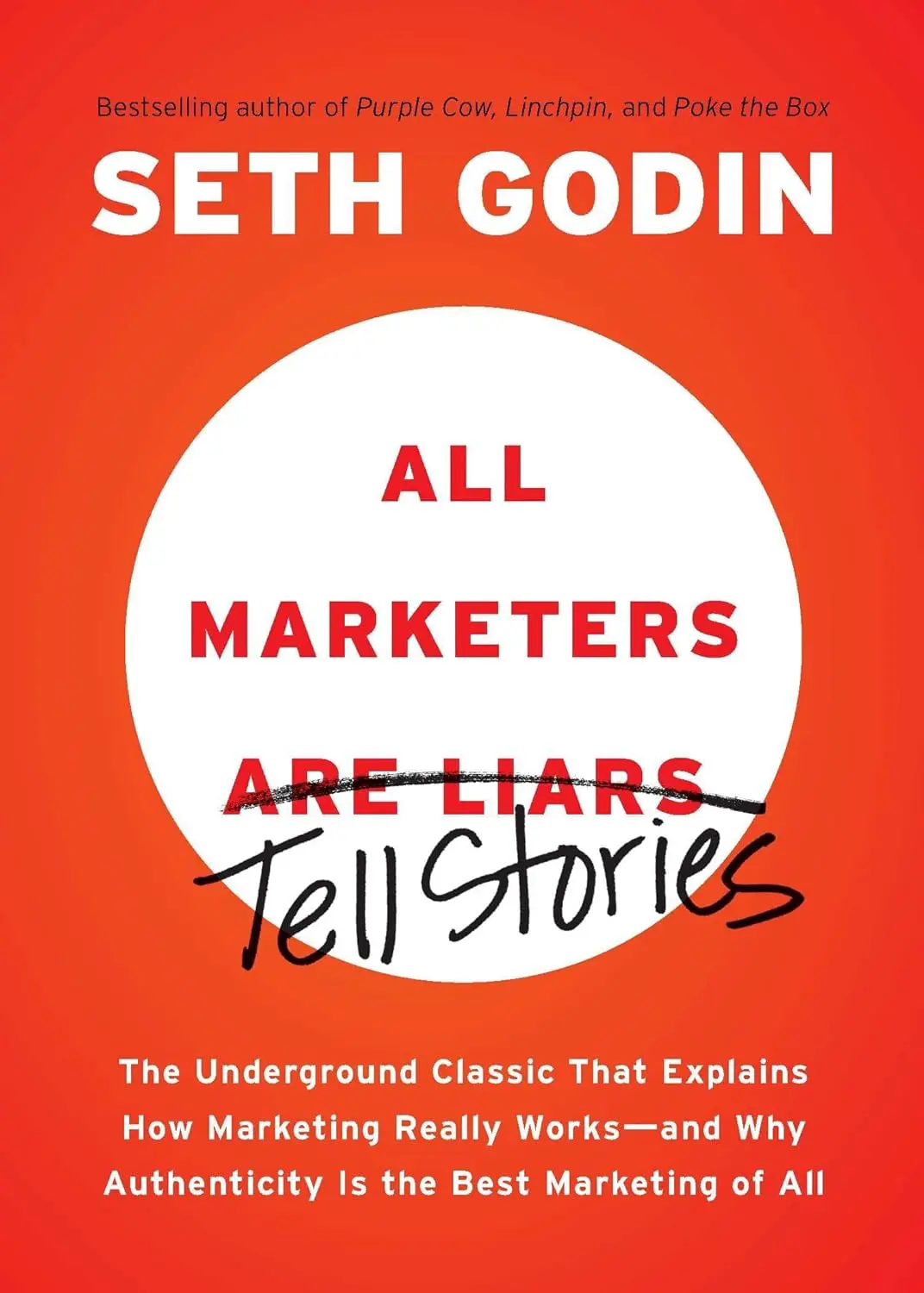
All Marketers Are Liars (later subtitled “Tell Stories” in newer editions) is Seth Godin’s book about the role of storytelling in marketing. His thesis is that people don’t make purchasing decisions based on facts and features. They make decisions based on the stories they tell themselves about who they are and what they value. Marketers who understand this tell stories that fit into the worldviews their customers already hold. Marketers who don’t understand this shout features into the void and wonder why nobody listens.
Godin distinguishes between two kinds of stories. Authentic stories are ones where the product actually delivers on the narrative. A winery that tells a story about handcrafted quality and actually produces handcrafted wine is telling an authentic story. A fraudulent story is one where the product doesn’t match the narrative. The distinction matters because authentic stories create loyal customers and fraudulent stories eventually create angry ones.
The book introduces the concept of “worldview” as the lens through which customers evaluate everything. People who believe organic food is healthier will pay more for organic labels regardless of the science. People who believe luxury brands signal status will pay premium prices regardless of manufacturing costs. Godin argues that you can’t change someone’s worldview with marketing. You can only find people whose worldview already aligns with the story your product tells and reach them with that story.
The “first story wins” concept is also useful. When someone encounters your product for the first time, they form a snap judgment based on the story they tell themselves about it. This first impression is extremely sticky. If you frame your product wrong at the beginning, no amount of subsequent marketing will fix it. Getting the initial story right is therefore worth more than any campaign you run afterward.
For founders, the practical takeaway is that your marketing should start with understanding the worldview of your target customer, not with listing your product’s features. What story do they already believe? What do they want to be true? If you can align your product’s narrative with their existing worldview, they’ll pay attention. If you try to change their worldview, you’ll fail.
The writing is vintage Godin: conversational, assertive, and full of examples. The title is deliberately provocative, and Godin addresses the ethical tension directly. The later editions reframe the message around authenticity more than the original did.
