
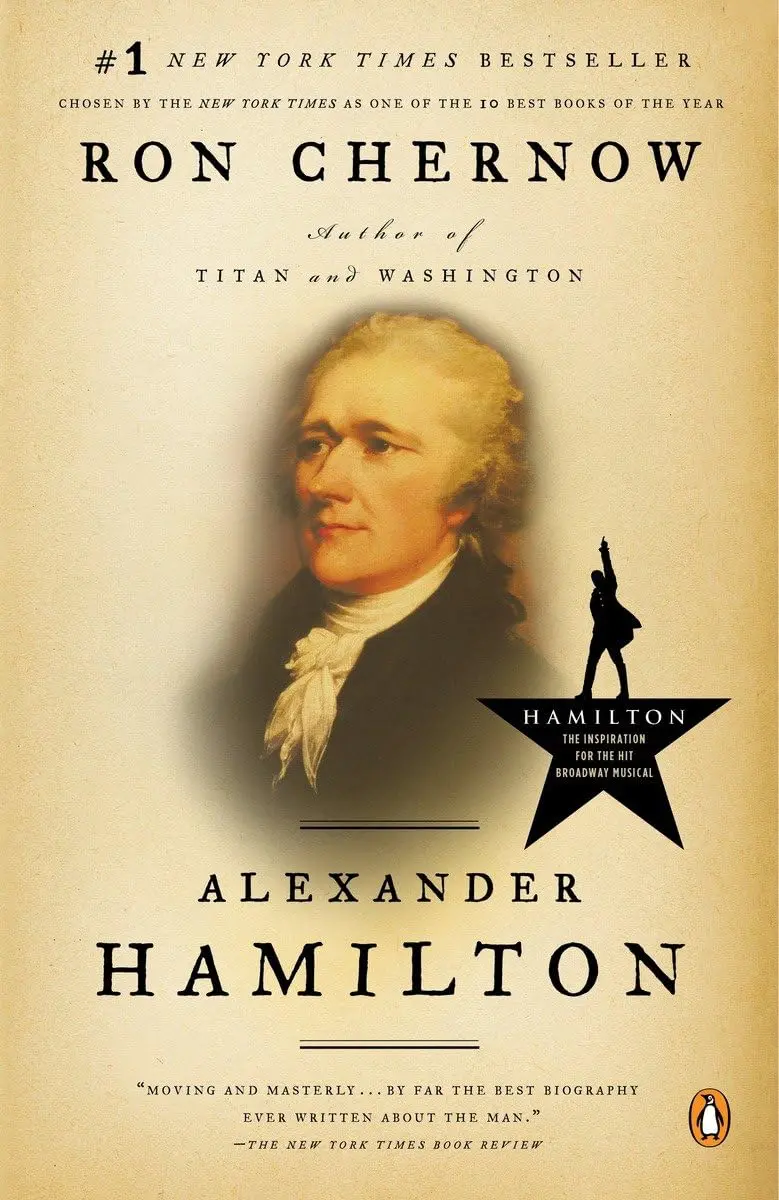
Hamilton’s life reads like fiction. Born illegitimate in the Caribbean, orphaned by 13, he arrived in New York as a teenager with nothing and within two decades became one of the most powerful people in the new United States. He served as Washington’s right-hand man during the Revolution, wrote the majority of the Federalist Papers, designed the national banking system, and created the foundations of American economic policy.
Chernow traces all of this with his usual narrative skill, but the biography is most interesting when it covers Hamilton’s mind at work. Hamilton thought in systems. When he designed the Treasury, he was not just solving an immediate funding problem. He was building institutions (a national bank, a customs service, a debt structure) that would allow the country to grow for centuries. His reports to Congress read like business plans: detailed, data-driven, and organized around a long-term vision.
Hamilton was also famously self-destructive. His affair with Maria Reynolds, which he publicly confessed to in excruciating detail to prove he was not guilty of financial corruption, damaged his reputation. His feuds with other founders (Jefferson, Adams, Burr) were personal and petty. And his death, killed in a duel with Aaron Burr at 47 or 49 (his birth year is disputed) – was the kind of avoidable disaster that Hamilton’s own rationality should have prevented.
For founders, Hamilton is a study in building institutions from scratch under hostile conditions. He operated without precedent, without resources, and against political opponents who wanted him to fail. The skills he used, writing persuasively, thinking in systems, building coalitions, and working at an inhuman pace, are recognizable to anyone who has built a company from nothing.
The biography inspired Lin-Manuel Miranda to create the musical Hamilton, which introduced the story to millions of people who would never have read a 700-page biography. At about 730 pages, the book is long but moves well. Chernow’s prose is engaging and his research is exhaustive. It pairs well with his Rockefeller biography (Titan) as a study of builders operating in different centuries.
