
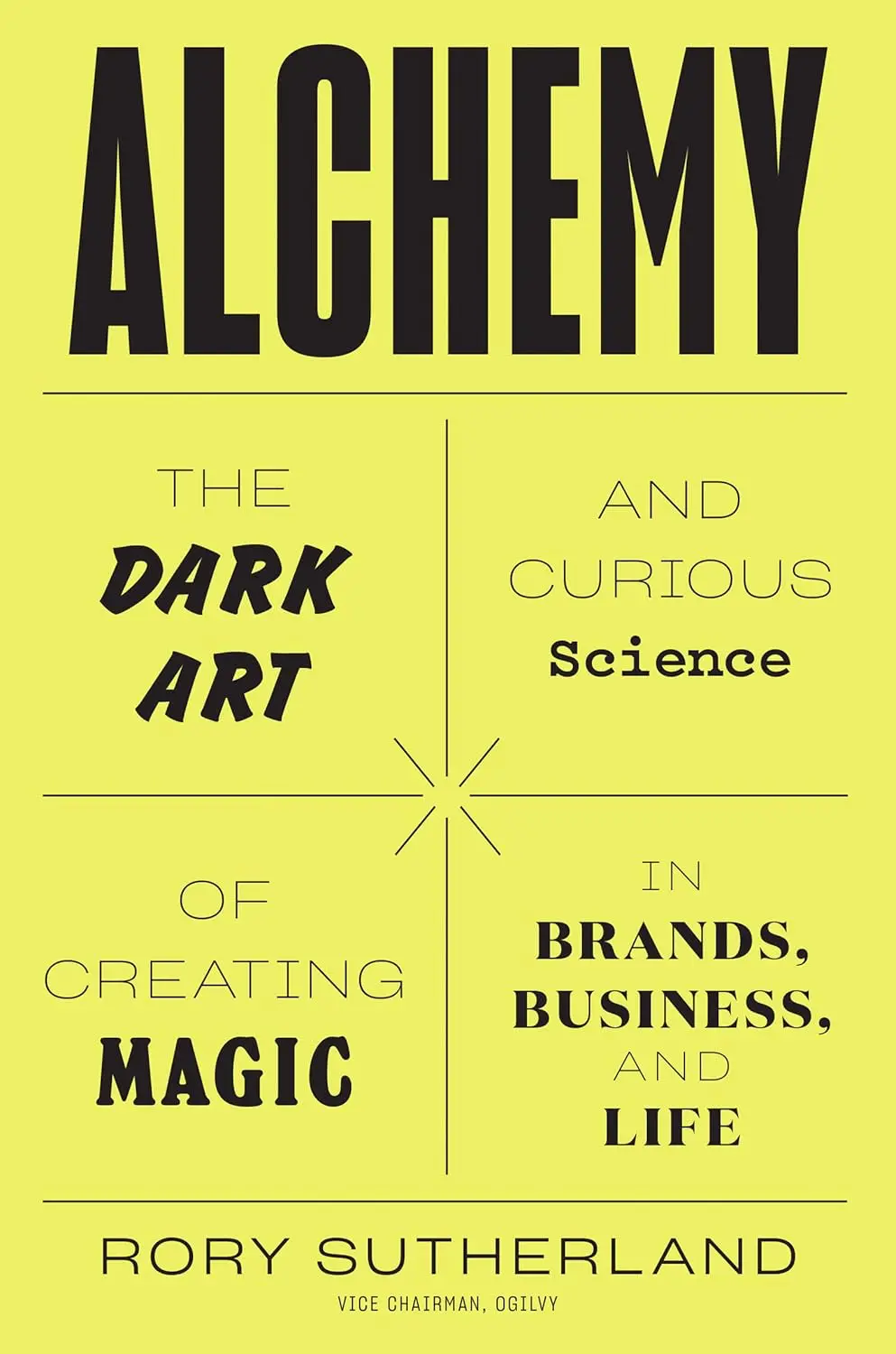
Sutherland’s argument is that logic is overrated in business. Not because logic is bad, but because the problems worth solving are often psychological, not rational. A train company that spends millions making the journey faster might get better results by putting WiFi on the train, because passengers do not mind the journey if they can use the time productively. The logical solution (faster trains) is expensive. The psychological solution (useful time) is cheap and often more effective.
The book is organized loosely around examples of this principle in action. Red Bull became the best-selling energy drink partly because it tastes bad: the unpleasant taste signals that the drink is potent. Expensive placebos work better than cheap ones. Small, ugly cars feel safer to drive because other drivers give them more room. In each case, the effective solution is the one that addresses perception rather than reality.
Sutherland draws on behavioral economics, evolutionary psychology, and 30 years of advertising experience. He writes with the wit and confidence of someone who has been making these arguments to skeptical corporate clients for decades and has learned to make them entertaining.
The structure is loose. The book does not build a linear argument. It accumulates examples and observations that point in the same direction: human behavior is not rational, and pretending it is leads to worse decisions than accepting irrationality and working with it. This makes the book more enjoyable to read than to summarize.
For founders, the practical takeaway is to question the assumption that the best solution is always the most logical one. Pricing, packaging, messaging, and user experience all operate on psychological principles that do not follow from spreadsheet analysis. Sometimes making a product slightly inconvenient increases perceived value. Sometimes raising the price increases sales. These counterintuitive results are not anomalies. They are how human psychology works.
Seth Godin has recommended it. At about 370 pages, the book reads like a collection of essays rather than a continuous argument. Sutherland’s writing is funny, opinionated, and full of stories from advertising campaigns that worked for unexpected reasons. It is the kind of book that makes you look at familiar problems from angles you had not considered.
