
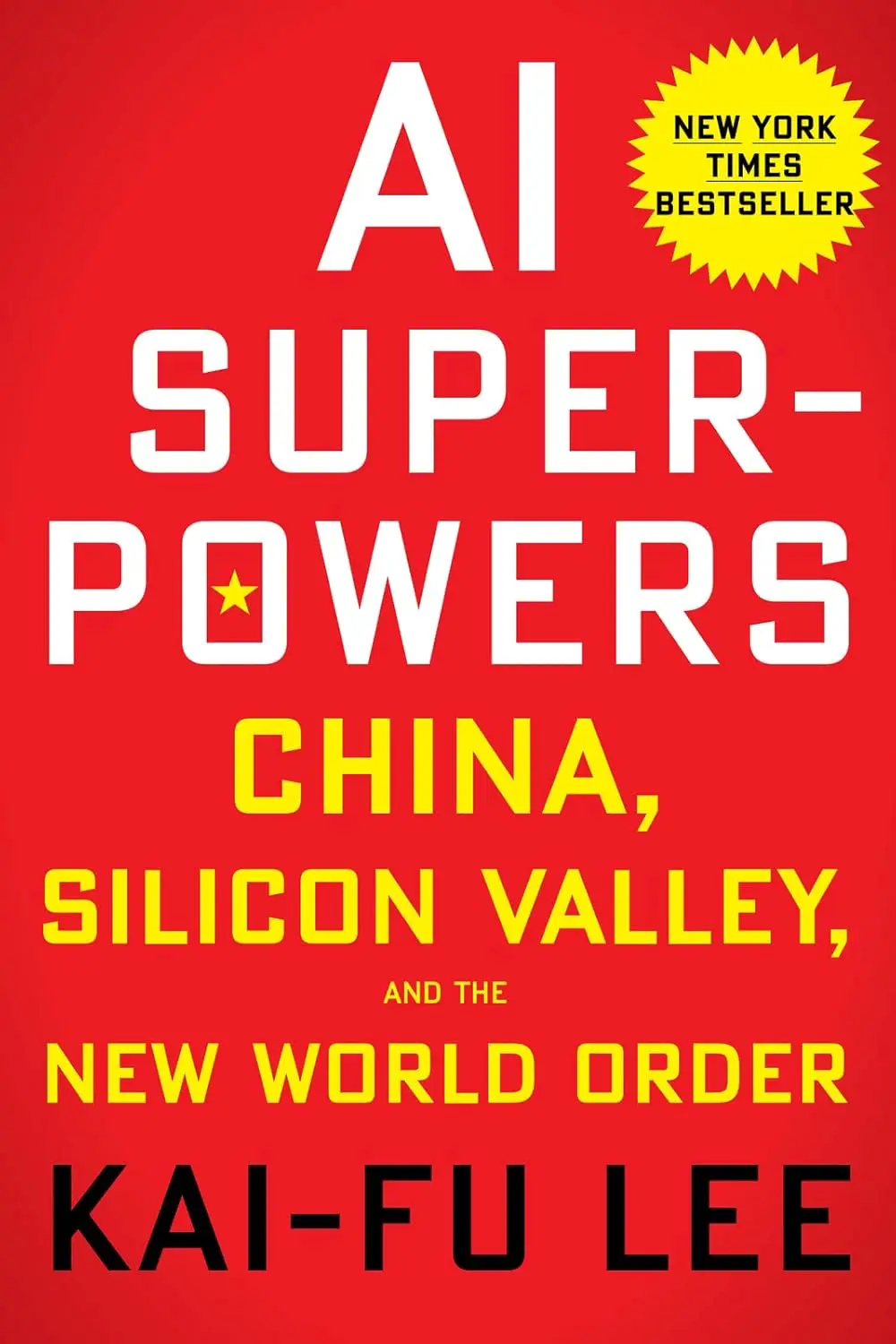
AI Superpowers is Kai-Fu Lee’s comparison of the artificial intelligence industries in the United States and China. Lee has a rare perspective: he ran Google China, founded a major Chinese venture capital firm (Sinovation Ventures), and worked at Apple, Microsoft, and SGI before that. His argument is that while the U.S. led the early breakthroughs in AI research, China is catching up fast and in some areas has already pulled ahead in AI deployment and commercialization.
Lee identifies four waves of AI: internet AI (recommendation algorithms, like what Netflix and TikTok use), business AI (using machine learning to optimize operations and detect patterns in corporate data), perception AI (computer vision, speech recognition, and sensor processing that brings AI into the physical world), and autonomous AI (self-driving vehicles, robots, and other systems that act independently). He maps the competitive position of the U.S. and China across each wave and argues that China has advantages in internet AI (because of its massive user base and aggressive data collection) and will likely dominate perception AI (because of weaker privacy norms and more government support for surveillance technology).
The later chapters shift to the human consequences of AI. Lee describes his own cancer diagnosis and how it changed his thinking about what matters in life, leading him to argue that the displacement AI causes needs to be met with new social contracts and a revaluation of human-to-human care work. This section is more personal and philosophical than the competitive analysis but adds an important dimension.
For founders, the competitive analysis chapters are the most directly useful. Understanding where China is investing, how Chinese entrepreneurs approach markets differently from Silicon Valley, and which AI applications are developing fastest helps you think about both opportunities and threats. Lee’s observation that implementation speed, not research quality, is what determines AI winners is a useful corrective for founders who think they need to be on the cutting edge of research to compete.
The book was published in 2018, and some specific predictions have aged. The broad argument about U.S.-China AI competition has only become more relevant. The writing is clear and accessible, with Lee drawing freely from his personal experience across both ecosystems.
