
Dave Eggers was a senior at the University of Illinois when his mother died of stomach cancer. His father had died of lung cancer five weeks earlier. Dave was twenty-one. His brother Toph was eight. Their older siblings were grown and gone. So Dave became, without preparation or ceremony, a single parent to a third-grader.
The memoir that resulted does not read like a grief book. It reads like someone processing an impossible situation by talking as fast as they can, making jokes the entire time, and then occasionally stopping to acknowledge that what has happened is actually devastating. The tone is manic and self-conscious. Eggers interrupts himself constantly. He addresses the reader directly. He includes a preface that goes on for pages and pages, making fun of the very idea of prefacing a memoir, listing the book’s flaws before anyone else can, and generally behaving as if the fourth wall were never built.
The central story, which is Dave and Toph figuring out how to live together, is genuinely moving when Eggers lets it breathe. He describes making dinner badly, worrying about whether Toph is okay, trying to be a parent and a twenty-something at the same time. There is a scene involving a Frisbee on a rooftop that captures a specific kind of desperate joy better than almost anything else written in that decade.
Around the memoir, Eggers packs a lot of other material. He auditions for the MTV show The Real World and narrates the experience as a meta-commentary on his own need for attention. He starts a magazine called Might with a group of friends in San Francisco and chronicles its rise and collapse. He reflects on the relationship between lived experience and the act of turning it into a story, asking whether writing about his parents’ deaths is an act of honoring them or exploiting them, and never fully resolving the question.
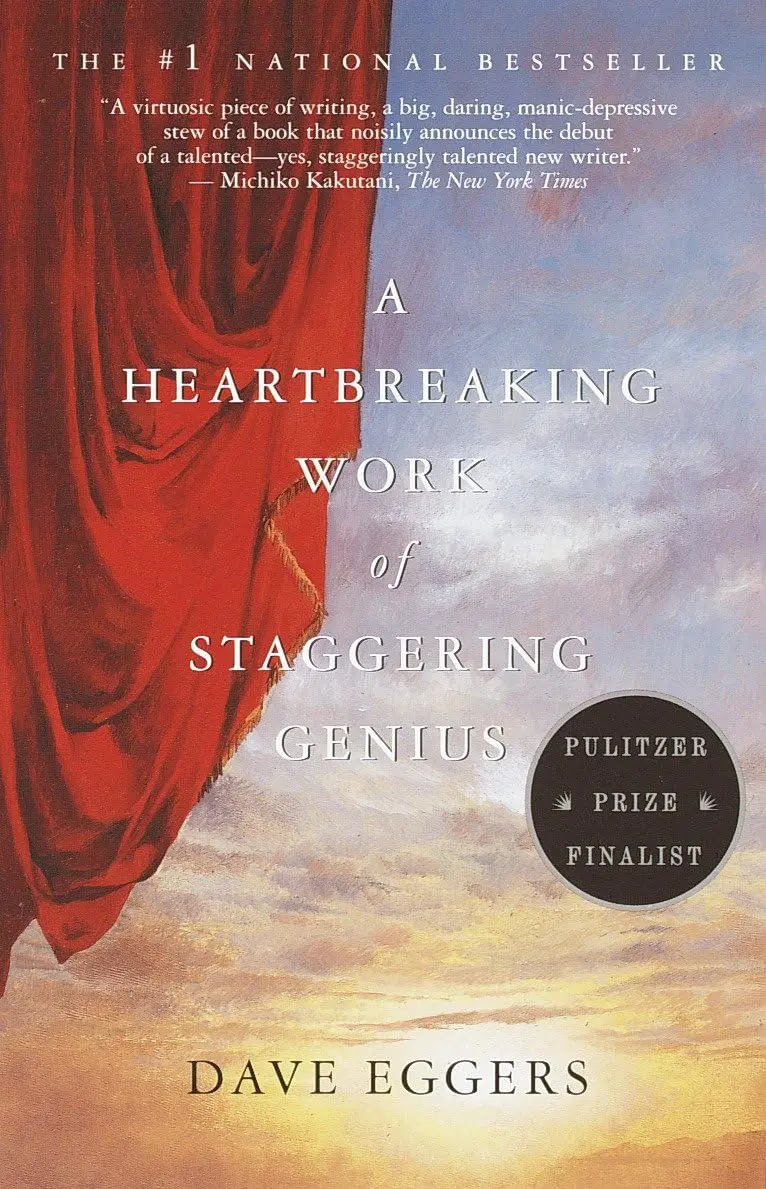
The title is itself a joke, or a defense mechanism, or a dare. Eggers called his memoir A Heartbreaking Work of Staggering Genius before any critic could. It is the literary equivalent of insulting yourself before someone else gets the chance.
The book was a finalist for the Pulitzer Prize. It launched Eggers’s career as a writer, publisher, and founder of multiple organizations, including McSweeney’s, a literary publishing house, and 826 Valencia, a chain of nonprofit writing centers for young people. Whether the book’s self-referential style has aged well depends on your tolerance for that kind of thing. The emotional core, a young man drowning and swimming simultaneously, holds up regardless.
