
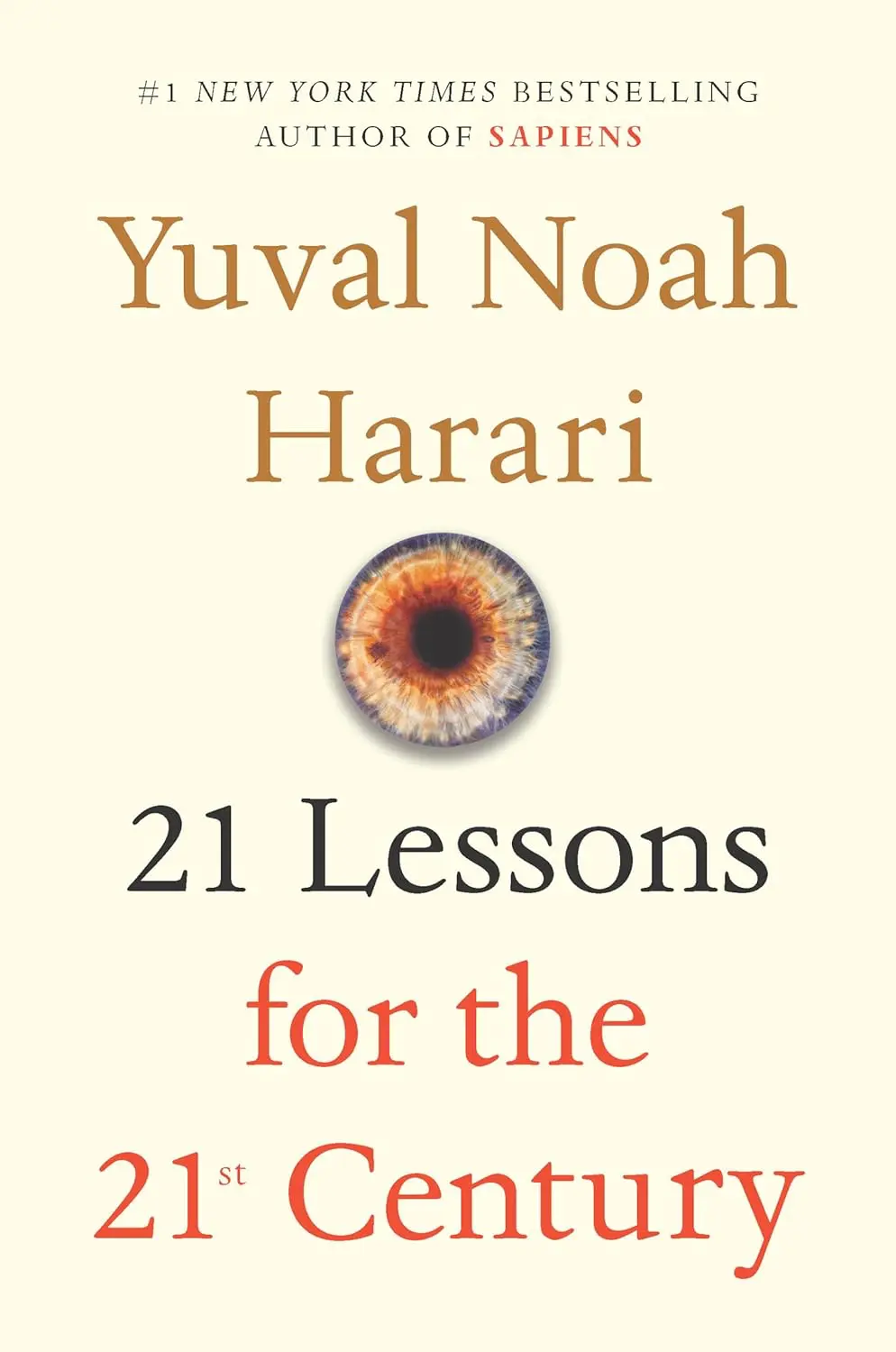
Where Sapiens covered the past and Homo Deus covered the future, 21 Lessons deals with the now. Each chapter addresses a different contemporary issue: the disillusionment with liberalism, the threat of AI to employment, the spread of fake news, the challenge of terrorism, the crisis of meaning in secular societies, and the question of what to teach children when nobody knows what the world will look like in thirty years.
Harari writes as someone who has spent years thinking about history and recognizes that the present is unusually confusing. The old political frameworks (communism, fascism, liberalism) do not map cleanly onto the problems created by AI, biotech, and algorithmic media. He does not propose new frameworks so much as describe why the old ones are failing and what questions we should be asking instead.
The chapters on technology are the most relevant for business readers. Harari argues that AI will create a “useless class” of people whose skills have been automated, and that the political and economic consequences will be severe unless societies plan for this. He also argues that the most dangerous aspect of AI is not superintelligence but the ability of algorithms to manipulate human attention and decision-making at scale.
The chapters on education are surprisingly practical. Harari argues that teaching specific knowledge is becoming less useful because knowledge becomes obsolete faster than ever. What matters more is teaching mental flexibility: the ability to learn new things, cope with unfamiliar situations, and maintain psychological balance in the face of constant change.
The book is more accessible than Sapiens and less speculative than Homo Deus. The standalone essay format means you can read chapters in any order and skip topics that do not interest you.
Bill Gates has recommended it. At about 370 pages, the book is well-paced. Harari is a clear writer who can make complex ideas readable without oversimplifying them. The main criticism is that some chapters feel more like columns than deep analysis, but the range of topics covered makes it a useful overview of the issues shaping the decade.
