
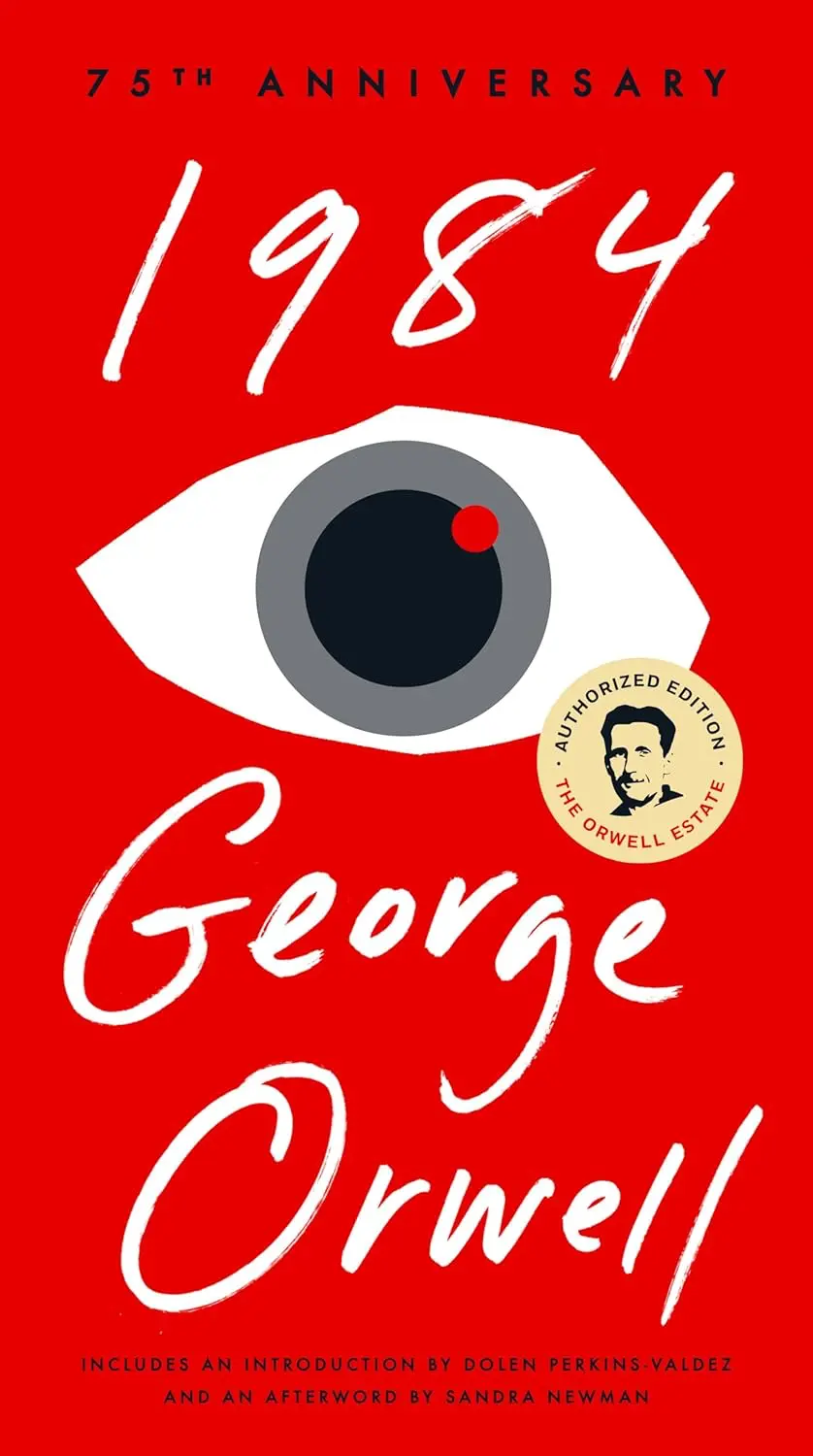
1984 takes place in Airstrip One (formerly England), a province of the superstate Oceania. The government, led by the Party and its figurehead Big Brother, controls every aspect of life. History is rewritten daily to match whatever the Party currently claims is true. Language is being systematically reduced through Newspeak, a stripped-down vocabulary designed to make certain thoughts literally impossible to express.
The protagonist, Winston Smith, works at the Ministry of Truth, where his job is to alter historical records. He secretly hates the Party and begins a forbidden relationship with Julia, a fellow dissident. Their rebellion, its discovery, and its consequences form the plot.
What makes the book last is not the plot but the ideas. Orwell was writing about the totalitarian systems he observed in Stalin’s Soviet Union and Hitler’s Germany, but his insights about power, language, and truth have proved applicable far beyond those specific contexts. The concept of doublethink, holding two contradictory beliefs simultaneously and accepting both, shows up in corporate cultures, political discourse, and media spin. The manipulation of language to constrain thought is relevant to any discussion about how framing shapes perception.
For business readers, 1984 is less directly applicable than some books on this list, but it offers a framework for thinking about information control, organizational culture, and the relationship between language and power. Companies that control the narrative internally, that punish dissent, or that rewrite their own history to match current strategy are engaging in dynamics Orwell would have recognized.
The book is short, about 300 pages, and reads quickly despite its heavy themes. It pairs well with Huxley’s Brave New World. Where Orwell imagines control through fear and deprivation, Huxley imagines control through pleasure and excess. Both books are worth reading together because they describe different failure modes for society, and both are relevant to how technology is shaping modern life.
