
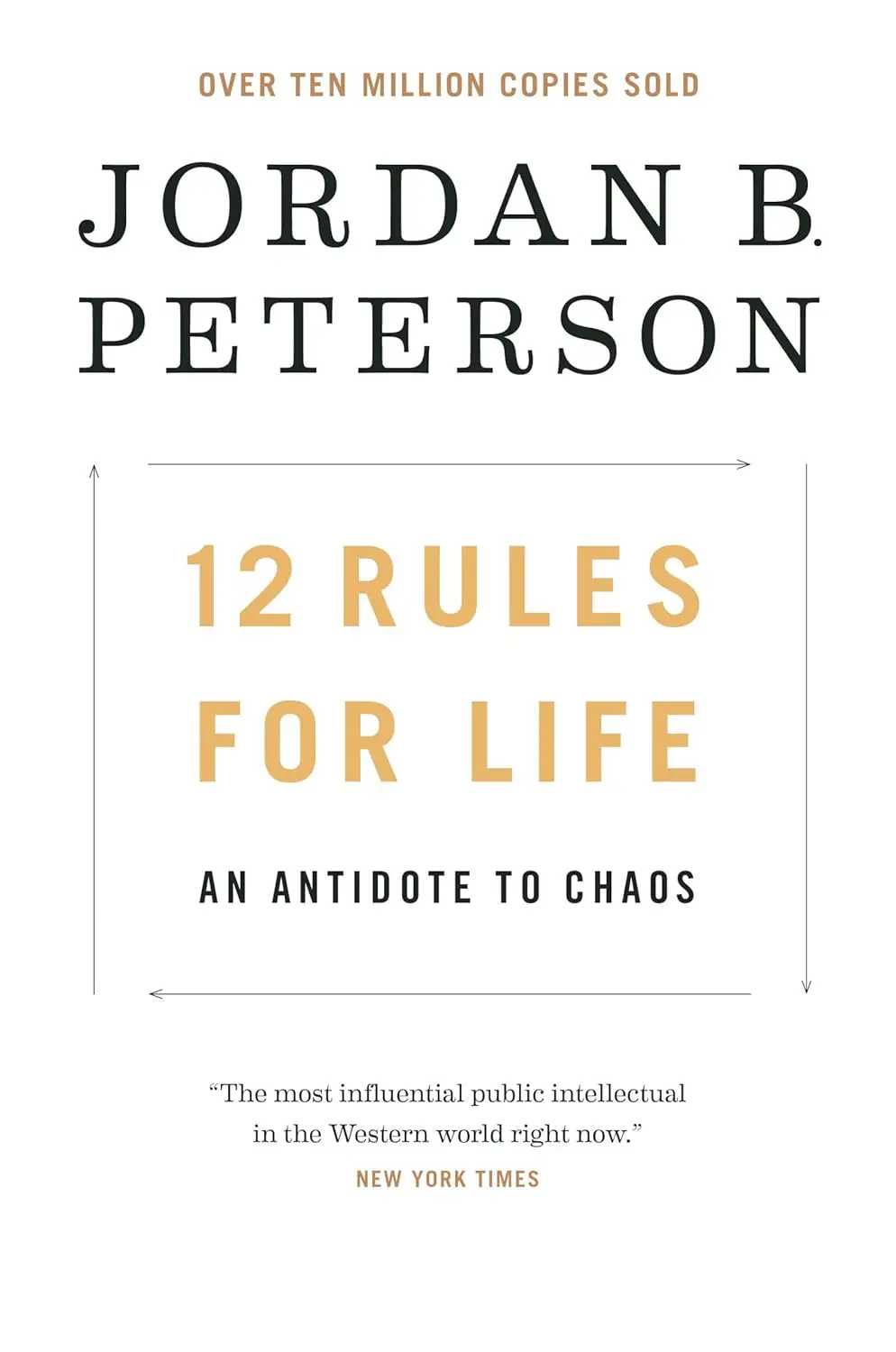
Peterson became a public figure through his YouTube lectures and political controversies, but the book draws primarily on his decades of clinical practice and his academic work on the psychology of belief systems. Each of the twelve rules gets a chapter that starts with the rule, explores the psychology and mythology behind it, and connects it to practical life.
The rules are deceptively simple. “Stand up straight with your shoulders back” is not just about posture. Peterson uses the behavior of lobsters (whose serotonin systems respond to dominance hierarchies) to argue that carrying yourself with confidence changes how others treat you and how you feel about yourself. “Treat yourself like someone you are responsible for helping” addresses the common pattern of people who take better care of others than they do of themselves. “Compare yourself to who you were yesterday, not to who someone else is today” addresses the anxiety of social comparison.
Peterson’s writing is dense and sometimes digressive. A chapter that starts with a simple rule about cleaning your room can detour through Dostoevsky, Jungian archetypes, the Book of Genesis, and Peterson’s clinical experience with depressed patients before circling back to the practical point. Some readers find the digressions enriching. Others find them unfocused.
The book is polarizing for reasons that have more to do with Peterson’s public persona than its content. Supporters find it a sincere and useful guide to taking responsibility for your life. Critics find it conservative in its values, occasionally dogmatic, and overly focused on individual responsibility at the expense of structural factors.
For founders, the most directly applicable rules are about honesty (“tell the truth, or at least don’t lie”), about taking on meaningful challenges (“pursue what is meaningful, not what is expedient”), and about managing yourself before trying to manage others (“set your house in perfect order before you criticize the world”).
Joe Rogan and Jocko Willink have recommended it. At about 370 pages, the book is substantial. Peterson’s prose is earnest and detailed. It reads best when taken one rule at a time with space to think between chapters.
