
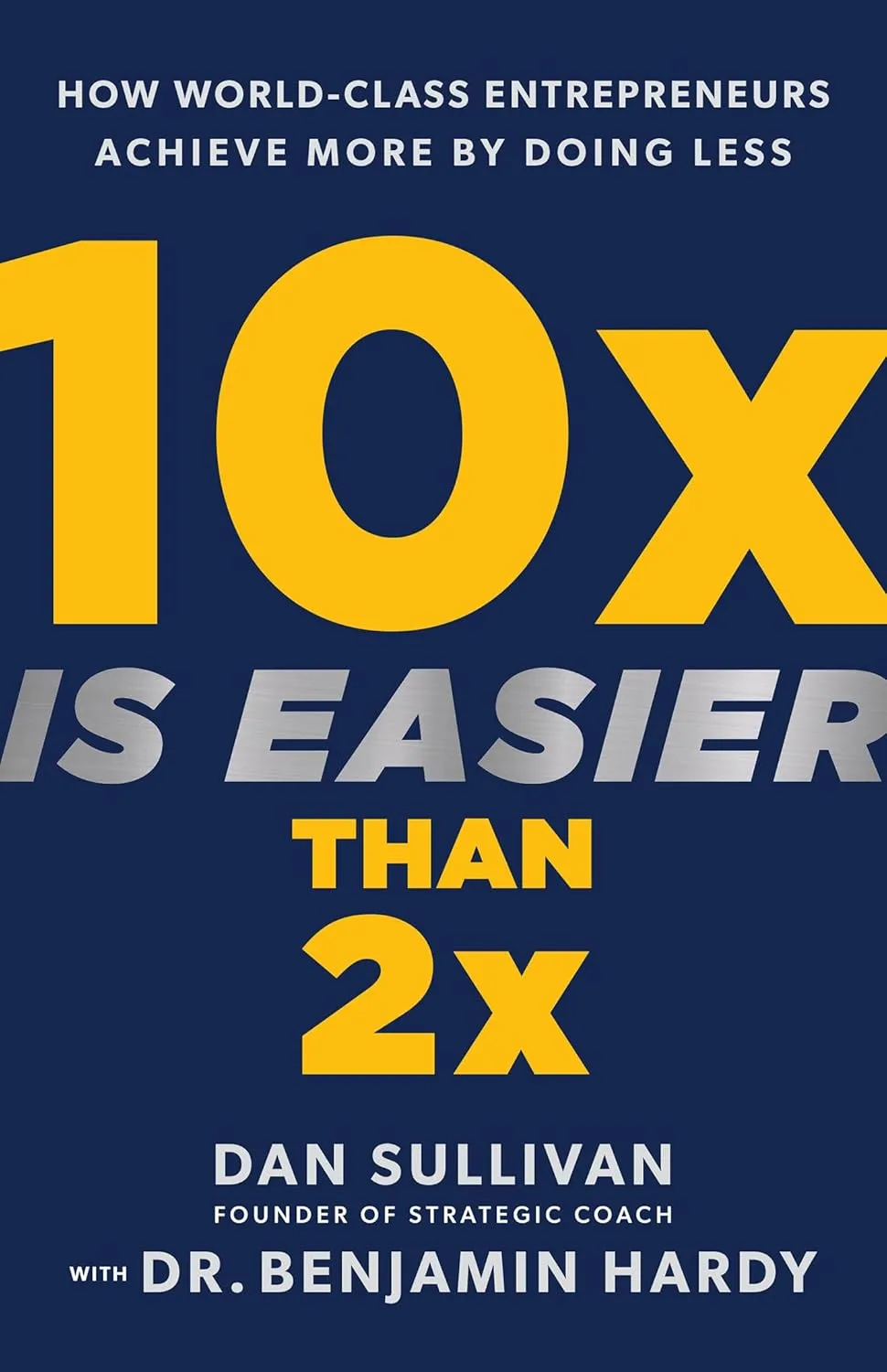
10x Is Easier Than 2x is Dan Sullivan and Benjamin Hardy’s counterintuitive argument about ambition and focus. Sullivan, who has coached entrepreneurs through his Strategic Coach program for over 30 years, noticed that clients who aimed for incremental improvements (2x growth) often struggled more than clients who aimed for radical leaps (10x growth). The reason, he argues, is that a 2x goal can be achieved by doing more of what you’re already doing, which means working harder, longer, and with more stress. A 10x goal, on the other hand, requires completely changing your approach, which forces you to identify the few activities that actually matter and abandon everything else.
The book walks through the practical implications. To grow 10x, you have to identify the 20% of your activities that produce 80% of your results and then drop the other 80%. You have to say no to good opportunities so you can say yes to great ones. You have to upgrade your team, your systems, and often your own identity, because the person who built a $1 million business is not the same person who can build a $10 million business. Each 10x jump requires letting go of the previous version of yourself.
Sullivan and Hardy frame this as a process of “freedom.” The more you focus on what you do best and delegate or eliminate everything else, the more time and energy you have for the work that actually moves the needle. They call this “unique ability,” the intersection of what you’re best at and what you most enjoy, and argue that building your business around your unique ability is not just more profitable but more sustainable.
For founders, the book’s most useful insight is about letting go. Most founders add complexity as they grow: more products, more customers, more team members, more meetings. Sullivan’s argument is that growth comes from subtraction, not addition. Each stage of growth requires identifying what got you here but won’t get you there, and having the discipline to stop doing it.
The writing alternates between Sullivan’s coaching stories and Hardy’s psychological frameworks. Some sections feel repetitive, and the 10x concept can start to feel like a hammer looking for nails. But the core argument is strong: ambitious goals force clearer thinking than modest ones, and the discomfort of aiming higher is often less than the grind of aiming lower.
