





What Travis Kalanick’s book recommendations tell you about Uber’s founder
Five books. That is the entire list. Most founders on these pages recommend twenty or more. Travis Kalanick recommends five, and every single one is about a person or character who bends the world to their will through sheer force of ambition, strategy, and refusal to compromise. There are no books about mindfulness, empathy, company culture, or work-life balance. There are no novels about uncertainty or loss. This is the most concentrated reading list in this collection, and it tells you exactly who Kalanick was as a founder and why Uber looked the way it did.
Quick background. Kalanick grew up in Los Angeles, studied computer engineering at UCLA but dropped out before graduating, and started his first company, Scour, a peer-to-peer search engine, in 1998. It was sued for $250 billion by the entertainment industry and went bankrupt. He started a second company, Red Swoosh, which Akamai acquired in 2007 for approximately $19 million. In 2009, he co-founded Uber with Garrett Camp. Over the next eight years, Uber expanded into hundreds of cities, fought regulators and taxi unions in nearly every market it entered, raised tens of billions in venture capital, and became one of the most valuable private companies in the world. Kalanick resigned as CEO in 2017 after a cascade of scandals involving workplace culture, allegations of sexual harassment within the company, and a lawsuit from Google’s self-driving car unit. He now runs CloudKitchens, a ghost kitchen real estate company.
Travis Kalanick’s books on individualism and ambition
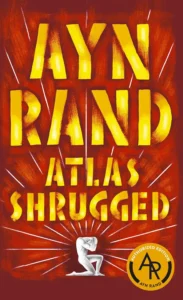
The Fountainhead and Atlas Shrugged, both by Ayn Rand, are the backbone of this list. The Fountainhead is about Howard Roark, an architect who would rather dynamite his own building than see it compromised by committee. Atlas Shrugged is about industrialists who withdraw from a society that punishes achievement, letting the world collapse without them. Both novels celebrate the individual who refuses to submit to collective mediocrity, and both treat compromise as moral weakness.
Kalanick ran Uber like a Rand protagonist. He entered markets without asking permission from regulators. He treated resistance from taxi commissions and city governments as obstacles to be overcome, not signals to reconsider. He built a company culture that rewarded aggression and speed above almost everything else. The internal value that captured Uber’s early ethos was “always be hustlin’.” That phrase could have come from a Rand character.
The Rand books explain the energy that built Uber into a global force in under a decade. They also explain the blind spots. Rand’s philosophy has no room for the idea that your employees might be suffering, that your competitive tactics might be unethical, or that the people affected by your disruption deserve consideration. Kalanick’s Uber moved fast and broke things, including, eventually, itself.
Books on strategy and warfare Travis Kalanick recommends
The Art of War by Sun Tzu is the most common book across all these founder reading lists, but on Kalanick’s list it carries a different weight. Sun Tzu wrote about choosing battles wisely, about winning without fighting when possible, about knowing when to retreat. Kalanick took the fighting part seriously but not always the wisdom part. Uber’s strategy in new markets was often closer to siege warfare than to Sun Tzu’s ideal of strategic positioning. The company subsidized rides at a loss to undercut competitors, ran covert programs to identify and evade regulators, and built tools to obstruct law enforcement investigations. Sun Tzu would have approved of the ambition. He might have questioned the execution.
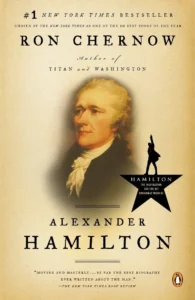
Alexander Hamilton by Ron Chernow is a biography of a man who was an orphan, an immigrant, a war hero, the architect of the American financial system, and eventually killed in a duel by a political rival. Hamilton was brilliant, relentless, abrasive, and incapable of avoiding fights he did not need to have. The parallel to Kalanick is hard to miss. Both men built systems of enormous consequence. Both were undone not by their enemies but by their own inability to temper the qualities that made them effective.
Ender’s Game by Orson Scott Card is a novel about a child prodigy recruited into a military academy where he is manipulated, isolated, and pushed to his limits until he becomes the greatest strategic mind of his generation. Ender wins every game by redefining its rules. He also discovers, too late, that the games were real and the stakes were higher than anyone told him. Kalanick built Uber as if it were a game with rules he could rewrite. The discovery that the consequences were real, that real people were affected by the culture he created, came after the damage was done.
How Travis Kalanick’s reading list explains Uber’s rise and fall
Five books. Two Ayn Rand novels about uncompromising individuals. A military strategy manual. A biography of a brilliant man destroyed by his own combativeness. And a science fiction novel about a prodigy who wins every battle without realizing the cost. This is not a reading list designed for self-reflection. It is a reading list designed for war.
Uber changed transportation in hundreds of cities. It created an entirely new category of work. It made ride-hailing so normal that people forgot how recently it did not exist. All of that happened because Kalanick read the world the way these five books taught him to: as a contest where the person with the most conviction and the least hesitation wins. The problem is that the books that could have warned him about what comes next, about culture, about people, about the gap between winning and being right, are not on the list. They never were.
